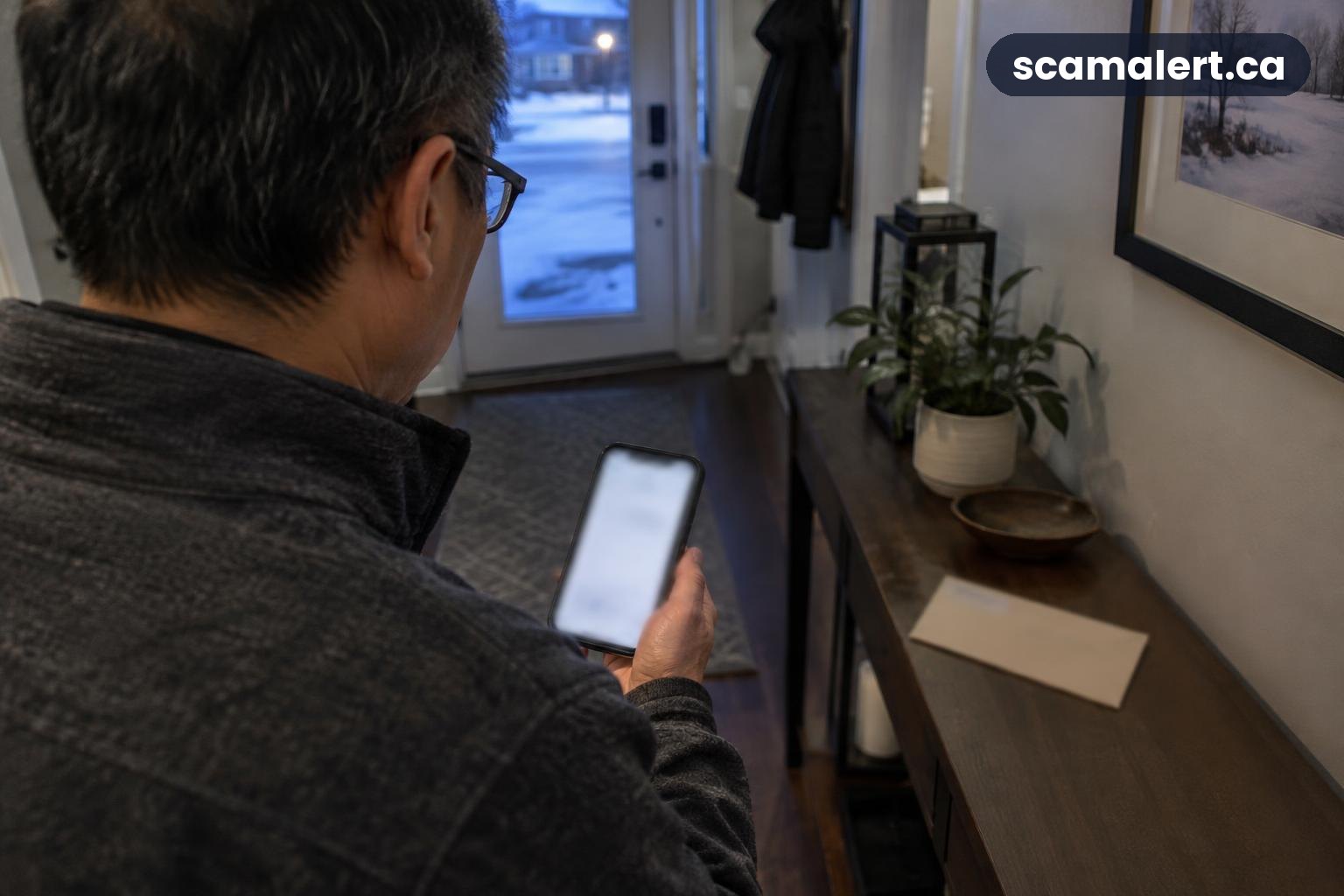
A police impersonation scam can make a call, message or other approach sound official and urgent. Anyone can be targeted, and the safest response is to pause, avoid sharing information or sending money, and verify the contact using details you find independently.
What the police impersonation scam looks like
In this type of scam, someone pretends to be a police officer or another law-enforcement representative. The person may claim there is an investigation, a problem with your identity or account, or an urgent matter that needs your attention. The exact story can change; the aim is to make you act before you have time to check it.
Contact may come by phone, text, email or another channel. A message might use official-sounding language or suggest that you must keep the conversation private. A caller may also try to make a demand feel routine by giving instructions step by step. These details can make a false approach feel convincing, but they do not prove who is contacting you.
A person pretending to be police may ask for personal or banking information, a verification code, or money. They might direct you to transfer funds, buy gift cards, pay a fee, or use another payment method. Treat any request to move money or reveal security information as a reason to stop and verify, not as proof that the caller is genuine.
Some approaches rely on fear: the person may suggest that you will be arrested, face a penalty, or harm an investigation if you do not comply. Others may sound calm and helpful, offering to guide you through a supposed problem. Either way, a convincing tone, uniform or official-looking document is not enough to establish someone’s identity.
Police may contact people for legitimate reasons, so an unexpected approach is not automatically proof of a scam. But you do not need to follow instructions simply because someone claims to be an officer. End the conversation safely and confirm the matter through a police service’s independently located contact information.
Do not rely on caller ID, a displayed name, an email address, a profile photo or a number provided by the person contacting you. Details can be copied or manipulated. If you want to verify the approach, find the police service’s official contact information yourself, rather than calling back, clicking a link or using a number in the message.
Red flags to watch for
- Pressure to act immediately: The person says you must pay, share information or follow instructions right away and discourages you from taking time to check.
- Threats or intimidation: They use fear of arrest, punishment or other serious consequences to make you comply without asking questions.
- Requests for money: They ask you to transfer funds, pay with gift cards or cryptocurrency, or use another unusual payment method to resolve a supposed police matter.
- Requests for security details: They ask for a password, banking details, a PIN, a one-time verification code or remote access to your device. Do not disclose these to an unexpected caller or message sender.
- Instructions to keep quiet: They tell you not to speak to family, your bank or the police service. Secrecy can prevent you from getting an independent check.
- Pressure to stay on the line: They discourage you from hanging up, calling someone you trust or contacting a police service through a number you found yourself.
- Official-looking details used as proof: A name, badge image, document, caller ID or knowledge of some personal information does not, on its own, confirm that the contact is genuine.
- Links or contact details supplied in the approach: The message directs you to a website or number that the sender controls. Do not use it to verify the sender’s own claims.
What to do if you’ve been targeted
- Stop the interaction. Do not send money, share information, click links or install software because someone is pressuring you. If it is a call, hang up. If it is a message, do not reply to argue or test the sender.
- Verify independently. If you are concerned there may be a real police matter, find the relevant police service’s official contact information yourself and ask whether the contact is genuine. Do not use a callback number, link or other details supplied by the person who approached you. If you feel in immediate danger, contact emergency services.
- Protect your accounts. If you shared a password or banking details, contact the affected bank or service using its official contact information. Change exposed passwords, starting with accounts that use the same password, and turn on available account security features. Never share a verification code with someone who contacts you unexpectedly.
- Act quickly if money was sent. Contact your bank or payment provider right away and explain what happened. Ask whether it can stop, recall or flag the payment and follow its instructions. If you paid by gift card or another method, contact the company that issued it using its official website or contact information.
- Save relevant details. Keep messages, emails, payment records and any information about how the person contacted you. Note what you remember, but do not keep engaging with the sender to collect more evidence. Do not forward suspicious links to other people.
- Tell someone you trust. A second person can help you check the story and take practical next steps. If the person demanded secrecy, that is not a reason to handle the situation alone.
- Watch for follow-up approaches. After one attempt, someone may contact you again pretending to help recover money or investigate what happened. Treat unsolicited offers of recovery or further instructions with caution, and independently verify any organization before sharing information or paying.
How to report it
Report suspected fraud to the Canadian Anti-Fraud Centre online or by calling 1-888-495-8501. Reporting can help document what happened, even if you did not lose money. Include the contact method, what the person claimed, what they asked you to do and any steps you took, while avoiding further contact with the sender.
Also report the approach to your local police service. If you are unsure whether a contact claiming to be from police is legitimate, use contact information you found independently to check with the relevant service. If money or banking details were involved, contact your bank promptly as well; do not wait for a police report before alerting it.
For general guidance, the Canadian Anti-Fraud Centre’s official website explains how to report fraud in Canada. Keep copies of your report details and any instructions you receive from your bank or police. If you have not lost money, you can still report the attempt and use the experience as a prompt to check your account security.
Police caller warning signs and safe verification
When a message claims to be from police, focus on what the sender is asking you to do rather than how official the approach looks. A demand for money, private information or secrecy deserves an independent check. You can end an unexpected conversation and take time to verify without accepting the sender’s version of events.
Make a simple plan with family members, especially anyone who may feel intimidated by an official-sounding call. Agree that no one should make a rushed payment or share a code because of a threat, and that a person can pause to consult someone they trust. A calm check using independently found contact information is safer than following instructions from an unverified caller.
If you receive a police impersonation scam attempt, remember that you are allowed to stop communicating and seek help. Share the warning with people who may be targeted, but do not circulate the sender’s links or contact details as if they were genuine. For suspected fraud, report it to the Canadian Anti-Fraud Centre and local police, and notify your bank if payment or banking information is involved.
Reviewed by our editorial team on .

The Scam Alert Team tracks fraud targeting Canadians and turns official warnings into clear, practical advice. Our team has a background in IT and cybersecurity, and every article is fact-checked against official sources before publication. How we verify alerts