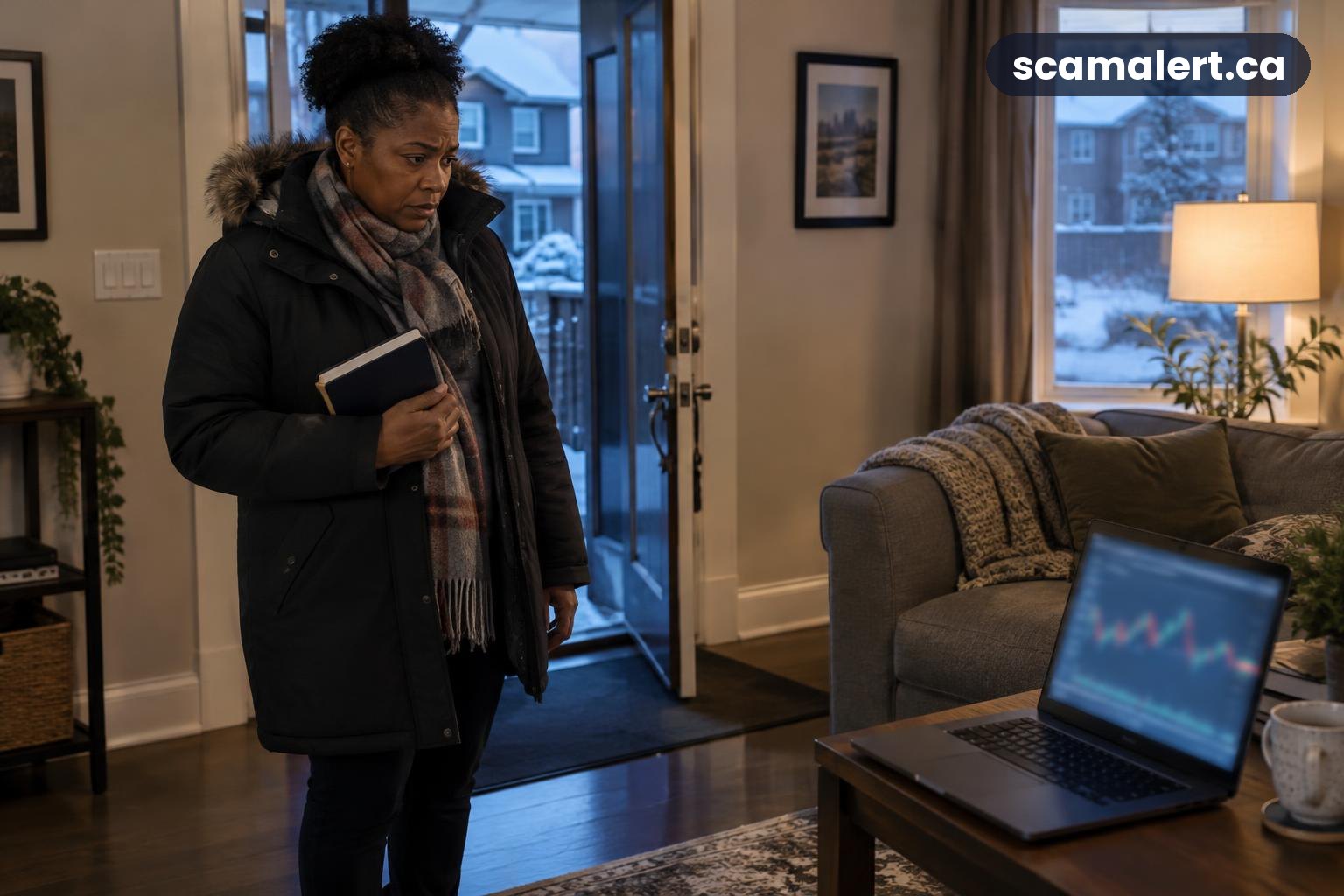
AI trading bot scams may promise that software can grow your money with little effort, but no bot can guarantee investment profits. Before investing, check who is offering the service, how it is regulated, how you can withdraw funds and whether the promised returns make sense.
An “AI” label is not proof that a trading system works or that an investment is legitimate. Treat the offer like any other investment: pause, verify it independently and do not risk money you cannot afford to lose.
How AI trading bot scams work
A promoter may advertise software that claims to analyse markets and place trades automatically. You might be asked to pay a fee, transfer money to an investment account, or buy cryptocurrency and send it to a wallet. The pitch may describe the system as easy to use or suggest that it can make trading decisions for you.
Some fraudulent investment pitches use a website or app that displays account balances, charts or apparent profits. A displayed balance is not proof that money has been invested or that it can be withdrawn. If the operator controls the account or platform, the numbers shown there may not reflect funds you can access.
After an initial payment, a promoter may encourage you to add more money to increase your returns or unlock a feature. If you try to withdraw, you could be asked to pay extra charges or provide more personal or banking information. Do not send another payment just because someone says it is needed to release your own funds.
AI trading bot scams can also involve a real trading service being misrepresented. A genuine company, software tool or exchange may be impersonated, or its name may be used without permission. Verify the offer using contact details you find independently, rather than details supplied by the person promoting it.
Common AI investment pitch variations
These offers may appear in different places, including social media, online advertisements, websites, group chats or direct messages. A post may lead to a sign-up page, while a person who contacts you may offer to explain the system or help you make an initial deposit. The channel alone does not prove an offer is fraudulent, but it is not a substitute for verification.
A promoter might describe the software as a hands-off way to trade stocks, foreign currencies or cryptocurrency. Another may say you can copy a system or follow instructions from an automated account. Whatever the product is said to trade, ask who holds the funds, what legal entity operates the service and how you can independently confirm those details.
Some pitches lean heavily on technical language, charts or claims about machine learning. Others may focus on testimonials or screenshots showing supposed profits. These materials can be easy to present and difficult to verify. Look for clear, independently checkable information about the people and organization behind the offer, not just explanations of how the technology supposedly works.
Scams can also begin with a small deposit or a demonstration account that appears to perform well. That experience should not be treated as proof of reliable returns. Before sending funds, confirm that the investment and the people selling it are properly registered where required, using an official securities regulator’s website. The Canadian Securities Administrators provides information to help investors check securities-related matters.
Red flags in AI trading bot scams
- Guaranteed or unusually consistent profits: Investment returns cannot be assured, and market prices can move against you.
- Pressure to act quickly: You are told an opportunity is about to close or that you must deposit more right away.
- Unclear ownership: The promoter will not give you the legal name and location of the company operating the service.
- Hard-to-check registration: You are given a registration claim but cannot confirm it using an official regulator.
- Requests to pay in cryptocurrency: You are directed to send funds to a wallet or account you do not control.
- Withdrawal obstacles: You are asked for additional payments before you can access your funds.
- Proof that is only promotional: The pitch relies on screenshots, testimonials or charts that cannot be independently verified.
- Requests for sensitive access: Someone asks for passwords, banking sign-in details, verification codes or remote access to your device.
Questions to ask before using an AI trading bot
Use these questions before opening an account or transferring money. If the answers are vague, inconsistent or difficult to verify, stop and take time to check them. A confident explanation is not the same as independent evidence.
- Who operates the service? Ask for the legal name of the company and the names of the people responsible. Verify the information independently. Be cautious if the promoter uses only a first name, a social media profile or an informal group chat.
- Is the seller or firm registered where required? Check through an official securities regulator, using the firm’s exact legal name. Do not rely on a certificate, badge or link sent by the promoter. Registration is not a promise of profits, but a claim that cannot be confirmed is a serious reason to pause.
- Where will my money go? Find out who holds the funds, whose name the account is in and whether you are being asked to send money to a personal account or a crypto wallet. Make sure you understand who has control over the funds.
- How does the service make money? Ask about fees, commissions, subscriptions and other costs, including when they apply. Request the terms in writing and read them before agreeing. Do not accept “no fees” as a complete answer if other charges may apply.
- What risks could cause a loss? Ask what could go wrong and whether you could lose some or all of your investment. If the answer is that losses cannot happen, or that the bot guarantees a particular result, do not treat that as a credible risk explanation.
- Can I withdraw without paying more? Read the withdrawal terms and find out how to close the account. Do not rely on a salesperson’s verbal assurance. Requests for new payments to release a balance deserve careful scrutiny.
How to protect yourself from AI trading bot scams
Do not invest because a message, advertisement or new contact creates urgency. Take a break and search for the firm and its claims independently. Use official regulator websites and contact an organization through details you locate yourself, not a link or phone number provided in a pitch.
Keep control of your accounts and devices. Never share banking passwords, one-time verification codes or recovery phrases, and do not let a stranger connect remotely to your computer or phone. Use strong, unique passwords and secure your financial accounts with the protections offered by your bank or service provider.
Before transferring money, understand the product, fees and withdrawal process. Be especially careful if you are told to borrow, use savings needed for essentials, or move funds into cryptocurrency to take part. If you do not understand how the investment works, do not proceed until you have checked it with a qualified, independent source.
Talk the offer through with someone you trust who is not involved in selling it. A legitimate opportunity should withstand reasonable questions and time for checking. AI trading bot scams often depend on getting a person to act before they can assess the claims calmly.
What to do if you have been targeted
- Stop sending money. Do not pay extra charges or “taxes” to release funds, and do not follow instructions to transfer money to another account or wallet.
- Contact your bank or payment provider promptly. If you sent money or shared banking details, explain what happened and ask what steps may be available to protect your account or attempt to stop a transaction. Follow their instructions to secure affected accounts.
- Secure your accounts and devices. Change passwords that may have been exposed, starting with your email and financial accounts. If you shared a verification code or gave someone access to a device, tell your bank and relevant service providers.
- Save the evidence. Keep messages, emails, receipts, transaction details, account statements, website addresses and the names used by the promoter. Do not edit or delete material that may help explain what happened.
- Be cautious of recovery offers. Someone may contact you claiming they can get your money back for an upfront fee or by accessing your account. Verify any such service independently, and never share passwords or recovery phrases.
- Report the incident. Reporting can help authorities identify patterns and gives you a record of what occurred. Include the steps you took and the evidence you saved.
How to report AI trading bot scams in Canada
Report suspected fraud to the Canadian Anti-Fraud Centre online or by phone at 1-888-495-8501. You can report an attempt even if you did not lose money.
Contact your local police as well, especially if money was taken, your identity was misused or you are being threatened. If a payment or banking information was involved, notify your bank or payment provider promptly. You can also contact the securities regulator in your province or territory if the offer involved an investment or a claim about registration.
Frequently asked questions
Can an AI trading bot guarantee profits?
No. No trading method can guarantee investment profits. A claim of guaranteed returns is a reason to stop and verify the offer carefully, not a reason to invest quickly.
Does an AI label mean a bot is a scam?
Not by itself. The label does not prove that a service is legitimate, effective or suitable for you. Check the operator, registration where required, fees, risks and withdrawal terms independently.
What if the bot’s account shows a profit?
A balance or profit shown on a website or app is not proof that you can withdraw those funds. Check the withdrawal process and the organization behind the account. Do not pay additional money simply because someone says it is needed to release a displayed balance.
Can I get my money back after sending it?
There is no guarantee that funds can be recovered. Contact your bank or payment provider as soon as possible, report the incident to local police and the Canadian Anti-Fraud Centre, and be wary of anyone who promises recovery for an upfront payment.
Reviewed by our editorial team on .

The Scam Alert Team tracks fraud targeting Canadians and turns official warnings into clear, practical advice. Our team has a background in IT and cybersecurity, and every article is fact-checked against official sources before publication. How we verify alerts