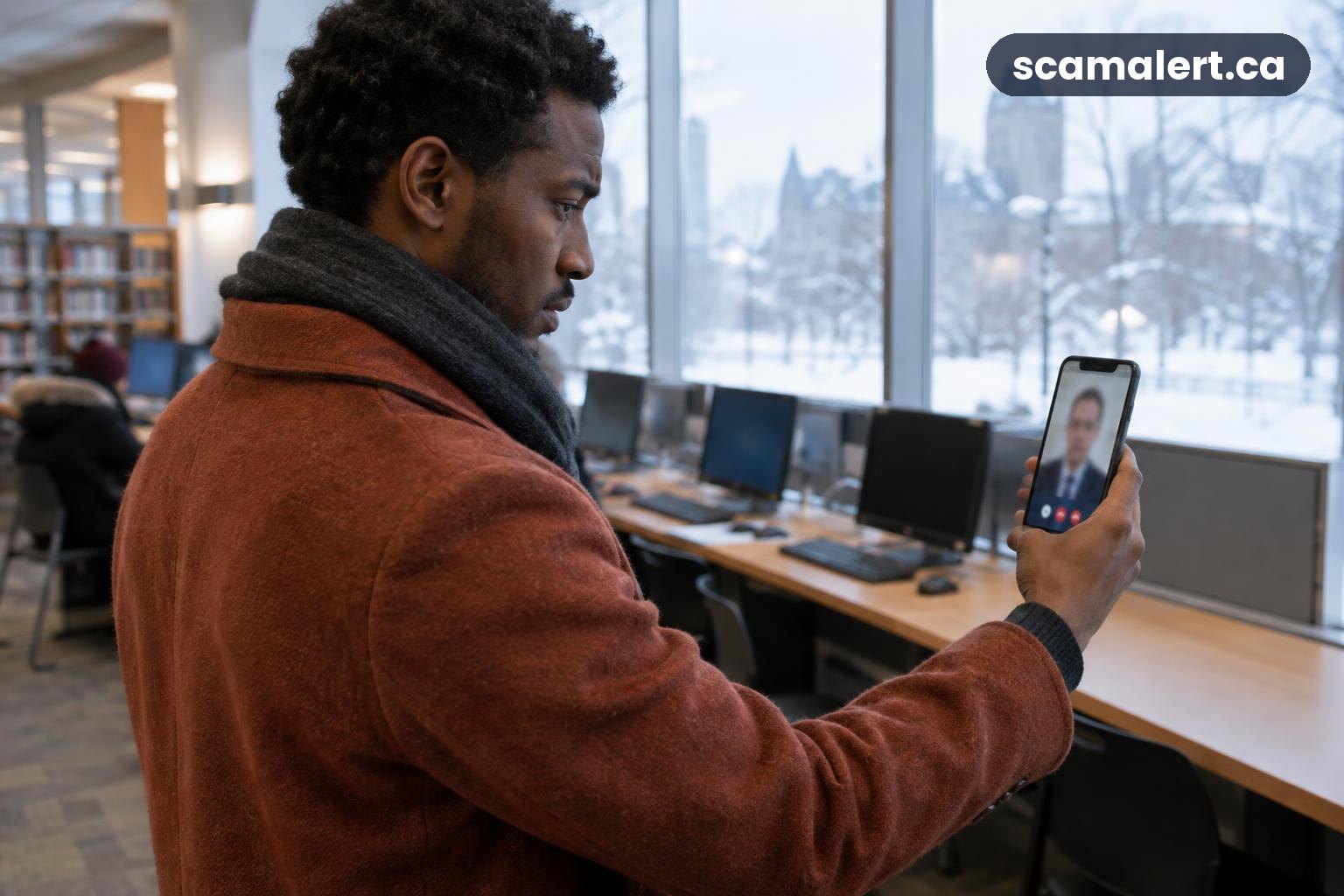
Immigration, Refugees and Citizenship Canada (IRCC) is warning newcomers about scams involving people posing as officials and content made with artificial intelligence (AI). These approaches can target people dealing with applications or other immigration matters, especially when they are worried about delays or the consequences of a mistake.
What the scam looks like
A scammer may claim to represent IRCC or another official service and contact someone by phone, email, text, social media or video. They may use official-sounding language, copied images or documents, or AI-generated audio or video to make the approach seem convincing. The warning does not mean every unusual message is a scam, but a familiar-looking name, face or voice is not proof that a contact is genuine.
The person may say there is a problem with an application, that urgent action is needed, or that a fee or personal information must be provided. They may try to keep the conversation secret or stop someone from taking time to check. These are common impersonation tactics; do not assume a message is legitimate just because it includes personal details or looks professionally prepared.
Scammers can seek money, identity information or access to accounts. Information such as passport details, application documents, passwords and verification codes can be misused. Do not send money or sensitive information because someone has contacted you unexpectedly and claimed to be an official.
Red flags to watch for
- Pressure to act immediately: The contact insists you must pay, reply or provide documents before you can verify the request.
- Unusual payment demands: You are asked to pay through a method you cannot easily reverse, or to send money to a personal account. Check any fee independently before paying.
- Requests for confidential details: Someone asks for a password, a one-time security code, banking information or identity documents through an unexpected message or call.
- Threats or promises: The person uses frightening claims about your status or offers a guaranteed outcome in exchange for money.
- Convincing but unverified media: A familiar-looking logo, official-style document, voice or video is offered as the only proof of identity.
- Resistance to independent checks: The contact discourages you from ending the conversation and using official channels to confirm what is being requested.
- Unexpected links or attachments: A message urges you to open a file or enter personal information on a page you reached through its link.
What to do if you’ve been targeted
- Pause and stop responding. Do not click links, open unexpected attachments, pay, or provide additional information. If you are on a call, end it and make your own check using contact details found independently.
- Verify the request separately. Go to the Government of Canada immigration website by typing its address yourself or finding it through a trusted search. Use official contact information from that site to ask whether the contact or request is real. Do not rely on details supplied by the person who contacted you.
- Keep evidence. Save messages, emails, call details, payment records and screenshots, if it is safe to do so. Do not forward suspicious links to others.
- Secure affected accounts. If you shared a password or security code, change the password from a trusted device and review account security. If you shared identity or application documents, seek advice through official channels about what steps may be appropriate.
- Contact your bank promptly if needed. If you sent money or disclosed banking information, tell your bank what happened and ask what protections or next steps are available. If you reused a password, change it on other accounts too.
- Ask someone you trust to help. A trusted friend, family member or settlement-support worker can help you review the contact and find official information. Take time before making a decision, even if the person claims the matter is urgent.
How to report it
Report suspected fraud to the Canadian Anti-Fraud Centre at 1-888-495-8501 or through antifraudcentre-centreantifraude.ca. You can also report the incident to your local police. If money or banking details were involved, contact your bank as soon as possible. Reporting can help document what happened and alert the appropriate organizations, even if you did not lose money.
IRCC is a real Government of Canada department. A scammer may falsely claim to represent it; the department itself is not the scammer. When in doubt, pause and verify through official channels you found independently.
Source: IRCC warns newcomers about scams using fake officials and AI-generated content – RED FM Canada
Reviewed by our editorial team on .

The Scam Alert Team tracks fraud targeting Canadians and turns official warnings into clear, practical advice. Our team has a background in IT and cybersecurity, and every article is fact-checked against official sources before publication. How we verify alerts