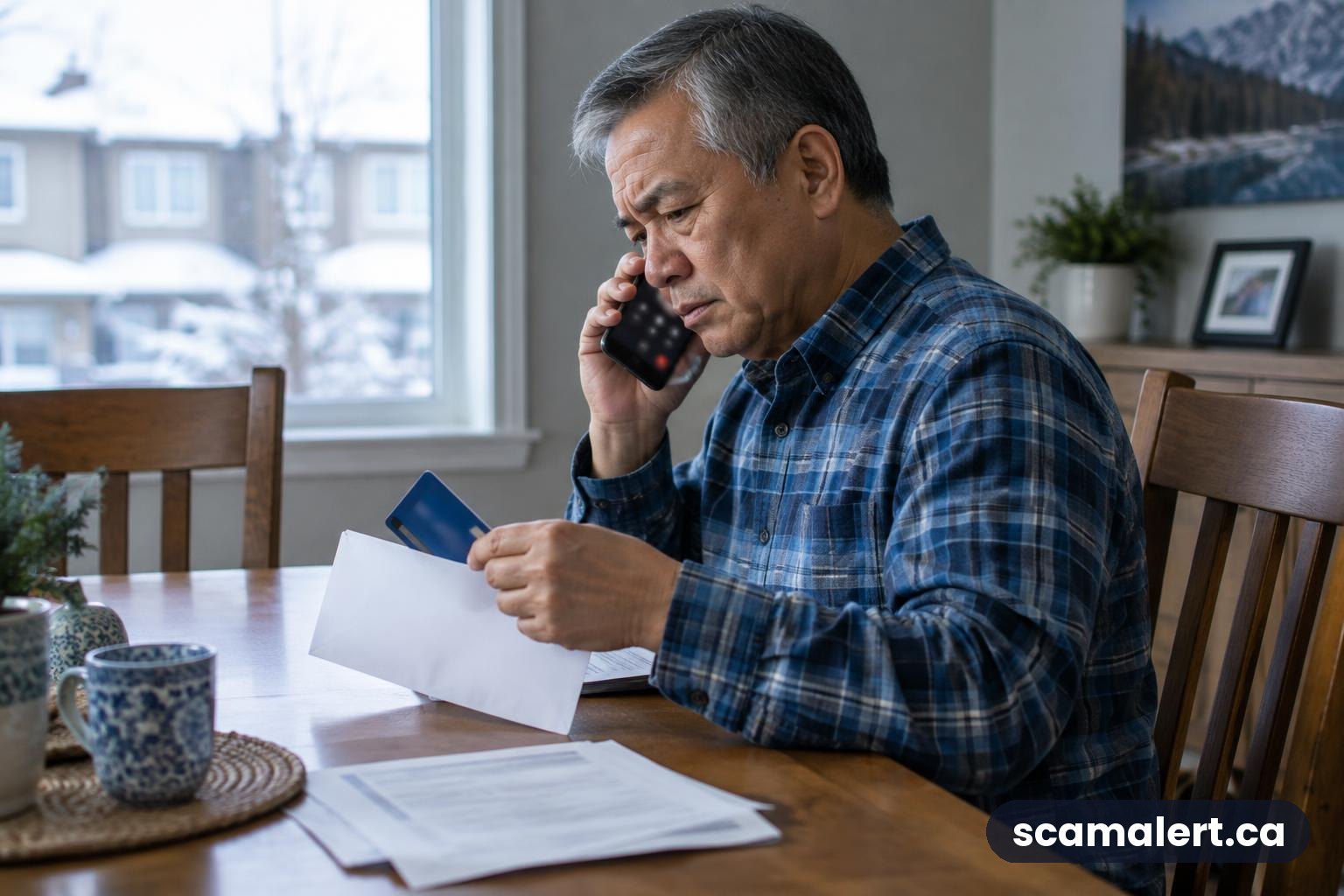
CRA scam calls are attempts by callers to impersonate the Canada Revenue Agency and trick you into sharing personal or financial information, or sending money. The caller may claim there is a tax problem, a refund or an urgent account issue. Treat unexpected demands with caution: end the call, verify the claim using contact information you find independently, and never rush into paying or sharing sensitive details.
How CRA scam calls work
In this type of impersonation scam, a caller says they represent the Canada Revenue Agency. They may use a serious tone and try to make the situation feel urgent. The story can vary: you might be told that you owe money, that a payment or refund is waiting, or that your account needs immediate attention.
The caller’s goal is to get you to act before you have time to check whether the story is true. They may ask for personal information, banking details, or a payment. In other cases, they may try to persuade you to follow instructions on your phone or computer. A caller might also ask you to stay on the line while you make a payment or contact someone else.
A convincing caller ID, official-sounding language or knowledge of some personal details does not prove that a call is genuine. Caller ID can be misleading, and information about you may come from sources unrelated to the call. Do not use the number shown on your screen as your only way to confirm who called.
These calls are made by people pretending to represent the agency. The Canada Revenue Agency is not the scammer. If you are unsure whether a request is real, pause and check through a contact method you find independently, rather than relying on instructions or numbers supplied during the call.
Common versions of the call
The details change, but the pressure and request for action are often the important clues. A caller might say you must pay a tax balance right away, or warn that something bad will happen if you do not cooperate. Another caller might offer a refund or say there is a problem with your account, then ask you to confirm information or follow a link or other instructions.
Some calls focus on getting information rather than an immediate payment. The caller may ask you to confirm your identity, provide account details, or read out a code sent to your phone. A code can sometimes let another person access an account or approve an action, so do not share it just because someone claims to be from a government agency.
Other approaches may ask you to pay in an unusual way, such as with gift cards, cryptocurrency or a transfer to a personal account. A caller may try to keep you from speaking with family, a bank or another person who could help you assess the request. These are examples of possible approaches, not proof that every unexpected call is fraudulent. The safest response is to stop and verify independently.
Warning signs to watch for
- Pressure to act immediately: The caller says you cannot hang up, take time to check, or ask someone you trust for help.
- Threats or intimidation: You are warned of serious consequences unless you pay or provide information during the call.
- Unusual payment instructions: You are told to use gift cards, cryptocurrency, cash, or a transfer to an individual or unfamiliar account.
- Requests for sensitive details: The caller asks for banking credentials, a password, a one-time security code, or information that would let them access an account.
- Instructions to install software or change device settings: You are asked to give someone remote access to your device or to follow steps you do not understand.
- Claims that you must keep the call secret: The caller discourages you from contacting your bank, family or the agency through another channel.
- Reliance on caller ID as proof: The caller insists that a displayed name or number is enough to prove their identity.
- A request to use contact details provided in the call: You are urged to call a number, visit a website or follow a link supplied by the caller instead of checking independently.
How to protect yourself
If an unexpected call claims to be about your taxes, slow things down. You do not have to resolve a demand while the caller is on the line. End the call if you feel pressured, then look up the agency’s contact information independently and use that to ask whether the matter is genuine. Do not call back using a number given by the caller or rely only on caller ID.
Keep passwords, banking information and security codes private. A request to read out a code or disclose a password should make you stop and verify. Do not give a caller remote access to your computer or phone, and do not install software at their direction. If you have questions about your account, go to it through your usual trusted route rather than following a caller’s link or instructions.
Before making any payment, check the request independently. Be especially cautious if you are asked to use a payment method that is hard to reverse, or to send money to an individual. If a caller says you cannot take time to verify, treat that pressure as a reason to pause, not a reason to comply.
It can help to tell family members, including older relatives and young adults, that official-sounding calls can be impersonations. Agree on a simple plan: hang up, check independently, and ask someone trusted before sending money or sharing sensitive information. If a caller claims to be helping you recover money lost in an earlier scam, be cautious as well; do not pay an unexpected caller or share account details to get supposed help.
What to do if you have been targeted
- End the interaction. Hang up and stop replying to messages from the caller. Do not follow further instructions or use contact details they provided.
- If you shared a password or security code, secure the affected account. Change the password using a trusted route, and contact the relevant service provider if you cannot access the account or need help protecting it.
- If you shared banking details or sent money, contact your bank or financial institution promptly. Explain what happened and ask what steps are available to protect your account or address the transaction. Do not wait to see whether the caller contacts you again.
- Protect other accounts that may be affected. If you reused a password, change it on other accounts too. Watch for unexpected account activity and be alert to follow-up calls or messages.
- Keep relevant information. Write down what you remember, including what the caller claimed and what information or payment you provided. Keep messages or other records that may help when you contact your bank or make a report. Do not keep engaging with the caller to collect more information.
- Tell someone you trust. A trusted person can help you decide what accounts to secure and support you in making reports. Being targeted does not mean you did anything wrong; these calls are designed to create pressure and confusion.
How to report CRA scam calls in Canada
Report suspected fraud to the Canadian Anti-Fraud Centre at 1-888-495-8501 or through antifraudcentre-centreantifraude.ca. You can report an attempt even if you did not lose money. Provide what you know, but do not contact the caller again to gather more details.
Contact your local police service to report the incident, particularly if you lost money, someone accessed your accounts or you feel threatened. If money or banking details were involved, contact your bank or financial institution as soon as possible as well. These steps serve different purposes, so making one report does not replace contacting the others.
If you are unsure whether a call was genuine, you can still take a cautious approach: end the call and check using contact information you find independently. Reporting suspicious activity can help you get guidance and ensure the incident is recorded.
Frequently asked questions
Does a CRA caller ID mean the call is genuine?
No. Caller ID is not enough to confirm who is calling. Hang up if you are uncertain and verify the issue using contact information you find independently.
Should I pay during an unexpected call about a tax bill?
Do not let a caller rush you into paying. Stop the conversation and check the claim independently before taking action. Be cautious of demands for gift cards, cryptocurrency or transfers to an individual.
What if I only answered the call?
Answering by itself does not mean the caller has access to your accounts. Do not share information, codes or money. If you did not provide anything or follow instructions, end the call and be cautious about later contact.
Where should I report a CRA impersonation call?
Report it to the Canadian Anti-Fraud Centre and your local police. If you shared banking details or sent money, contact your bank or financial institution promptly too.