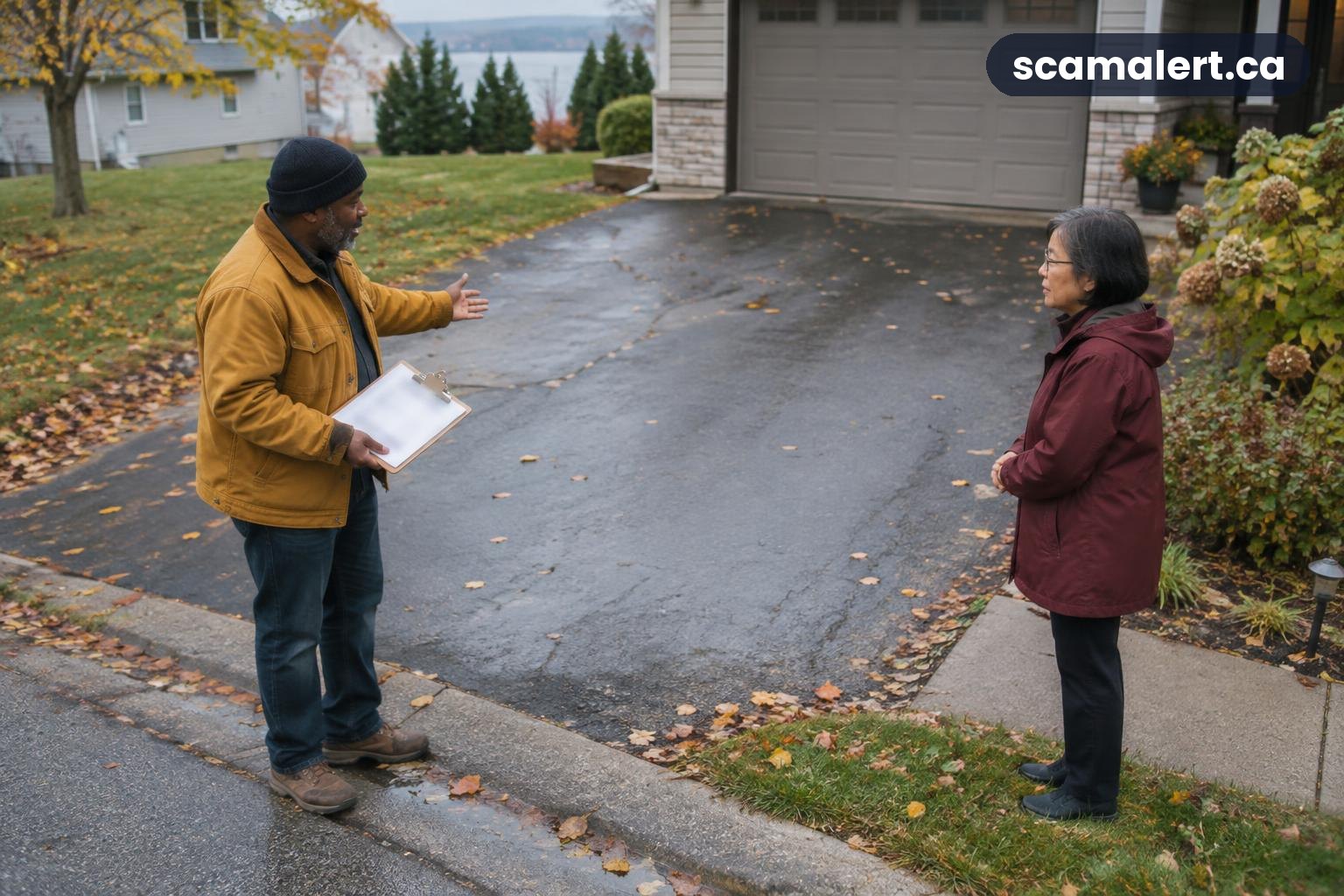
A CTV News headline reports that driveway paving scammers have been reported to Sault police. The headline does not give details about the people involved or how the offers were made, but homeowners anywhere in Canada can take steps to check a paving contractor before agreeing to work or handing over money.
A paving business offering services is not automatically suspicious. The concern is when someone uses pressure, unclear terms or misleading promises to get a customer to pay for work that may be incomplete, poor quality or never done.
What the scam looks like
In a paving scam, a person may offer to repair or pave a driveway and ask the homeowner to agree quickly. The offer could come in person, by phone or through another kind of contact. The report in Sault, Ontario does not describe the approach used, so these are general examples of how a paving offer might raise concerns—not details confirmed in that report.
A dishonest operator might make a claim about having leftover materials, offer a price that is only available immediately, or request a large payment before work begins. They may give little information about the business, the materials, the job’s scope or what happens if there is a problem. In some cases, the work may not match what was agreed to.
Even a real contractor can have different prices, timelines and workmanship. Reduce the risk of a costly dispute by getting the terms in writing and comparing the offer with other contractors. Do not assume that a polished vehicle, equipment or confident sales pitch proves a business is reliable.
Red flags to watch for
- Pressure to decide immediately: You are told the price or opportunity will disappear unless you agree on the spot.
- Vague details: The person will not clearly explain what the job includes, what materials will be used, or when the work will be completed.
- No written estimate or contract: You are expected to rely on a verbal promise instead of getting the price and terms in writing.
- Unusual payment demands: You are asked for a large amount upfront, cash only, or payment before you have checked the business and agreement.
- Hard-to-check business information: The person will not provide a business name, contact details or references you can independently verify.
- Uninvited work offer: Someone appears at your home and says they can start right away, without giving you time to compare offers or seek advice.
- Changing terms: The price, materials or scope of work changes after you have agreed, especially if you are pressured to pay more.
What to do if you’ve been targeted
- Pause the conversation. You do not need to agree or pay while someone is waiting. Ask for the offer in writing and take time to consider it.
- Check the contractor independently. Look for business contact information and seek references. Contact references yourself, and compare written estimates from more than one contractor. Do not rely only on information supplied by the person making the offer.
- Read the agreement before signing. Make sure it describes the work, materials, total price, payment schedule and expected timing. Keep a copy of estimates, contracts, messages and receipts.
- Do not pay more because of pressure. If work has started or a payment is requested, review what you agreed to and ask for a clear explanation. Avoid giving anyone your banking passwords, one-time security codes or remote access to your devices.
- If you have paid or shared financial details, contact your bank promptly. Explain what happened and ask whether the payment can be stopped or whether your accounts or cards need protection. Save any records and take photographs of work or damage, if relevant.
- If someone is at your home and you feel unsafe, do not let them in. Move to a safe place and contact local police if you need immediate help.
How to report it
Report suspected fraud to the Canadian Anti-Fraud Centre at 1-888-495-8501 or through antifraudcentre-centreantifraude.ca. You can also contact your local police, including Sault police if the incident happened in that area. Share relevant records, such as messages, estimates, receipts and payment details.
If you sent money or provided banking information, contact your bank as soon as possible. Your bank can explain what steps may be available to secure your account or respond to the payment. Reporting promptly gives the appropriate organizations information about what happened and may help protect you from further loss.
Source: Driveway paving scammers reported to Sault police – CTV News
Reviewed by our editorial team on .

The Scam Alert Team tracks fraud targeting Canadians and turns official warnings into clear, practical advice. Our team has a background in IT and cybersecurity, and every article is fact-checked against official sources before publication. How we verify alerts