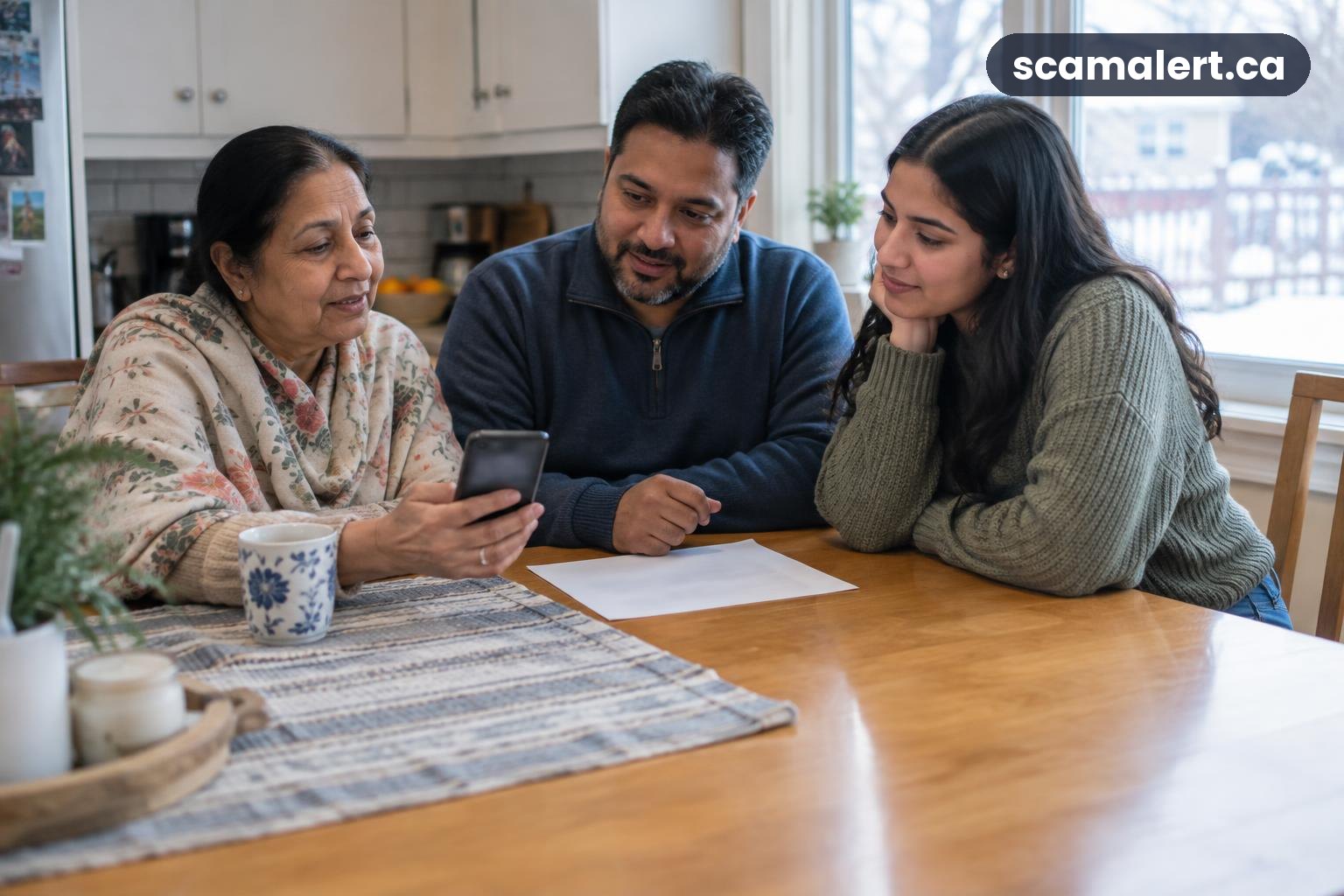
The grandparent scam uses a made-up family emergency to pressure people into sending money, often by pretending a relative is in trouble. WPTZ reports that a man was sentenced in Vermont for participating in a grandparent scam; Canadians can use that reminder to discuss how to verify urgent requests with family members.
What the scam looks like
In a common version of the grandparent scam, someone calls or messages an older adult and claims to be a grandchild or another relative. The caller may say they have been arrested, are in an accident, need medical help or are stranded. They may sound frightened and insist that money is needed immediately.
The person may claim that a lawyer, police officer or another helper is speaking on the relative’s behalf. A second caller can reinforce the story or give instructions about how to send money. These details are meant to make the emergency sound believable, not to prove that it is real.
Scammers may have some personal information about a family, or they may keep details vague and encourage the recipient to guess who is calling. If the person says a name, the caller can adopt it. A familiar-sounding voice is not proof of identity, either; callers can imitate someone or use recordings and other technology to mislead a listener.
The request may be to send money by a method that is difficult to reverse, or to hand cash to someone. The exact method can vary. Treat any unexpected, urgent request for money as something to verify independently, even if the caller sounds like a relative or says not to tell anyone.
The Vermont case reported by WPTZ is a sentencing report. It does not establish that every call using this approach is connected to that case. For families in Canada, the useful step is to recognize the pressure tactics and agree on a way to check emergency claims before sending money.
Red flags to watch for
- Urgency and secrecy: The caller insists that you must act immediately and asks you not to contact other relatives.
- A request for money: They ask for a transfer, cash, gift cards or another payment to resolve an emergency.
- Unusual payment arrangements: Someone offers to collect cash, or the caller directs you to a payment method you do not normally use with family.
- Identity that cannot be checked: The caller avoids answering personal questions, refuses a call back or says they cannot speak freely.
- Pressure to keep talking: They try to stop you from hanging up, contacting the relative directly or discussing the request with someone you trust.
- A supposed official asks you to pay: A person claiming to be a lawyer or authority insists that money must be sent privately to fix the emergency.
- Details that keep changing: The story, payment instructions or identity of the person asking for help shifts as you ask questions.
Any one of these signs is a reason to pause. A real emergency can still be checked calmly: end the conversation, then use a contact method you already know belongs to your relative.
What to do if you’ve been targeted
- Pause and do not send money. Do not transfer funds, buy gift cards, share banking details or hand cash to a collector while you are unsure who is contacting you. A caller’s insistence that there is no time to check is a reason to slow down, not a reason to skip verification.
- Contact the relative independently. Hang up and call the family member using a number saved in your contacts or another number you already trust. Do not rely on a number supplied by the caller, and do not simply redial if you are uncertain whether the line is still connected. If the relative does not answer, try another trusted family member.
- Ask a question the caller cannot easily guess. Families can agree in advance on a private check or a simple question. Do not share passwords, security codes or banking login details as a test. A familiar voice or correct personal detail on its own should not be treated as verification.
- Check claims through independent channels. If the caller says an official or lawyer is involved, look up the organization’s contact information yourself and call it directly. Do not use a phone number, link or payment instruction provided during the suspicious conversation.
- Keep the messages and details. Save texts, emails, voicemails and payment instructions. Make a note of what was requested and when, and keep any transaction records. Do not continue engaging just to gather more information if that could put you under further pressure.
- Tell someone you trust. Contact a relative, friend or caregiver and explain what happened. This can help check the story, reduce isolation and make it less likely that another family member responds to the same approach.
- If you paid or shared banking information, call your bank promptly. Use the number on your bank card or statement, explain what happened and ask what steps may be available. If you shared a password or account access details, tell the bank and change credentials using the bank’s official website or app.
- Report the attempt, even if no money was lost. Reporting can help document the incident and alert authorities. If you believe someone is in immediate danger, contact local police or emergency services through a number you know is genuine.
How to report it
Report the incident to the Canadian Anti-Fraud Centre (CAFC), whether you lost money or only received a suspicious call or message. You can call 1-888-495-8501 or visit the Canadian Anti-Fraud Centre website. Provide the contact details, messages and payment information you have, but do not send more money to someone who claims they can recover a loss for a fee.
Contact your local police to report the incident, especially if money was collected in person, a threat was made or you have information that may help identify the person involved. If money or banking details were involved, contact your bank right away using its verified contact information. Ask what action to take on the account or transaction and follow its instructions.
Reporting does not guarantee that money can be recovered, but acting quickly gives your bank and police the chance to advise you about next steps. Keep a record of who you contacted and when, and share the warning with relatives who might receive a similar call.
Family emergency impersonation: practical prevention
Talk about the grandparent scam before anyone receives a frightening call. Agree that family members will verify urgent requests by calling a known number and will check with another relative before sending money. Keep the plan simple enough that everyone can remember it, including older adults and family members who may not use messaging apps.
Consider choosing a family check phrase for situations where someone genuinely needs help. Keep it private and do not send it in an ordinary message where it could be exposed. A check phrase is only one safeguard; still confirm the person’s identity and the circumstances through a separate, trusted contact method.
Make it clear that asking for a second opinion is sensible, not disloyal. Anyone who is pressed to keep a supposed emergency secret can say they need to verify the request first. A genuine relative should understand that checking protects the whole family.
Frequently asked questions
Should I hang up if the caller says they are a relative?
Yes, if you are unsure. Hang up and call the relative back using a number you already have. If the caller claims the relative cannot be reached, contact another trusted family member and check the story independently before taking any financial action.
What if I already sent money?
Contact your bank immediately if a bank account, card or transfer was involved, and report the incident to local police and the Canadian Anti-Fraud Centre. Keep receipts, messages and call details. Do not pay anyone who contacts you promising to recover the money in exchange for an upfront fee.
Can scammers make a call sound like someone I know?
A familiar voice alone is not reliable proof of identity. End the call and verify through a known number or another family member. Agreeing on a private check in advance can also help, but never share banking passwords or security codes to prove who you are.
Source: Man sentenced in Vermont for participation in grandparent scam – WPTZ
Reviewed by our editorial team on .

The Scam Alert Team tracks fraud targeting Canadians and turns official warnings into clear, practical advice. Our team has a background in IT and cybersecurity, and every article is fact-checked against official sources before publication. How we verify alerts