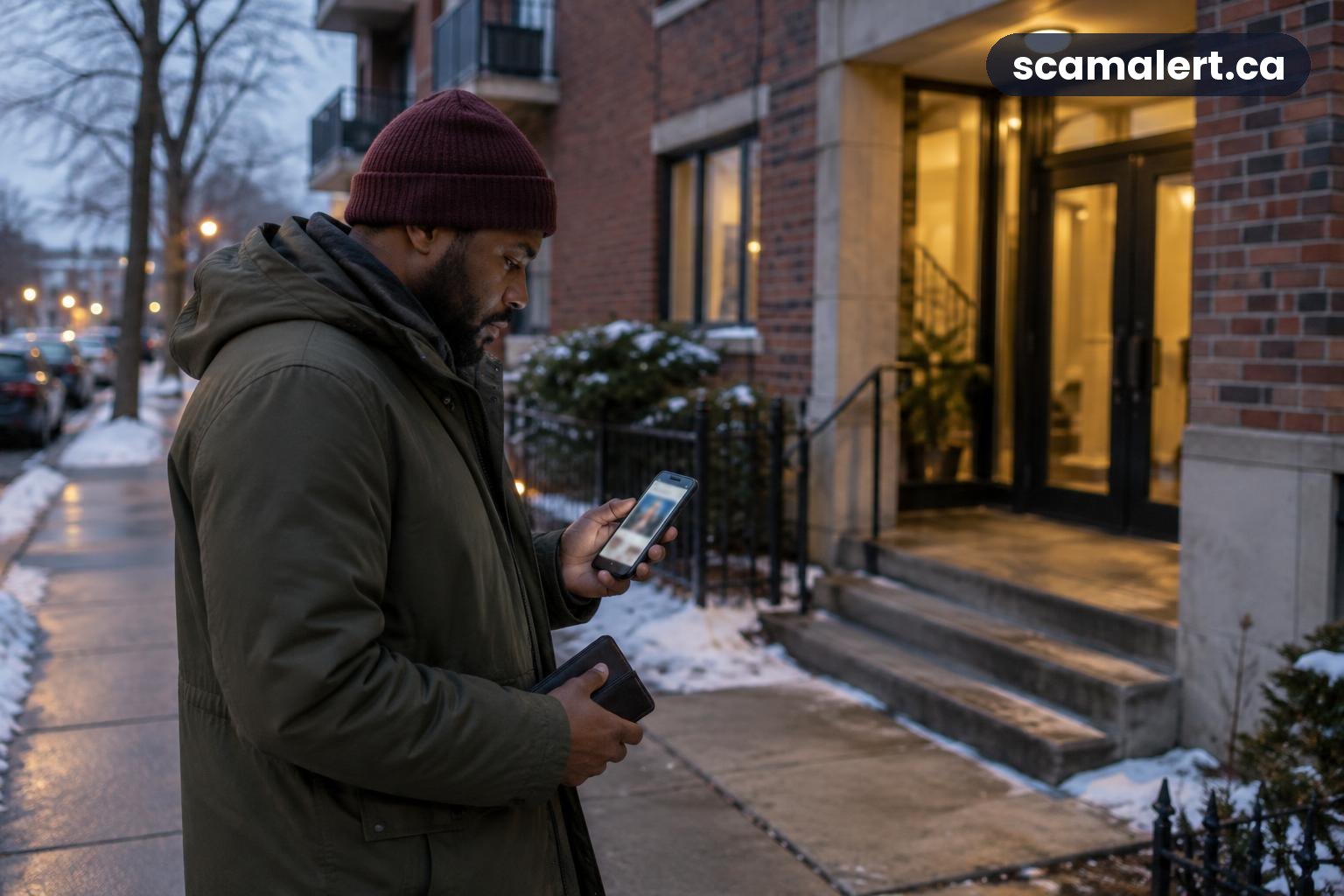
A rental listing that asks you to send a deposit before you have seen the home deserves careful checking. Scammers may use real-looking photos and details to advertise a place they do not control, then disappear after payment. Before sending money, confirm the unit exists, meet someone authorized to rent it, see the exact home and check the rules where you live. Rental deposit rules differ across Canada, so do not assume that a requested payment is allowed just because a landlord asks for it.
How rental deposit scams work
A scammer advertises a house, apartment or room for rent, often using photos and details that make the listing seem convincing. They may copy a genuine listing, invent one, or claim to be renting out a property they do not own or manage. The person may communicate by email, text or an online platform and offer a reason they cannot show the unit themselves.
After you express interest, they may say there are many applicants or that you must act quickly. They ask you to pay a deposit, first month’s rent or another fee to reserve the place, arrange a viewing or receive the keys. The requested payment might be through a bank transfer, payment app, cash or another method. Once they receive money, they may stop replying, block you or provide excuses for delaying access.
Some listings involve a real property, but the person posting them has no authority to rent it. They might pose as the owner, property manager or current tenant. In other cases, a scammer may be trying to collect personal information as well as money, using an application form or identity documents to make the interaction seem routine.
A polished advertisement, a friendly conversation or a document that looks official does not prove that the person has the right to rent the home. Nor does a video tour alone establish that the person controls the unit. Verify the property and the person’s authority independently before paying.
Variations renters may encounter
Rental listing scams can appear on classified-ad websites, social media, community groups and other online channels. A listing may use photos or wording taken from a legitimate advertisement. If you find the same home advertised with different contact details, prices or availability, pause and check which person is authorized to rent it.
A poster may say they are out of town, working overseas or otherwise unable to meet. They might offer to mail keys after payment or arrange for someone else to show the unit. These explanations are not proof of wrongdoing on their own, but they make it harder for you to confirm who you are dealing with. Do not send money just because a person gives a plausible reason for avoiding an in-person viewing.
Another version involves a real tenant offering a room or sublet without having permission to do so. Ask who owns or manages the property and whether the person has authority to rent the unit or room. If the person says they are a tenant, ask what approval is needed and confirm it with the property owner or manager using contact information you find independently.
Some people are asked to pay for an application, a viewing, a background check or a reservation before they can see the home. There can be legitimate processes and charges in some rental situations, but rules differ by province and territory. Check with your local tenancy or consumer-protection authority rather than relying only on what the advertiser tells you.
Red flags to watch for
- Payment is demanded before you see the exact unit. Be especially cautious if the person says the payment is the only way to arrange a viewing or hold the home.
- You are pressured to act immediately. Claims that you will lose the place unless you pay right away can make it harder to check the details.
- The person avoids a direct viewing. They may keep cancelling, offer only a virtual tour, or say keys will be sent after payment.
- The contact details or listing information do not match. Look for conflicting names, descriptions, prices, photos or availability across advertisements.
- You cannot confirm who is authorized to rent the home. A name, profile or copy of an ID is not, by itself, proof of ownership or authority.
- You are asked to use a payment method you cannot comfortably trace or question. Be wary of unusual instructions, including requests to send money to someone unrelated to the rental.
- The person requests more personal information than seems necessary. Do not send identity documents or banking details simply to prove you are interested.
- The explanation changes when you ask for verification. A legitimate rental process should allow reasonable questions and time to check details.
One warning sign does not prove that a listing is fraudulent. Taken together, however, pressure, lack of access and unverifiable claims are reasons to stop and investigate before paying.
How to protect yourself before paying
Arrange to see the exact property in person, including the room or unit you would rent. If an in-person visit is not possible, do not treat a video call as complete verification. Ask questions, request a live view of the specific home and take further steps to confirm the person’s authority. If the person will not allow reasonable checks, look for another rental.
Find the owner or property manager’s contact details independently. For example, if a listing claims to be managed by a company, look up that company through a source other than the contact information in the advertisement, then ask whether the listing and representative are genuine. If a tenant is offering a sublet, confirm any required permission with the owner or manager.
Compare the listing’s photos and wording with other advertisements for the same address. Reused images or inconsistent details are reasons to ask more questions. Keep in mind that finding a matching advertisement does not by itself tell you which poster is legitimate.
Before paying, check the rental deposit rules in your province or territory. The types of deposits permitted and the limits that apply can differ. Ask for a written agreement that identifies the property, the parties, the amount and what the payment covers. Get a receipt and keep copies of messages and payment records. Do not rely on a verbal promise that money will be returned if the rental does not proceed.
Use a payment method and process you understand, and do not let pressure push you into sending money to an unrelated person or account. A payment may be difficult to recover once it has been completed. Never share online banking passwords, one-time security codes or other account access details with someone advertising a rental.
Protect your personal information, too. Ask why sensitive information is needed, who will receive it and how it will be handled. Avoid sending copies of identity documents or banking information before you have verified the person and the rental process. If you do provide documents later, share only what is required and consider whether any information can be safely obscured.
What to do if you have been targeted
- Stop sending money and information. Do not pay another fee to release keys, recover a deposit or fix an alleged payment problem until you have independently checked the claim.
- Contact your bank or payment provider quickly if you paid. Explain what happened and ask whether the transaction can be stopped, recalled or otherwise addressed. Recovery is not guaranteed, but acting promptly gives the provider a chance to review it.
- Save the evidence. Keep the advertisement, messages, emails, phone details, payment records, agreement and any documents you received. Take screenshots if the listing or conversation may be removed.
- Protect accounts and personal information. If you shared a password or security code, change the password and contact the relevant provider. If you shared identity information, watch for unexpected account activity and ask the organization that issued the document what steps it recommends.
- Tell the listing platform. Report the advertisement and account using the platform’s reporting tools. This may help the platform review the content, but it does not replace reporting to police or the Canadian Anti-Fraud Centre.
- Check your housing options with a local service. If you are already in a tenancy or have questions about a deposit, contact the tenancy authority or consumer-protection office for your province or territory. Rules and remedies vary by location.
How to report a rental listing scam in Canada
Report suspected fraud to the Canadian Anti-Fraud Centre at 1-888-495-8501 or through antifraudcentre-centreantifraude.ca. Include what happened, how the person contacted you and what information or money you provided. You can report even if you did not lose money.
Contact your local police to report the incident, particularly if money was taken, identity information was misused or you believe someone is using a real address without permission. If money or banking details are involved, contact your bank as soon as possible. Also report the listing to the website or service where you saw it, and contact your provincial or territorial tenancy or consumer-protection office for guidance about rental rules.
Frequently asked questions
Should I ever pay a rental deposit before viewing the home?
Do not send money just to secure a viewing or because an advertiser says you must act quickly. First confirm the exact home and the person’s authority to rent it. Deposit rules vary across Canada, so check your local rules before agreeing to any payment.
Is a video tour enough to verify a rental listing?
A video tour can help you see a property, but it does not prove that the person on the call owns or manages it. Verify their authority separately and be cautious if they will not let you see the exact unit or answer reasonable questions.
What if the listing is real but the person is not the landlord?
Pause before paying. Contact the owner or property manager through independently found contact details and confirm that the person is authorized to rent the unit. If the offer is a sublet, ask what permission is required and verify it.
Can I get my deposit back after being scammed?
There is no guarantee that a payment can be recovered. Contact your bank or payment provider promptly and report the incident. Keep all messages, advertisements and payment records to support your report.
Reviewed by our editorial team on .

The Scam Alert Team tracks fraud targeting Canadians and turns official warnings into clear, practical advice. Our team has a background in IT and cybersecurity, and every article is fact-checked against official sources before publication. How we verify alerts