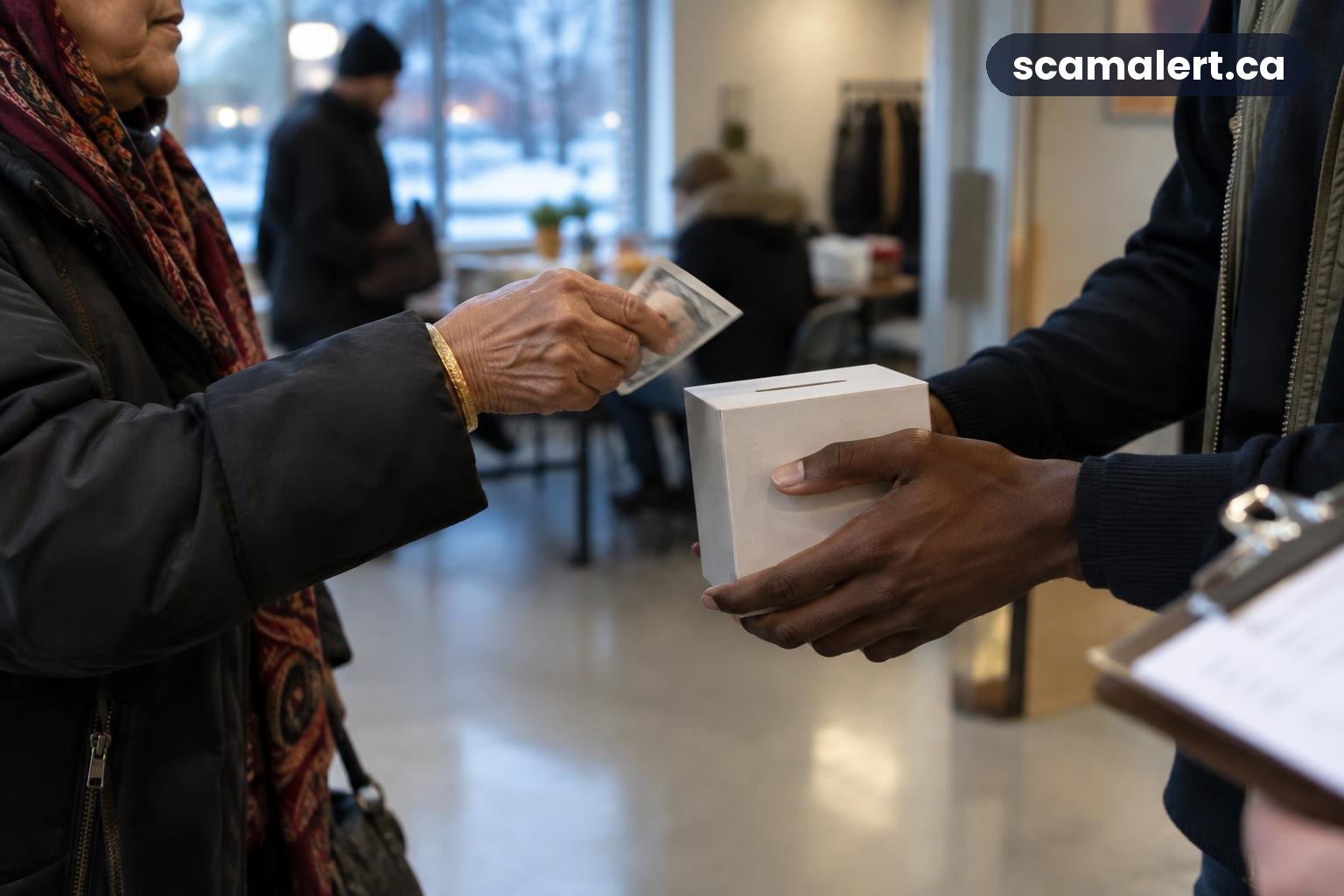
Charity scams can involve a fake organization, a copied fundraising page or someone pretending to collect for a real cause. Before donating, pause and check the charity and the payment route through contact details you find independently. A few simple checks can help you give to the cause you intend to support without being rushed into a risky payment.
How charity scams work
A dishonest fundraiser may use a convincing name, images and story to make an appeal seem genuine. They may contact you by phone, email, text message, social media, a website or in person. The request might claim that people need urgent help, or suggest that a donation must be made right away.
Some appeals use the name of a real charity without its permission. Others may direct donors to a lookalike website or to a personal payment account. In either case, the organization being impersonated is not responsible for the false appeal. A real charity’s name or logo appearing in a message does not prove that the message came from it.
The person collecting money may ask you to use a payment method that is hard to reverse, or ask for personal or banking details beyond what you expected to provide. A request like this does not by itself prove a crime, but it is a reason to stop and verify before continuing.
Charity scams rely on donors acting before they have time to check. You do not have to decide during a call, at a door or while reading a message. A legitimate fundraiser should allow you to take time to confirm who is asking and where your donation will go.
Ways charity scams can appear in Canada
Fundraising requests can arrive through many channels, and the format alone does not establish whether an appeal is genuine. For example, a message shared on social media might link to a fundraising page with a familiar charity’s name, while the page itself is run by someone else. Check the page and organizer rather than relying on a post being widely shared.
A person collecting in public or going door to door might say they represent a charity. Ask for the organization’s full name and a way to verify the campaign. If you are unsure, do not hand over cash or payment details on the spot; look up the charity’s contact information independently and ask it whether the fundraiser is authorized.
An appeal may also refer to an emergency or a particular person or family. Emotional stories can be sincere, but they can also be copied or used without permission. If the appeal names a charity, contact that organization directly. If it is a personal fundraiser, check who organized it, how funds will be delivered and whether the person receiving them has agreed to the appeal.
Some donors may receive a follow-up message claiming there is a problem with a donation or asking them to pay an extra fee. Do not follow a new link or provide banking information just because the sender knows you donated. Use contact details from the charity’s independently located website or your own donation record.
Red flags in charity scams
One warning sign is pressure to give immediately, especially if the fundraiser discourages questions or says you cannot donate later. Another is a payment request that does not match the way you expected to donate. Take time to verify instead of letting urgency make the decision for you.
- The person cannot clearly explain the charity’s full name, purpose or how the money will be used.
- A message or page uses a name similar to a known organization but has different contact details or a web address that does not match information you find independently.
- You are asked to pay a personal account or use a method you cannot comfortably verify, such as sending gift cards or cryptocurrency.
- The fundraiser wants your banking password, one-time security code or other information that is not needed to make a donation.
- You are told not to discuss the request with anyone, or are discouraged from contacting the charity directly.
- A receipt is promised as proof that an appeal is genuine. A receipt or logo alone does not establish who received the money.
- The person becomes hostile when you ask for time, written information or a way to confirm the campaign.
How to check a charity before donating
Start by finding the organization yourself. Do not rely only on a link, phone number or QR code supplied in an unsolicited message. Search for the charity’s official contact details separately, then ask whether the specific campaign, fundraiser or payment page is connected to it.
If the organization says it is a registered charity, you can check its details through the Canada Revenue Agency’s official information for charities. Start at the Canada Revenue Agency website and look for its charity listings. Compare the organization’s legal name and details carefully; a public-facing name may differ from the legal name.
Registration information can help you check an organization’s status, but it does not verify every person collecting money or every fundraising page using its name. Contact the charity through a channel you located independently and ask whether it authorized the appeal. If a name does not appear where you expect, ask the organization about it rather than assuming that a similar name belongs to the same group.
Look at the payment destination before you authorize anything. Confirm the recipient name and the amount, and check that the payment page is the one the charity directs donors to. Do not share passwords, one-time codes or full banking sign-in details to make a donation. If anything feels unclear, close the page and contact the charity yourself.
Decide in advance how you want to donate. Giving through a charity’s verified website or another payment route it confirms can reduce the chance of sending money to an impersonator. Keep a record of the organization, amount, date and payment method so you can follow up if something seems wrong.
What to do if you have been targeted
- Stop communicating and do not send more. Do not pay a supposed refund fee or follow-up charge, and do not share additional personal, banking or security information. If you are still deciding, take time to verify the appeal independently.
- Save the details. Keep messages, emails, web addresses, receipts, screenshots and notes about what was said. Record the payment method and any information you shared. Do not forward a suspicious link to other people as a way of warning them.
- Contact your bank or payment provider promptly if money or banking details were involved. Explain what happened and ask what steps are available to protect your account or try to stop or dispute a payment. Follow the provider’s instructions, and change affected passwords from a trusted device if you shared them.
- Contact the real charity through independently verified details. Tell it that someone may be using its name and share the information you saved. This gives the organization a chance to check the appeal and advise you about its campaign.
- Secure any affected accounts. If you shared a password or security code, contact the relevant service using its official contact information. Do not respond to a new caller or message claiming they can recover your donation for a fee.
- Report the incident. Reporting can help create a record and alert the relevant organizations. Include the details you saved, even if you did not lose money.
How to report charity scams in Canada
Report suspected fraud to the Canadian Anti-Fraud Centre online at antifraudcentre-centreantifraude.ca or by phone at 1-888-495-8501. You can report an attempt even if you did not send money.
You can also contact your local police. If money was taken or you provided banking information, contact your bank or payment provider as soon as possible. Give each organization the records you kept, and use contact details you have independently confirmed.
If someone is claiming to represent a real charity, notify that charity using its verified contact details as well. Do not accuse the named organization based only on an unsolicited appeal: it may be an impersonation, not an appeal the charity created or approved.
Frequently asked questions
How can I tell if a charity appeal is real?
Confirm the charity’s name and campaign using contact information you find independently. Check any claimed registration through the CRA, and ask the organization whether it authorized the particular fundraiser or payment page.
Is a registered charity’s name enough to trust a donation request?
No. A real charity’s name can be copied or used by someone who is not authorized to collect donations. Verify the individual appeal and where the payment will go, not just the name shown on a message or page.
Should I donate when someone says the appeal is urgent?
You can choose to donate later, after checking. Do not let pressure replace verification. Find the organization’s details yourself and use a payment route it confirms.
What if I shared information but did not donate?
Contact the relevant bank or service if you shared banking information, a password or a security code. Secure affected accounts and report the attempt to the Canadian Anti-Fraud Centre and your local police.
Reviewed by our editorial team on .

The Scam Alert Team tracks fraud targeting Canadians and turns official warnings into clear, practical advice. Our team has a background in IT and cybersecurity, and every article is fact-checked against official sources before publication. How we verify alerts