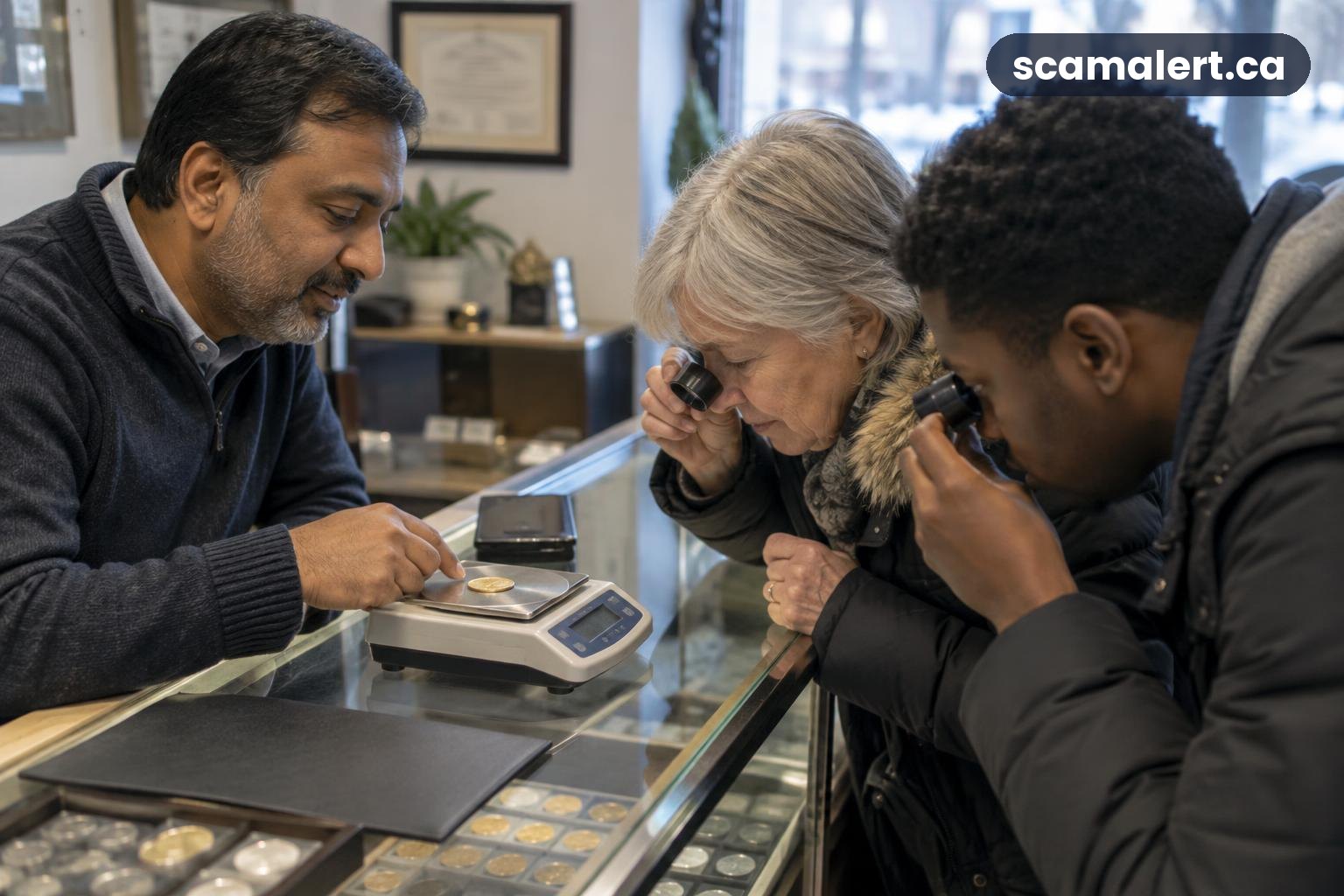
A gold purchase scam is the subject of an RCMP warning reported by Yahoo News Canada. The headline does not give the location, explain how the scam works or identify who is being approached, so anyone considering buying gold should take care to verify the seller and the transaction before paying.
What the scam looks like
The available report says only that the RCMP warned about a scam involving the purchase of gold. It does not provide enough detail to say whether people are contacted online, by phone or in person, or whether the offer involves coins, bars, jewellery or another product. Those details matter, so do not assume a message or sales pitch is part of this particular warning just because it mentions gold.
In general, a gold purchase scam may take different forms. A seller could offer gold that is not genuine, misrepresent its weight or purity, or take payment without delivering what was promised. An offer might also combine a gold purchase with claims about profits or investment returns. These are general risks to consider, not confirmed details about the RCMP warning.
Gold can be sold through different kinds of businesses and private sellers. A polished website, professional-looking paperwork or confident sales pitch does not, on its own, prove that the product is authentic or that the seller will honour the agreement. Check each part of the transaction independently instead of relying on how convincing it looks.
Before committing, find out exactly what is being sold and how the seller describes it: for example, the type of item, its stated weight and purity, the full price, and any fees or conditions. Ask for those details in writing. If the answers are vague, change during the conversation or are difficult to verify, pause rather than paying to keep an offer available.
Red flags to watch for
- Pressure to decide immediately. A seller may say you will lose a special price or opportunity unless you act right away. Take time to check the offer; a legitimate purchase should allow you to understand what you are buying.
- Payment that is hard to reverse. Be cautious if you are asked to pay by wire transfer, cryptocurrency, gift card or another unusual method, especially if the seller will not accept a safer, traceable option. Do not send money simply because a seller says the method is required.
- Unclear product details. Be wary when the seller cannot clearly explain the item’s weight, purity, price, delivery arrangements or return terms. Do not rely on a verbal promise if important terms are missing from the written agreement.
- Claims of guaranteed profit. Gold prices can change, and no sales pitch should be treated as proof that you will make money. Separate a purchase of a physical item from an investment claim, and do not accept guaranteed returns at face value.
- A seller who cannot be checked independently. Look for a verifiable business identity and contact information. Be cautious if the seller discourages you from checking references, asks you to keep the deal secret or gives details that do not match when checked.
- Requests for personal or banking information that are not needed. Do not share passwords, one-time security codes or remote access to your device to complete a gold purchase. Contact your bank directly if you are unsure whether a payment request is safe.
- Unusual delivery or collection arrangements. Confirm how and when the item will be handed over, and what proof you will receive. Be careful if those arrangements change after you have paid or if the seller will not put them in writing.
- Unsolicited approaches that create fear or urgency. If someone contacts you unexpectedly and insists you must buy, move money or follow special instructions, stop and verify the person and offer using contact details you find independently.
Gold purchase scam: steps to protect yourself
For an in-person or online purchase, slow the process down. Compare the seller’s claims with information from independent sources, and ask a qualified, independent professional how the item’s authenticity and stated characteristics can be checked. Do not let the seller choose the only person who verifies the gold.
Check the seller’s identity and business details using information you locate separately, rather than relying only on a link, phone number or document supplied during the pitch. Search for the business name and contact it through independently confirmed details. A search result or online review is not a guarantee, but it can help you identify questions to ask.
Read the full terms before paying. Make sure the written record describes the item, price, payment method, delivery or collection plan, and any return or refund conditions. Keep copies of messages, receipts and agreements. Do not sign or confirm anything you do not understand, and do not hand over money while key terms remain unsettled.
Pay only through a method you understand and can verify with your financial institution. Never share online banking passwords or security codes with a seller. If a payment request seems unusual, call your bank using the number on your bank card or statement—not a number provided by the person asking for payment.
If you are buying online, review the seller and the item before making a payment, and be cautious about moving a conversation away from a platform that provides transaction records or protections. Keep communication and proof of payment. If a seller changes the price or payment instructions at the last moment, stop and check the new request independently.
Think carefully about whether you are buying an item or being asked to invest. A gold purchase does not automatically mean you own gold that is stored or managed for you, and a sales pitch about future gains does not establish that an investment is sound. Ask for clear documentation and consider speaking with an independent financial professional before making a significant investment decision.
What to do if you’ve been targeted
- Stop contact and do not send more. If something feels wrong, pause the transaction. Do not pay an extra fee to release a delivery, recover a payment or prove that you are a serious buyer unless you have independently verified the request.
- Contact your bank or payment provider promptly. If you paid, shared banking details or gave access to an account, tell the institution what happened and ask what steps it can take. Request that it secure affected accounts, review transactions and explain whether a payment can be stopped or disputed.
- Secure your accounts and devices. Change passwords for any affected accounts, especially if you reused a password. If you shared a security code or gave someone access to your device, tell your bank and follow its instructions to protect your accounts.
- Preserve the evidence. Save messages, emails, receipts, payment records, advertisements, seller details and any written terms. Record what happened while it is fresh, but do not continue communicating just to gather more information.
- Report the incident. Contact the Canadian Anti-Fraud Centre and your local police. If money or banking information is involved, contact your bank as well. Reporting can help authorities and financial institutions assess the incident, even if you are unsure whether a crime occurred.
How to report a gold purchase scam
Report suspected fraud to the Canadian Anti-Fraud Centre online or by phone at 1-888-495-8501. Share the details you have, such as how the approach happened, what was offered, what payment was requested and whether you sent money or personal information. Keep your records available when you make the report.
Contact your local police service to report the incident, particularly if you lost money, received a suspicious item or believe your identity or accounts have been misused. If a payment or banking details are involved, call your bank promptly using a trusted number and follow its advice. The RCMP website provides information about the national police service, but use your local police service for a local report.
If you have only seen an offer and have not paid, you can still report it to the Canadian Anti-Fraud Centre. Keep the offer and any related messages, avoid clicking unfamiliar links or sharing personal information, and verify any future gold transaction through independent channels before proceeding.
Source: RCMP warn of new scam involving the purchase of gold – Yahoo News Canada
Reviewed by our editorial team on .

The Scam Alert Team tracks fraud targeting Canadians and turns official warnings into clear, practical advice. Our team has a background in IT and cybersecurity, and every article is fact-checked against official sources before publication. How we verify alerts