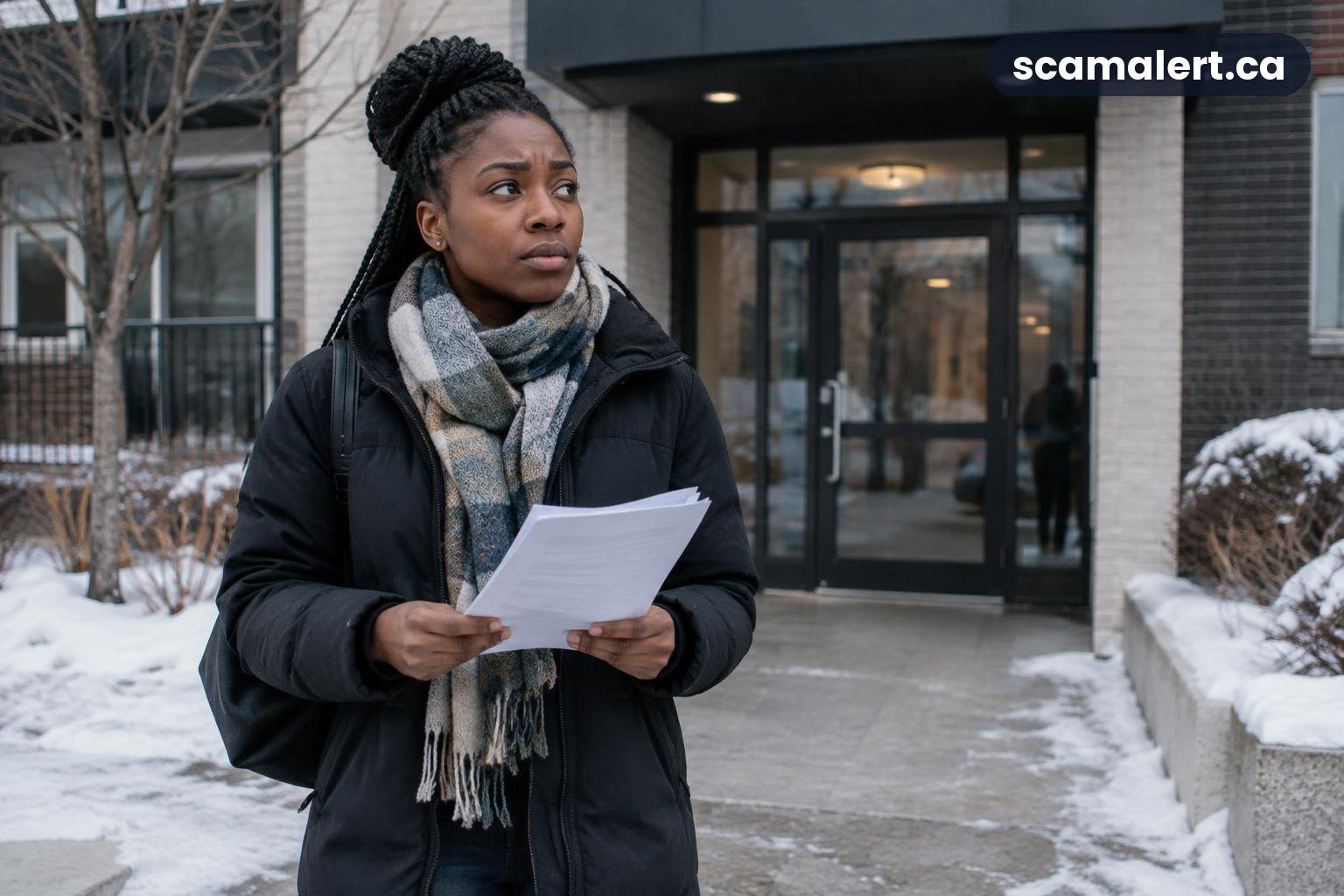
Sublet scams can leave you paying for a home you cannot move into, or sending money to someone who is not allowed to rent it to you. Before you sign or pay, verify the person’s connection to the property, check what permission they have to sublet, and make sure you can view the actual unit.
A sublet is an arrangement where a tenant rents all or part of their home to someone else, usually while remaining the tenant under their original agreement. The rules and terminology differ across Canada, and some arrangements may instead be treated as an assignment or another type of rental. Check the rules that apply where the property is located; do not assume a person’s claim that they have permission is enough.
How sublet scams work
A person advertising a sublet may not have the right to rent the unit, may not be the tenant they claim to be, or may have no connection to the property at all. They can use photographs and details copied from a genuine listing or present themselves as the current tenant. A polished ad, a plausible explanation or a copy of a document does not establish that the person can offer you a place to live.
The scammer may ask you to pay a deposit or rent before you have seen the home or confirmed who controls it. Once the money is sent, they may stop responding, provide access that does not work, or leave you to discover that the actual tenant or property owner knows nothing about the arrangement. Sometimes a real tenant may be trying to rent a place without obtaining approval that is required by the lease or local rules.
Payment is not the only risk. Someone may ask for personal details or copies of identification before you have verified the arrangement. Those details could be misused. Share only what is needed for a legitimate rental process, and wait until you have checked who you are dealing with.
Common sublet scam variations in Canada
One variation is a fake listing: the person advertising the unit does not live there and has no authority to rent it. They might claim to be travelling, working elsewhere or unable to meet in person, and offer to arrange keys after you pay. A real address or convincing interior photos do not prove the advertiser has access or permission.
In another variation, someone who really is a tenant advertises the home but has not confirmed whether subletting is allowed or what approval is needed. Their tenancy does not automatically mean they can make a separate agreement with you. Ask what the arrangement is, what the original lease says about it, and whether any required permission has been obtained.
Some misleading ads involve a genuine home but unclear terms: for example, the person may offer a room while presenting the arrangement as exclusive use of the whole unit, or may describe a short stay as a longer-term rental. Confirm exactly what space you will have, when you can occupy it, who else will live there, and what happens at the end of the agreed period.
These situations can overlap with other rental risks, including requests for money before a viewing or pressure to use a payment method that is difficult to reverse. For broader rental checks, the Canada Mortgage and Housing Corporation provides housing information. Use local tenancy resources to check the rules for your province or territory.
Red flags to watch for
- The advertiser will not let you view the unit in person, arrange a live video tour, or explain a reasonable alternative for access.
- They say they are away and will send keys or access instructions only after you pay.
- You are rushed to send a deposit or rent before you have checked the person’s identity, authority and written terms.
- The advertiser cannot explain whether they are the tenant, what their lease allows, or whether the landlord’s approval is required.
- The name on the proposed agreement does not match the person you have been communicating with, and there is no clear explanation.
- The terms about the unit, dates, rent, utilities, other occupants or deposit are vague or keep changing.
- The advertiser avoids reasonable questions, will not put the arrangement in writing, or asks you to keep it secret from the landlord.
- You are asked to send money using an unusual method, to an unrelated person, or before you can independently confirm the arrangement.
- Photos or descriptions seem inconsistent with what you see during a viewing, or the person cannot show that they can access the unit.
How to check a sublet before paying
Start by speaking with the person who will rent the unit to you. Ask whether they are the current tenant, whether they intend to return, and whether you will be renting the whole unit or only part of it. Ask to see the relevant parts of their rental agreement, with unrelated personal information covered if needed. A document can help you understand the claim, but it is not proof on its own.
Ask what permission is needed for this arrangement under the lease and local rules, and request written confirmation where approval is required. If you need to verify the landlord or property manager, use contact details you find independently rather than relying only on details supplied by the person advertising the sublet. Explain that you are considering a sublet and ask what they can confirm. Respect privacy: you need to verify the arrangement, not collect unrelated personal information.
View the actual unit before paying whenever possible. Confirm that the person can enter and show you the space, and make sure it matches the listing and the agreement. If an in-person viewing is not practical, a live video tour can provide useful context, but it is not as strong as seeing the property yourself and does not prove the person has authority to rent it.
Get a written agreement that clearly identifies the parties and the property, states the dates and rent, explains what is included, and records any deposit and its terms. Read it carefully before signing. Do not rely on a verbal promise that differs from the written agreement, and keep a copy of every document and message.
Before transferring money, confirm the recipient’s name and the amount, and use a payment method you understand. Keep receipts. Avoid sending money just to hold a place when the person has not answered basic questions or you have not verified the arrangement. Do not hand over sensitive identity or banking details until you know who is requesting them and why they are needed.
Rules about subletting, consent, deposits and tenant rights vary by province and territory, and may depend on the details of the arrangement. If anything is unclear, contact a local tenancy authority, tenant advice service or legal clinic before committing. The CMHC housing information site can help you find general housing guidance, but it does not replace advice about your particular agreement.
What to do if you have been targeted
- Stop communicating or paying for now. Do not send more money, identity documents or banking information while you check what happened. Do not agree to a rushed meeting or an unfamiliar payment arrangement.
- Save the evidence. Keep the listing, messages, emails, agreement, payment records and any information about the person or property. Take screenshots if a listing or message may disappear, and avoid editing the originals.
- Contact your bank or payment provider promptly if you sent money. Explain that you may have been deceived and ask whether the payment can be stopped, recalled or otherwise addressed. If you shared banking details, ask the bank how to secure the account.
- Protect your identity if you shared personal information. Contact the relevant account providers, change passwords that may be affected, and watch for unfamiliar account activity. If you gave someone a copy of identification, ask the issuing authority or a trusted identity-protection service what further steps are appropriate.
- Do not try to confront the person alone. If you went to the property and cannot get in, or feel unsafe, move to a safe place and contact local police. Do not enter a home without clear permission.
- Get local housing advice if you signed an agreement or moved in. Keep your documents and ask a tenant advice service, legal clinic or relevant provincial or territorial tenancy authority about your rights and next steps.
How to report a sublet scam in Canada
Report suspected fraud to the Canadian Anti-Fraud Centre online or by calling 1-888-495-8501. Reporting can help document the incident, even if you are unsure whether the situation meets the definition of fraud or have not lost money.
Contact your local police service, particularly if money was taken, you have been threatened, or someone used your identity. If you paid or shared banking information, contact your bank as soon as possible. Provide the evidence you saved and keep a record of your reports and any instructions you receive.
Frequently asked questions
Can a tenant sublet a home without asking the landlord?
It depends on the lease, the type of arrangement and the law where the property is located. Do not assume that every sublet needs the same permission, or that a tenant can always proceed without it. Check the applicable rules and ask for written confirmation of any approval that is required.
Is a copy of the tenant’s lease enough to verify a sublet?
No. It may help you understand the tenant’s claim and the terms they are subject to, but a copy alone does not show that it is genuine, current or that the person has permission to make the arrangement. Combine document checks with a viewing, independent confirmation where appropriate, and a clear written agreement.
Should I pay a deposit before I see the property?
Be cautious about paying before you have viewed the unit and verified the person’s authority and the terms. A demand for quick payment before those checks is a reason to pause. If a viewing is not possible, make extra efforts to verify the arrangement and get advice before sending money.
What if I already sent money?
Contact your bank or payment provider right away and ask what options are available. Save the listing and communications, report the incident to the Canadian Anti-Fraud Centre and local police, and do not send additional money to someone promising to recover your loss.
Reviewed by our editorial team on .

The Scam Alert Team tracks fraud targeting Canadians and turns official warnings into clear, practical advice. Our team has a background in IT and cybersecurity, and every article is fact-checked against official sources before publication. How we verify alerts