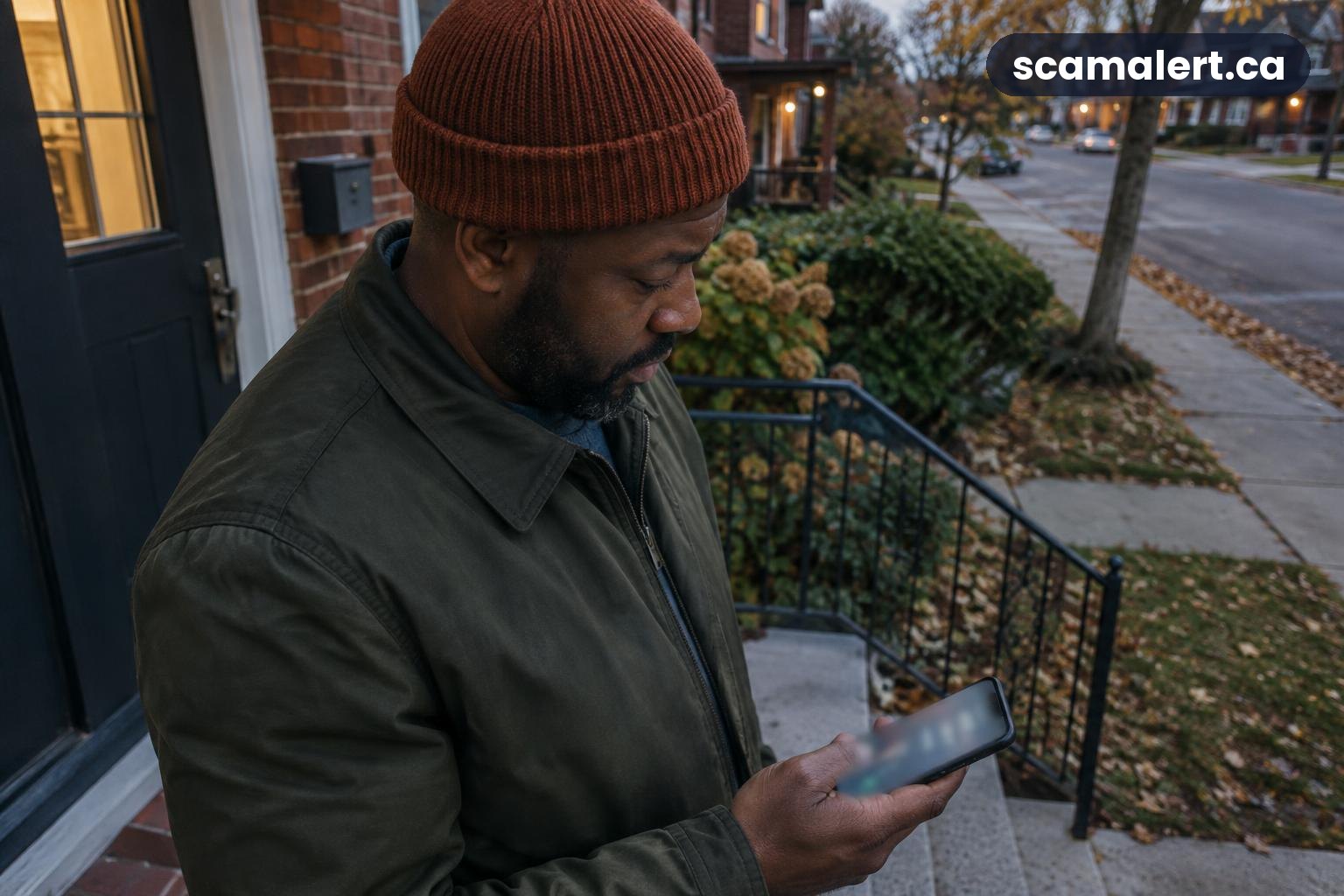
The Ontario Provincial Police (OPP) are warning Eastern Ontario residents about evolving fraud schemes. The available notice does not identify specific schemes, so residents should be cautious with unexpected requests for money, personal details or account access, whether they arrive by phone, text, email or in person.
What the scam looks like
Fraud tactics can change, and a message or call may be made to seem as if it comes from a person or organization you know. The name or number displayed on your phone is not reliable proof of who contacted you. A person may use a convincing story to prompt you to act quickly, share information or send money.
Some approaches involve a supposed problem with an account, a payment that needs to be made, or an urgent request from someone claiming to be a relative or an official. These are general examples of fraud tactics, not details confirmed in the OPP warning. The real organization or person being impersonated is not responsible for the contact.
A fraudster may ask for passwords, one-time verification codes, banking information, gift cards, cryptocurrency or a transfer. They may also tell you to keep the conversation secret or discourage you from checking their story with someone else. If a request is unexpected, pause and verify it using contact information you find independently, such as on an official statement or the organization’s official website.
Red flags to watch for
- Pressure to act immediately: You are told there is no time to think, check or get advice.
- Requests for private information: Someone asks for a password, PIN, one-time code or full banking details. Do not share these in response to an unexpected contact.
- Unusual payment instructions: You are asked to pay by gift card, cryptocurrency, wire transfer or another method that is difficult to reverse.
- Secrecy: The person tells you not to speak with your family, bank, police or the organization they claim to represent.
- Contact details you cannot verify: A caller or sender wants you to use a number or link they provided rather than one you find independently.
- A story that changes: Details do not add up, or the person becomes angry when you ask questions or want to confirm the request.
What to do if you’ve been targeted
- Stop and do not send anything else. End the call or conversation. Do not click links, open attachments or share verification codes.
- Verify the request independently. Contact the person or organization through a trusted number or website you locate yourself. If the message claims to be from someone you know, reach them using a separate, familiar method.
- Contact your bank promptly if money or banking details are involved. Explain what happened and ask what steps are available to protect your account or try to stop a transaction. Change affected passwords using a trusted device, and do not reuse an exposed password.
- Keep relevant records. Save messages, emails, receipts, transaction details and the time of contact. Do not continue engaging to collect more information.
- Tell someone you trust. A second person can help you assess what happened and take practical next steps. There is no need to feel ashamed; acting quickly to limit further loss matters most.
- Watch for follow-up approaches. Someone may claim they can recover lost money or investigate the incident for a fee. Verify any such offer independently and do not provide more money or account access.
How to report it
Report suspected fraud to the Canadian Anti-Fraud Centre online at antifraudcentre-centreantifraude.ca or by phone at 1-888-495-8501. You can report even if you did not lose money.
Contact your local police to report the incident, particularly if you have lost money, shared sensitive information or feel at risk. If money or banking details are involved, contact your bank as soon as possible. Reporting helps you seek support and contributes information that can help authorities understand fraud patterns.
Source: OPP warns Eastern Ontario residents about evolving fraud schemes – Brockville Daily
Reviewed by our editorial team on .
Last updated

The Scam Alert Team tracks fraud targeting Canadians and turns official warnings into clear, practical advice. Our team has a background in IT and cybersecurity, and every article is fact-checked against official sources before publication. How we verify alerts