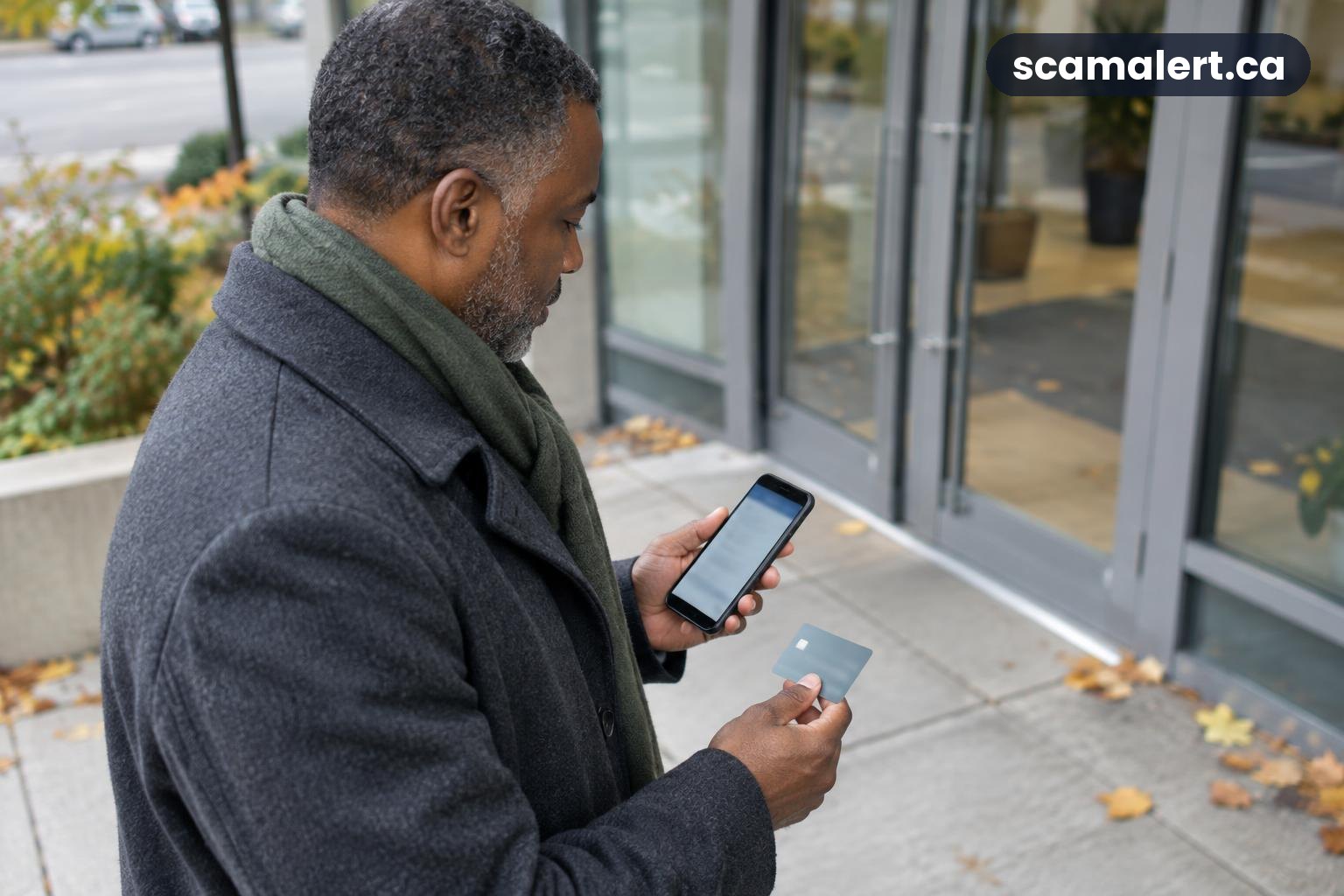
A call that appears to come from your bank’s fraud department can feel urgent and convincing. Before you move money, share a security code or follow instructions, end the call and contact your bank using a number or channel you find independently. A real bank can help you check your account without requiring you to trust an unexpected caller.
How fake bank fraud department calls work
A caller may claim that suspicious activity has been detected on your account, card or online banking profile. They might say that someone is trying to steal your money and that you must act immediately. The caller may sound professional and know or ask for personal details, but those things do not prove that they work for your bank.
The caller’s goal is to get you to do something that gives them access to your money or accounts. They may ask you to transfer funds to a so-called safe account, send an e-transfer, make another kind of payment, or withdraw cash. They may ask for your password, card details, PIN, or a one-time security code sent to your phone. Some may try to persuade you to install software or let them see or control your device.
Caller ID is not reliable proof of identity: the number displayed on your phone can be made to look like a familiar or legitimate number. A caller may also tell you not to hang up, not to talk to anyone else, or not to contact your bank through its usual channels. Those instructions are meant to stop you from checking the story independently.
Even if the caller says they are helping you protect your money, do not make a transfer based on their instructions. A transfer to an account described as “safe” is still a transfer controlled by someone else. Pause and verify through a channel you choose yourself.
Variations you may encounter
The details of the story can change, but the pressure to trust the caller and act quickly is a common thread. These are possible versions of the same impersonation approach, not a list of specific reported cases.
- The “safe account” story: The caller says your account is at risk and tells you to move your balance to another account while the bank investigates.
- The suspicious transaction story: The caller asks you to confirm a payment or says a transaction must be reversed. They may then request a code or direct you to send money.
- The account verification story: The caller says they need a password, PIN, card information or a one-time code to prove who you are or secure your account.
- The added helper: Someone else may join the conversation, claiming to be a bank employee, an investigator or another official. A second voice does not verify the first caller’s identity.
- The device-help story: The caller says they need access to your phone or computer to find or stop suspicious activity. Do not install software or give a caller control of your device.
- The follow-up message: A text or email may arrive during the call and appear to support the caller’s story. Do not rely on a link or phone number sent by the person who contacted you.
Scammers can adapt their explanations to what you say. You do not need to work out which version you are hearing. If the contact is unexpected and asks you to move money, share a secret code or hand over device access, stop and verify.
Red flags to watch for
- The caller creates panic or says you must act immediately to prevent a loss.
- You are told to move money to a different account, including one described as safe, temporary or controlled by the bank.
- The caller asks for your password, PIN, full card details or a one-time code.
- You are told not to hang up, contact your branch, or speak to family or anyone else.
- The caller asks you to click a link, install an app, share your screen or give remote access to your device.
- You are asked to keep the conversation or transfer secret.
- The caller insists that the number shown on your phone proves who they are.
- The caller becomes threatening, impatient or unwilling to let you check their claims independently.
One warning sign can be enough to pause. You do not have to accuse the caller of wrongdoing or keep arguing. Simply end the conversation and check with your bank yourself.
How to protect yourself and verify a call
If someone calls unexpectedly about fraud, do not use the number they give you or rely on the number displayed on your phone. Hang up. Then find your bank’s contact details on your bank card, a recent statement, or the bank’s official website or app that you open yourself. Call or message the bank through that independently chosen channel and ask whether there is a genuine issue with your account.
If you are unsure how to end a call safely, you can say you will contact the bank using its usual number and then hang up. Do not let the caller keep you on the line while you look up a number or make a transfer. If the call has left you unsettled, ask a trusted person to sit with you while you verify, but do not share your passwords or codes with them either.
Keep passwords, PINs and one-time security codes private. A code sent to you can be used to approve a sign-in or transaction; do not read it aloud to someone who called you. If a message or app notification appears while you are speaking, do not assume it confirms the caller’s identity. Check the account using the bank’s official app or website independently.
Never transfer money to “protect” it because an unexpected caller tells you to. Do not withdraw cash, send an e-transfer, or follow a payment instruction as part of an unsolicited fraud investigation. Your bank can explain any next steps after you contact it directly. If there is a genuine concern, follow instructions you receive through a channel you have independently verified.
Make it harder for a caller to pressure you by deciding in advance that you will not make financial decisions during unexpected calls. Let unknown calls go to voicemail if that feels safer. If you do answer, remember that you can end the call at any time. Avoid posting personal or financial information publicly, since details about you may make an impersonation attempt sound more credible.
What to do if you have been targeted
- Stop contact and stop payments. End the call, do not reply to the caller, and do not make any further transfers or payments. Do not use a link or phone number they supplied.
- Contact your bank immediately. Use the number on your bank card or statement, or an official app or website you access yourself. Explain what happened, including whether you shared a code, password or card details, or moved money. Ask the bank to secure affected accounts and advise you on next steps.
- Secure your accounts and devices. Change passwords for affected accounts using a trusted device and official sites or apps. If you gave someone access to a device or installed software at their request, tell your bank and get trusted help to secure the device. Do not use contact details provided by the caller.
- Save relevant information. Keep call details, messages, emails, transaction records and any payment receipts. Do not delete material that may help your bank or authorities understand what happened. Avoid sharing sensitive details publicly.
- Tell someone you trust. A calm second person can help you make calls and keep track of what you have done. Being targeted is not a reason to feel ashamed; report it promptly, even if you are uncertain whether money was lost.
- Report the incident. Contact the Canadian Anti-Fraud Centre and your local police. If money or banking information was involved, report it to your bank as well. Keep notes of when you contacted each organization and any instructions you received.
How to report a fake bank call in Canada
Report suspected fraud to the Canadian Anti-Fraud Centre at 1-888-495-8501 or through antifraudcentre-centreantifraude.ca. You can also report the incident to your local police. If you shared banking details, gave access to an account, or sent money, contact your bank right away using a verified channel.
Reporting helps the organizations you contact understand what happened and advise you on next steps. If you are unsure whether the call was genuine, you can still contact your bank independently and explain what was said. Do not call back using the number displayed on the incoming call or supplied by the caller.
Frequently asked questions
Can my bank call me about suspicious activity?
A call may sound like it comes from a bank, but the caller’s voice, claimed role or displayed number does not prove who they are. End an unexpected call and contact your bank using a number or channel you find independently. Do not move money or disclose a secret code during the call.
What should I do if I already transferred money?
Contact your bank immediately through a verified channel and explain the transfer and the caller’s instructions. Ask what steps are available to secure your accounts and address the payment. Also report the incident to the Canadian Anti-Fraud Centre and your local police.
Should I give a caller a one-time code to stop a transaction?
No. Do not read a one-time code to someone who contacted you unexpectedly. End the call and check your account with your bank through an independently verified channel.
What if I only answered the call and did not share anything?
End the conversation and do not follow any instructions, links or callbacks the caller provided. Contact your bank independently if you remain concerned about your account. If you shared information or later notice an issue, tell the bank promptly.
Reviewed by our editorial team on .
Last updated

The Scam Alert Team tracks fraud targeting Canadians and turns official warnings into clear, practical advice. Our team has a background in IT and cybersecurity, and every article is fact-checked against official sources before publication. How we verify alerts