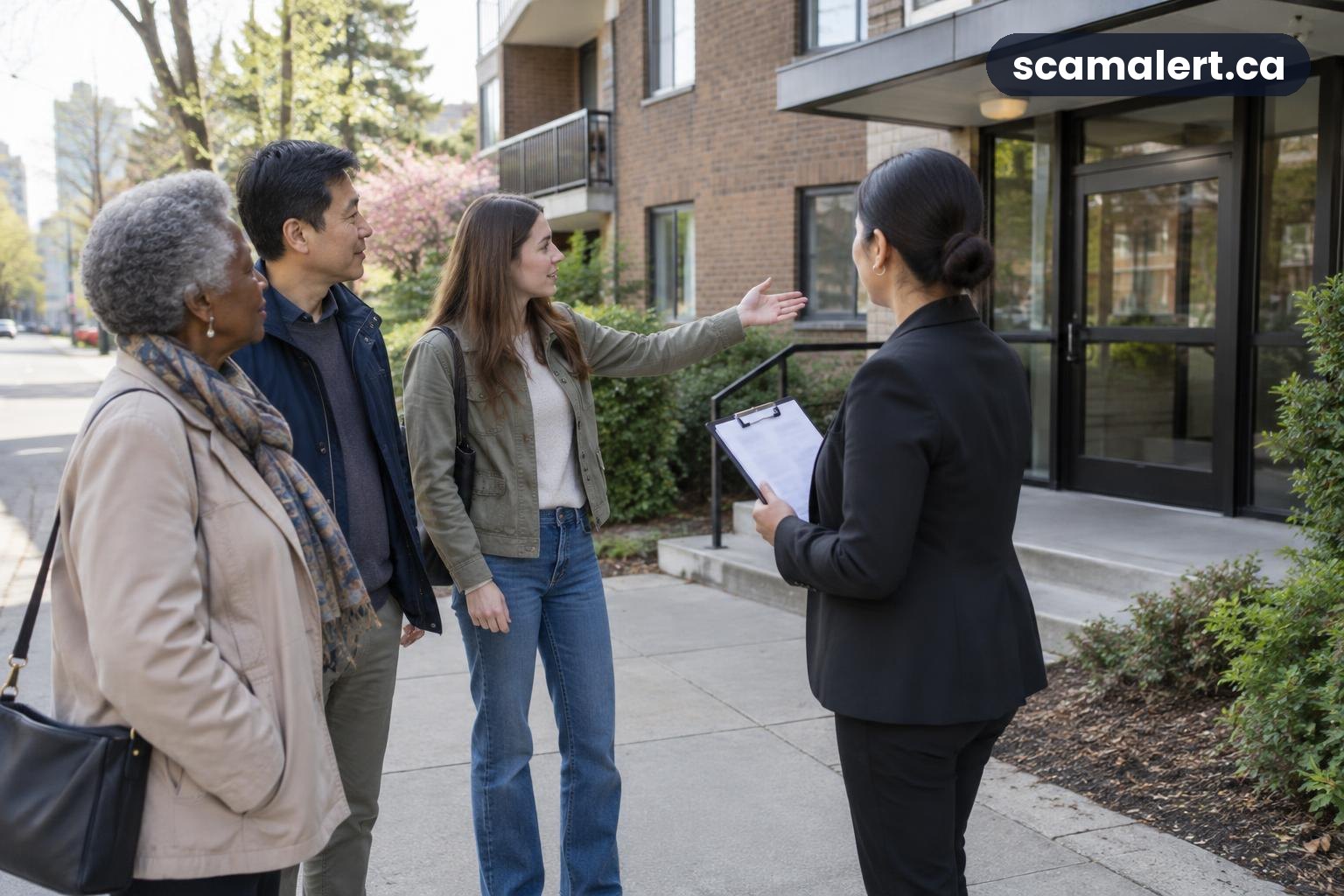
Rental listing scams can put your money and identity at risk, so verify who controls a property before paying a deposit or sharing your ID. Check the rental and the person’s authority through independent steps, and pause if you are being rushed or asked for sensitive information before you can confirm the basics.
How rental listing scams work
A scammer may copy details or photographs from a genuine rental advertisement, or post a made-up listing. They can pose as the owner, a property manager or someone who says they are helping the owner rent the home. The person contacting you may sound convincing, but a professional tone or detailed description does not prove they are authorized to rent the property.
The aim may be to get money, personal information or both. You could be asked for a deposit, application fee or other payment before you have seen the unit or confirmed who is offering it. A request for a copy of your identification may be presented as an ordinary application step, even when you have not verified the person or the rental.
Not every request for an application or identification is dishonest. Rental practices and rules differ across provinces and territories. The important safeguard is to establish who you are dealing with, what the payment is for and why your information is needed before you hand anything over.
Rental listing scams: variations renters may encounter
Some rental listing scams begin with an advertisement on a rental website, social media page or community group. Others may use a copied listing and direct interested renters to communicate privately. The original property or its owner may be real, even if the person who reposted the advertisement is not connected to it.
A person may claim they cannot meet because they are out of town, or say that payment is needed to arrange a viewing or reserve the unit. Another variation is an application form that requests identification and other personal details very early in the conversation. A fake or unauthorized listing can also be used to collect money from more than one prospective renter.
These are possible warning patterns, not proof by themselves. A landlord may have a legitimate reason for using an agent or collecting information during an application. Confirm the details independently instead of relying only on what the person messaging you says.
Red flags to watch for
- You are pressured to pay quickly, or told that you will lose the rental if you do not send money immediately.
- You are asked to pay before a viewing or before you have verified the person’s authority and the rental terms.
- The person avoids a reasonable way to view the unit, answer questions or confirm their connection to the property.
- The rent, availability or conditions seem unusually attractive, but the person will not provide clear, consistent details.
- You are asked to send a copy of your ID, banking details or other sensitive information before you know who will receive it or why it is needed.
- The payment instructions change, or you are asked to send money using a method that is difficult to reverse or trace.
- Photos or descriptions appear elsewhere with different contact details, or the person’s account does not match the information they give you.
- You are discouraged from checking with a property manager, building office or other independent source.
How to verify a landlord before sharing your ID
Start by checking the listing itself. Search a distinctive phrase from the advertisement and, where available, use a reverse image search on the photos. If you find the same photos or description connected to another address or contact, ask the advertiser to explain the difference and verify the answer independently.
Arrange to see the actual unit, in person when practical. If that is not possible, ask for a live video tour that lets you see the property and ask questions as you go. A viewing can help confirm that the unit exists, but it does not by itself prove the person showing it has the right to rent it.
Ask the person for their full name and whether they are the owner, a property manager or an agent. If they are acting for someone else, ask how you can confirm that arrangement. Contact the property management office or building using contact information you find independently, rather than relying only on a number, link or email address sent by the advertiser.
Ask for written rental terms and read them before paying or signing. The documents should make clear which unit is being offered, who the parties are, what any payment covers and when it is due. Check the rules that apply in your province or territory through its official tenancy information. Deposit rules and application practices are not identical across Canada.
Only provide identification when you have a clear reason to do so and have verified the recipient. Ask what information is needed, how it will be handled and whether a less sensitive alternative is acceptable at that stage. Avoid sending an unprotected image of your ID through an unexpected message. If you do provide a copy, ask whether you can limit it to the stated purpose, for example by adding a visible note to the copy, without obscuring information the recipient legitimately needs.
Keep messages, the advertisement, application documents and payment records. Use contact details you have checked independently if you need to ask a question later. Rental listing scams often rely on a renter feeling they must act before doing these simple checks.
What to do if you have been targeted
- Pause contact and payments. Do not send more money or information while you check what has happened. If you are unsure whether a message is genuine, use independently verified contact details to reach the property manager or organization named in it.
- Save the evidence. Keep copies or screenshots of the listing, messages, emails, payment instructions, receipts and any documents you received. Note how you contacted the person and what information you shared.
- Contact your bank or payment provider if money or banking details are involved. Explain the situation promptly and ask whether the transaction or account can be protected. Follow its instructions and review recent account activity.
- Protect your identity if you shared ID or personal details. Be alert for unexpected account, credit or verification activity. Contact the organization that issued the ID if you are concerned it could be misused, and ask the credit bureaus about placing a fraud alert on your credit file if appropriate.
- Tell the platform where the listing appeared. Give it the saved evidence and ask it to review the advertisement or account. Do not assume that removing a listing means your information or money is automatically protected.
- Report what happened. Contact the Canadian Anti-Fraud Centre and your local police. If money or banking details were involved, contact your bank as well, even if you have already reported the incident elsewhere.
How to report rental listing scams in Canada
Report suspected rental listing scams to the Canadian Anti-Fraud Centre online or by calling 1-888-495-8501. Reporting can help authorities identify patterns, even if you did not lose money. Keep your report factual and include the advertisement, messages and payment details you saved.
Also contact your local police to report suspected fraud or identity misuse. If you sent money or shared banking information, call your bank using the number on your bank card or an official statement. Ask what steps to take to secure your account or try to stop a payment.
Frequently asked questions
Should I send a photo of my ID to apply for a rental?
First confirm who is receiving it and why it is needed. Ask whether the information is required at this point in the process and how it will be protected. Do not send ID just because an unfamiliar advertiser says it is urgent.
Is a viewing enough to verify a landlord?
No. Seeing the unit can confirm that you have been shown a real property, but it does not establish that the person is authorized to rent it. Confirm their connection to the property independently and review the written terms.
What if the listing is real but the contact is not?
Stop dealing with that contact and reach the owner or property manager using independently found contact details. Tell the platform hosting the advertisement what you found, and report any request for money or personal information that appears deceptive.
Where can I report a rental listing scam?
Report it to the Canadian Anti-Fraud Centre and your local police. Contact your bank as well if you paid money or shared banking details. Save the listing and messages so you can provide useful information with your report.
Reviewed by our editorial team on .

The Scam Alert Team tracks fraud targeting Canadians and turns official warnings into clear, practical advice. Our team has a background in IT and cybersecurity, and every article is fact-checked against official sources before publication. How we verify alerts