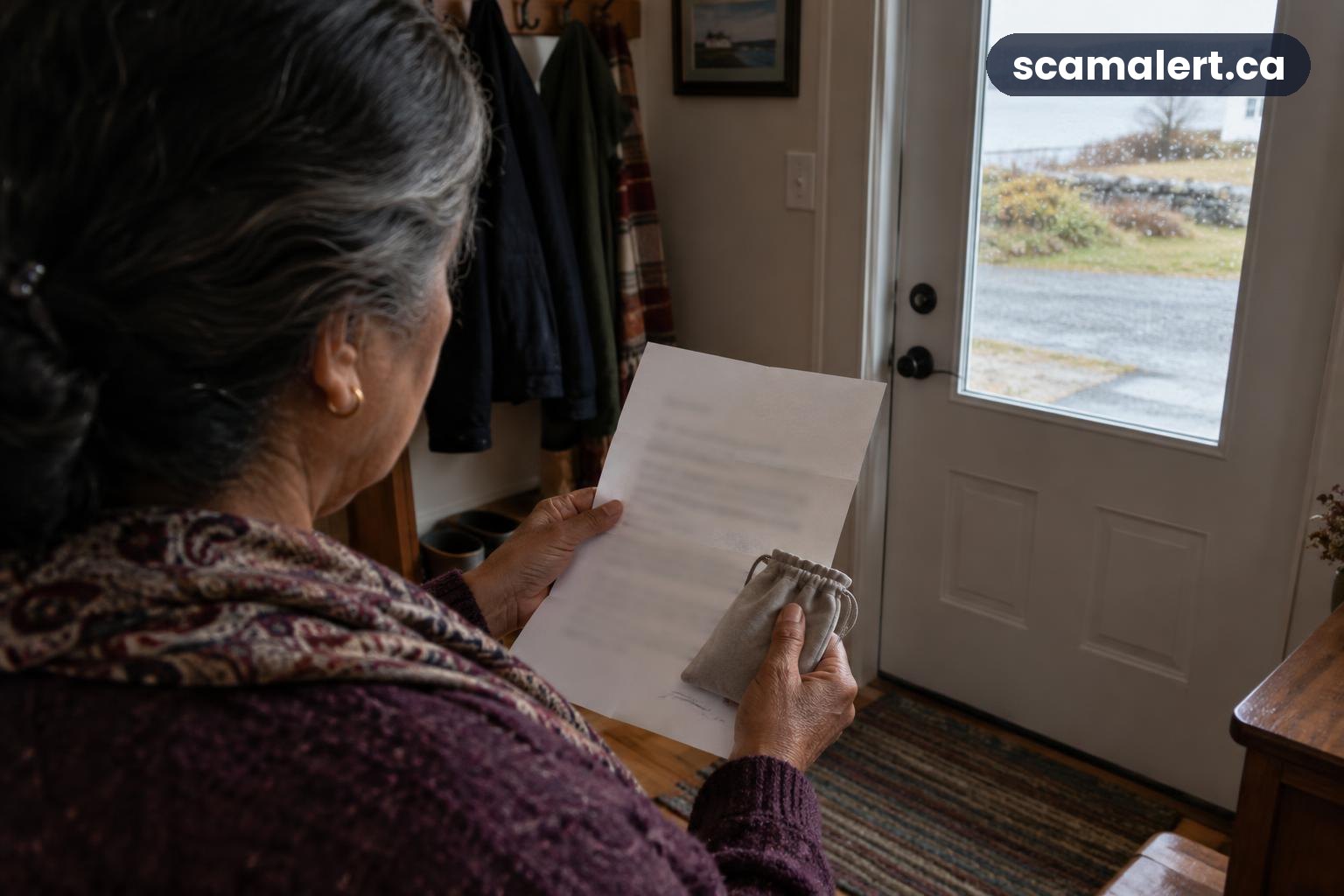
The gold safekeeping scam is a warning for Nova Scotians: the RCMP are alerting people to a request to hand over gold to police for safekeeping. Treat an unexpected request like this with care, and verify it independently before you give anyone valuables, personal information or access to your home.
What the scam looks like: gold safekeeping scam
The reported tactic is simple: someone asks a person to give police gold so it can supposedly be kept safe. The request may sound official or urgent, but a claim that valuables need protection does not prove that the person contacting you is a police officer.
The warning identifies the demand for gold, but does not specify how the request is delivered. In police-impersonation schemes generally, an approach might happen through a call, message or in-person contact. Whatever the channel, the key concern is being pressured to hand over a valuable item on the strength of an unverified claim.
Gold might mean jewellery, coins or another valuable item. If someone asks you to collect it, package it, leave it somewhere or hand it to a person, stop and check the request first. Do not follow instructions while you are feeling rushed or frightened.
Real police may need to handle property in an official investigation, but that is different from an unexpected demand to surrender valuables for informal safekeeping. If you are unsure whether a request is genuine, end the conversation and contact the relevant police service using contact information you find independently. Do not rely on contact details or links supplied by the person making the request.
Red flags to watch for
- A request for gold or other valuables. Be cautious if a person claiming to be an officer asks you to hand over property for safekeeping, protection or any other reason that you cannot verify.
- Pressure to act immediately. A demand that you make a quick decision, keep the matter secret or avoid speaking to family can make it harder to check the story. Take time to verify, even if the person says delay will put you at risk.
- An identity you cannot confirm. A name, title, uniform or confident manner is not enough on its own. A caller ID or message display can also be misleading.
- Instructions to use a particular handoff. Be wary of directions to meet an unknown person, leave gold at a location or arrange a collection before you have independently confirmed the request with police.
- Requests for private details or account access. Do not provide passwords, banking information, identity documents or security codes to someone whose identity and purpose you have not verified.
- A warning not to check with anyone. A legitimate request should withstand a reasonable effort to confirm it. Speak with someone you trust and contact police through an official channel.
Police impersonation and valuable-property requests
In a gold safekeeping scam, the apparent authority of the police can be used to make an unusual request seem credible. Remember that scammers can claim to represent a real public organization. The RCMP is warning about this tactic; that does not mean the RCMP is behind the request.
Do not try to prove the caller wrong by arguing or giving them more information. Keep the exchange brief, say you will verify the request independently, and end the contact. If someone is at your door and you feel unsafe, do not invite them in or hand over property; move to a safe place and contact local police.
To check a claimed police contact, look up the police service’s official contact details yourself and ask whether the request is genuine. If the person claims to be with the RCMP, you can start at the RCMP’s official website. Do not call back using a number provided in the unexpected contact.
What to do if you’ve been targeted
- Stop the handoff. If you have not given up the gold, do not do so while you check the request. If you have arranged a meeting or collection, cancel it and contact police using independently found details.
- Secure what remains. Keep gold and other valuables somewhere safe. If a person is nearby or you feel in immediate danger, prioritize your safety and contact local police.
- Save the details. Keep messages, emails, letters, call records and any information about a proposed meeting or collection. Write down what happened while it is fresh in your mind. Do not put yourself at risk to gather evidence.
- Contact police. Tell your local police service what was requested, how the person contacted you and whether any property or personal information was handed over. If the person claimed to represent a particular police service, contact that service through its official channels as well.
- Act quickly if gold was taken. Tell police what is missing and share any useful identifying details or records you already have, such as descriptions or purchase documentation. Do not confront or pursue the person yourself.
- Protect accounts and identity information. If you shared banking details, passwords or security codes, contact your bank or the relevant service using a trusted number or website. Change affected passwords and follow the provider’s advice about securing your accounts.
- Tell someone you trust. A trusted family member or friend can help you verify further contact, keep records and make calls. Being targeted is not a reason for shame; reporting helps create a record of what happened.
How to report it
Report the attempt to the Canadian Anti-Fraud Centre (CAFC) online at antifraudcentre-centreantifraude.ca or by phone at 1-888-495-8501. You can report even if you did not lose money or hand over gold.
Also contact your local police service, particularly if someone collected property, came to your home or threatened you. If money or banking details were involved, tell your bank promptly using the contact information on your bank card or its official website. Keep copies of reports and records of any steps you take.
For a gold safekeeping scam, the safest response is to pause before surrendering anything and verify the request through an official channel you found yourself. The same check is worthwhile whenever someone uses the name of police to ask for valuables or private information.
Source: N.S. RCMP warn of scam asking victims to give police gold for ‘safekeeping’ – Global News
Reviewed by our editorial team on .

The Scam Alert Team tracks fraud targeting Canadians and turns official warnings into clear, practical advice. Our team has a background in IT and cybersecurity, and every article is fact-checked against official sources before publication. How we verify alerts