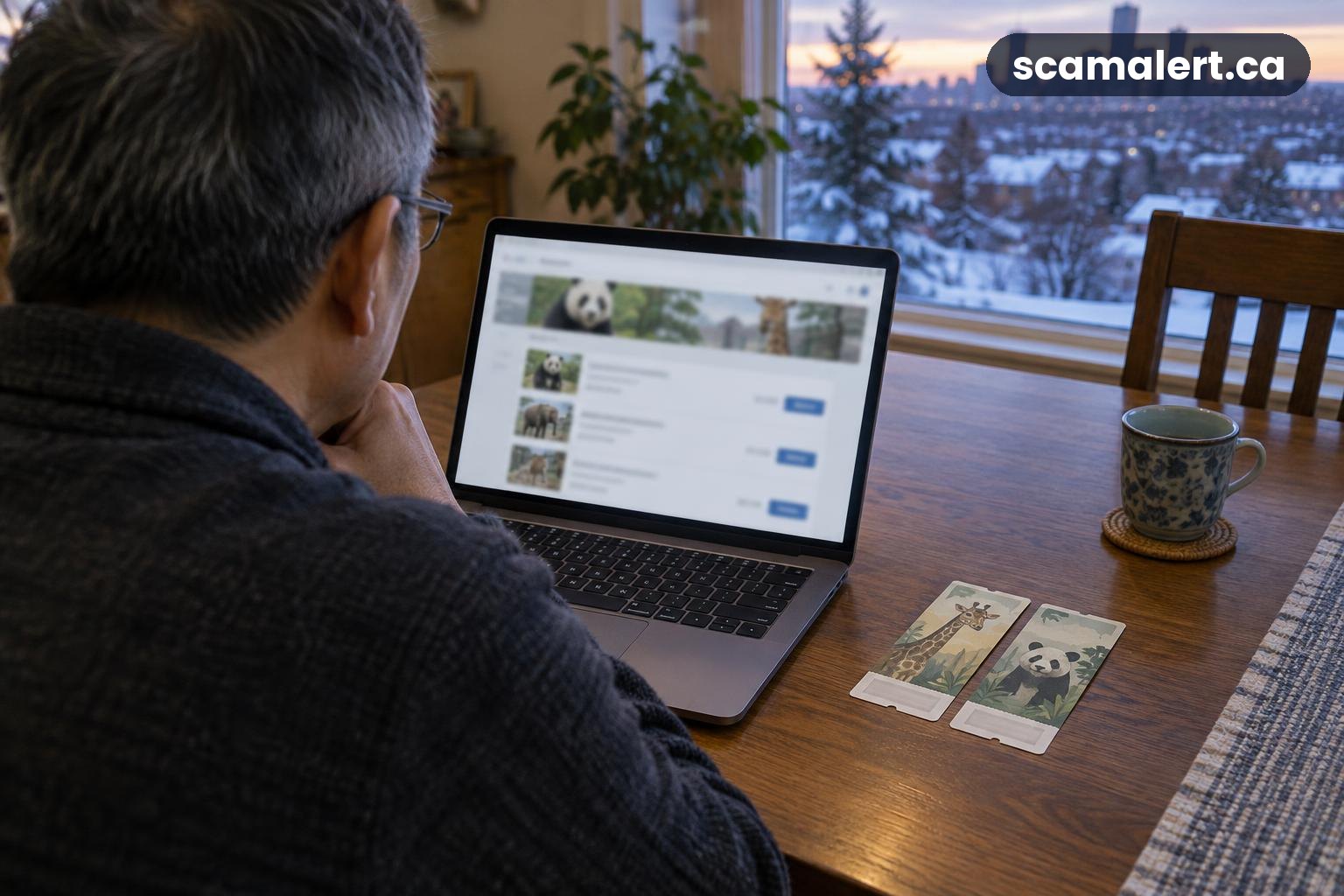
The Wilder Institute’s Calgary Zoo says phony tickets are being sold online. Anyone looking for admission tickets online should take care to check the seller before paying, especially if an offer appears on a resale page or social media.
What the scam looks like
The warning is about people offering tickets that may not be valid for entry. The available report does not say where the tickets are being advertised or describe a particular seller, price or method. The zoo is the organization being impersonated or used as the draw; that does not mean the zoo is behind the offers.
In general, an online ticket seller may use a copied image, an unofficial web page or a social media post to make an offer look trustworthy. A seller might send a ticket file or a code after payment, but an image or code by itself does not prove that a ticket is genuine. A ticket could be fake, already used, duplicated or unusable. The buyer may also have difficulty getting their money back if the seller disappears or the payment was sent directly to them.
Some questionable listings are designed to rush people into paying before they have checked the details. Others may ask a buyer to move the conversation or payment away from a platform that offers buyer protections. These are common risks with online ticket purchases, not details confirmed about this particular warning.
To reduce the chance of buying an invalid ticket, begin with the zoo’s official website, reached by typing its address yourself or finding it through a trusted search. Follow its current instructions for buying tickets. If you are considering a resale listing, verify whether resale is permitted and whether the ticket can be transferred or checked with the venue before sending money.
Red flags to watch for
- A seller you cannot verify: The account is new, has little history, or will not answer reasonable questions about the ticket and how it can be transferred.
- Pressure to act immediately: The seller says you must pay at once or lose the offer, leaving little time to check the details.
- Unusual payment requests: They ask for payment by gift card, cryptocurrency, wire transfer or another method that may be hard to reverse. Be cautious about sending an e-transfer to a stranger, too.
- Requests to leave the platform: A seller wants to move to private messages or use a payment method that removes platform protections.
- Unclear ticket terms: The listing does not explain whether the ticket is transferable, what date or admission it covers, or how the venue can confirm it is valid.
- A convincing-looking image treated as proof: Screenshots, logos and ticket graphics can be copied. Check the ticket through the venue’s own process instead.
- Requests for extra personal information: A seller asks for passwords, security codes, banking details or more identity information than needed to complete a legitimate sale.
What to do if you’ve been targeted
- Pause before sending anything else. Do not pay extra fees or share passwords, one-time verification codes or banking credentials. Contact the zoo using contact information you find independently if you need to ask whether a ticket or seller can be verified.
- Save the evidence. Keep messages, the listing, payment records, account details and any ticket file. Take screenshots while the material is still available, but do not post personal or payment information publicly.
- Contact the payment provider quickly. If you paid by credit card, debit card or another service, ask the provider whether it can stop, dispute or review the payment. Recovery is not guaranteed, but acting promptly may help.
- Secure accounts if you shared information. Change any affected passwords, using a unique password for each account, and turn on multi-factor authentication where available. If you gave out banking details or money, call your bank using the number on your card or statement.
- Do not try to recover money through a stranger. Be wary of anyone who promises to get your funds back for an upfront fee or asks for more account information.
How to report it
Report suspected ticket fraud to the Canadian Anti-Fraud Center online or by calling 1-888-495-8501. You can also report it to your local police. If you paid or shared banking information, contact your bank or payment provider promptly using a trusted number. Include the listing and messages when making a report, and keep copies for your records.
Source: Zoo scam: Wilder Institute’s Calgary Zoo says phony tickets being sold online – CTV News
Reviewed by our editorial team on .

The Scam Alert Team tracks fraud targeting Canadians and turns official warnings into clear, practical advice. Our team has a background in IT and cybersecurity, and every article is fact-checked against official sources before publication. How we verify alerts