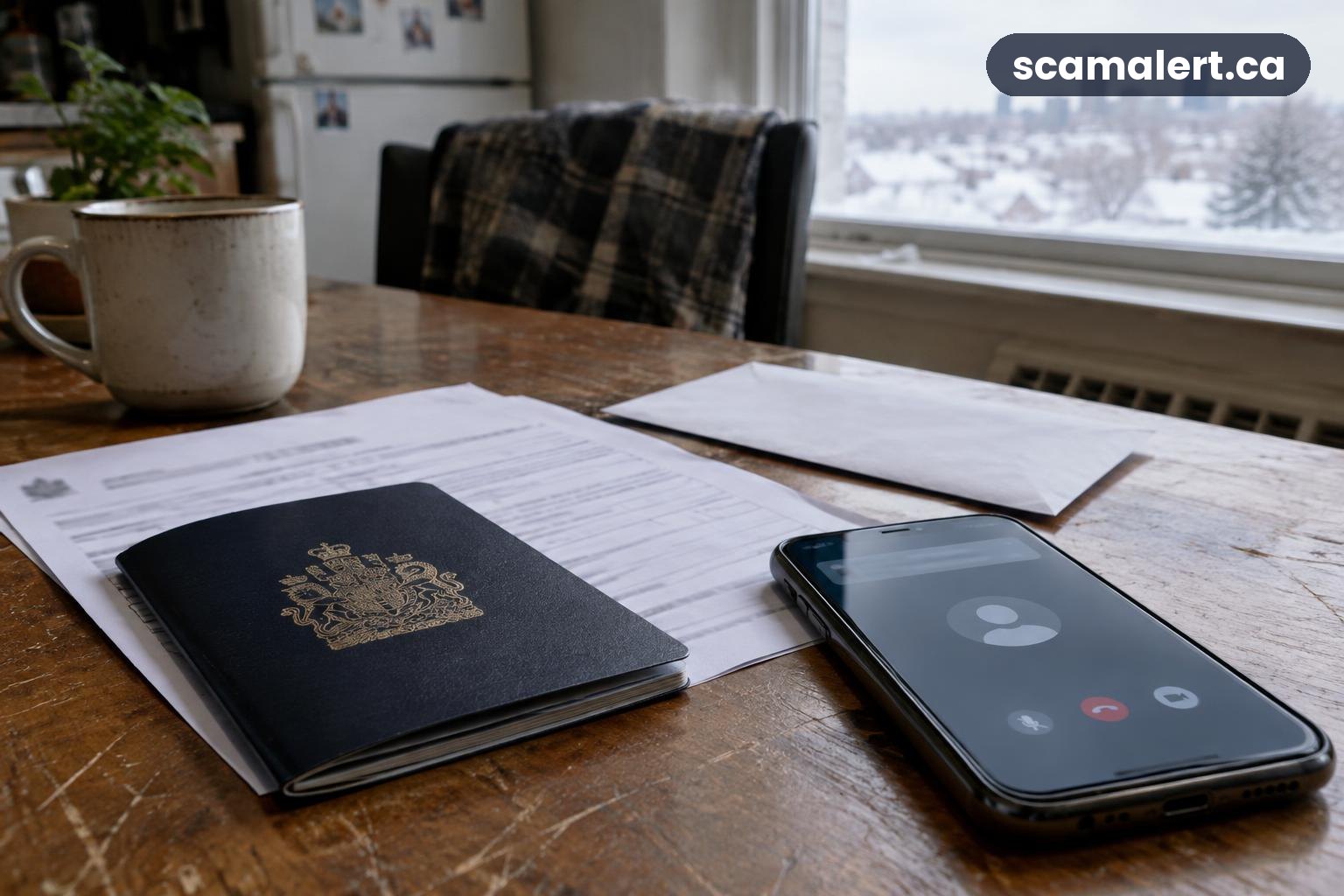
Canada is warning newcomers about immigration scams involving AI, people posing as officials and fake job offers, according to the report’s headline. If you are looking for immigration help or work in Canada, pause before paying or sharing personal information with someone who contacts you unexpectedly.
What the scam looks like
A person may claim to be a government official, an immigration adviser or a recruiter. They might offer help with an application, promise a job or say you need to act quickly to avoid a problem. The headline identifies AI-powered scams, but provides no details about the messages or methods involved.
In general, scammers can use AI tools to make written messages sound polished or to create convincing-looking material. A professional tone, a photograph, or a video call does not prove that someone is who they claim to be. Scammers may also copy the names or appearance of legitimate organizations. Those organizations are not responsible for messages sent by people impersonating them.
A fake job offer may be used to get you to pay a fee, provide identity or banking details, or share sensitive immigration documents. An immigration-related approach may similarly use a supposed application issue or an offer of special access to pressure you. These are examples of common warning signs, not confirmed details about the alert in the headline.
Check immigration information through official Government of Canada channels. If you are considering paid immigration help, independently confirm that the person is authorized to provide the service. Do not rely only on a link, phone number or contact details supplied by the person who approached you.
Red flags to watch for
- Pressure to act immediately: Someone says you will lose a job, application or status unless you pay or respond at once.
- Guaranteed outcomes: A person promises a visa, permanent residence, a job or faster processing in exchange for money.
- Unusual payment demands: Be wary of requests for gift cards, cryptocurrency, cash, or payment to a personal account.
- Requests for sensitive information: Do not send passport details, banking information, passwords or verification codes to an unverified contact.
- Unsolicited contact: A message, call or social media account claims to represent an official office or employer, but you have not independently confirmed it.
- Suspicious documents or messages: Polished wording, official-looking images and realistic voices can be copied or generated. Check the claim through a separate, trusted channel.
- Fees for a job: A demand for money to secure employment or release an offer deserves scrutiny. Verify the employer and the job using contact details you find independently.
What to do if you’ve been targeted
- Stop communicating for now. Do not pay, click further links, or send documents while you check the claim. Avoid replying with personal information.
- Verify independently. Find the relevant government service or employer through an official website or another trusted source. Contact them using details you locate yourself, not details in the message.
- Save evidence. Keep messages, emails, receipts, account names and other records. Do not alter the material if you may need to provide it to your bank or police.
- Secure your accounts. If you shared a password or verification code, change the password from a trusted device and update any other accounts using the same password. Turn on additional sign-in protection where available.
- Contact your bank promptly if you sent money or shared banking details. Ask what steps can be taken to protect your account or address a payment.
- Seek qualified immigration advice if you are concerned about an application or your status. Use official government information and independently check the credentials of anyone offering paid help.
How to report it
Report suspected fraud to the Canadian Anti-Fraud Centre at 1-888-495-8501 or through antifraudcentre-centreantifraude.ca. You can also contact your local police. If money or banking details are involved, contact your bank as soon as possible. Reporting can help document what happened and may help protect others.
Frequently asked questions
Can an AI-generated message prove that an offer is real?
No. A convincing message, voice or image is not proof of identity or legitimacy. Verify the person and the offer through a separate, trusted channel.
What if I already sent immigration documents?
Stop sending information and keep a record of what you shared and with whom. Report the incident to the Canadian Anti-Fraud Centre and local police, and contact your bank if financial information was included. Use official government channels to ask what steps may be appropriate for your situation.
Reviewed by our editorial team on .

The Scam Alert Team tracks fraud targeting Canadians and turns official warnings into clear, practical advice. Our team has a background in IT and cybersecurity, and every article is fact-checked against official sources before publication. How we verify alerts