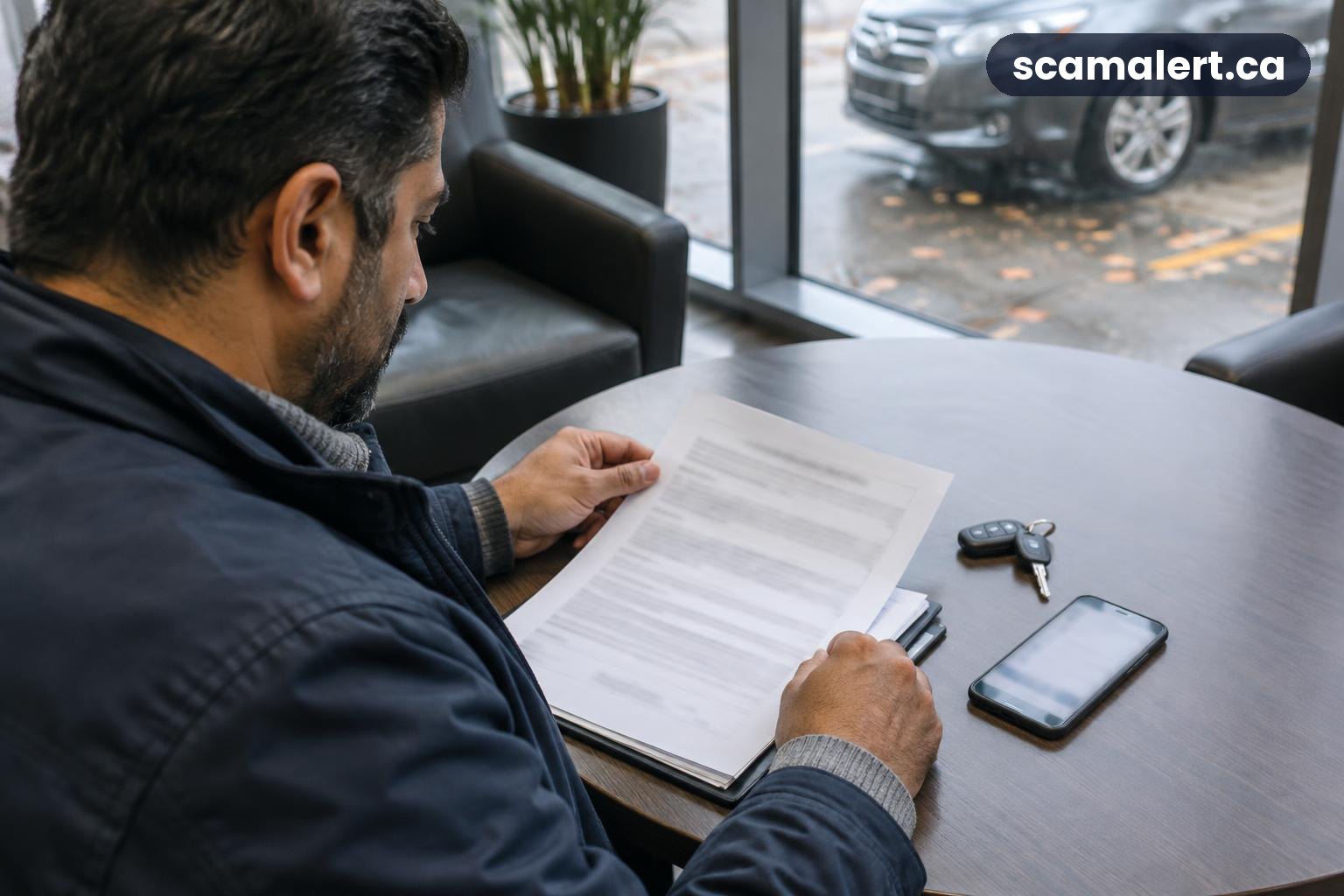
A Durham Radio News headline dated October 5, 2026, says Durham Regional Police Service (DRPS) is looking for three men in a vehicle financing fraud investigation. The headline does not provide details about the suspected method or identify anyone, so the examples below describe general risks—not allegations about this investigation.
What the scam looks like
Vehicle financing fraud can involve someone trying to obtain a car loan using another person’s identity, submitting false information or documents, or arranging financing without the proper person’s knowledge or permission. The details can vary, and a headline alone does not show which, if any, of these methods investigators are examining.
For a consumer, the problem may come to light when a lender contacts them about an application they did not make, a loan appears on their credit file, or they receive bills or collection notices for a vehicle they never financed. A person whose identity has been misused may then have to dispute the account and work to correct their credit records.
Fraud can also be a risk during a legitimate vehicle purchase. A dishonest seller or intermediary could pressure a buyer to sign incomplete paperwork, misrepresent the financing terms, or ask for personal or banking information for a purpose that is not clear. These are general warning signs; they do not establish what happened in the Durham investigation.
Red flags to watch for
- An application you did not make: A lender, dealership or credit provider contacts you about vehicle financing you do not recognize.
- Pressure to act immediately: Someone insists you sign or send documents before you have time to read them or verify the business and loan terms.
- Blank or incomplete paperwork: You are asked to sign forms with missing information, or the final agreement differs from what you were told.
- Unclear requests for personal details: Someone asks for identity documents, banking details or security codes without explaining why they are needed. Do not share one-time passcodes.
- Unexpected credit or collection notices: A loan, missed payment or collection account appears that you cannot connect to your own purchase.
- Payment instructions change suddenly: You are told to send a deposit or loan payment to a different person or account than the one you verified independently.
What to do if you’ve been targeted
- Pause before signing or paying. If anything is unclear, stop the transaction. Get a complete copy of the documents and take time to review them.
- Verify the request independently. Contact the lender or dealership using contact details you find yourself from a trusted source, not just details supplied in an unexpected message or call. Ask whether an application or account is in your name.
- Contact the lender promptly if you see an account you did not open. Tell its fraud department that you suspect identity misuse, ask it to investigate and dispute the account, and keep a record of your conversations and case references.
- Protect your identity and credit. Review your credit reports for unfamiliar applications or accounts. Ask the credit-reporting agencies about placing a fraud alert or correcting information, and change passwords on any affected accounts. Do not send more identity documents until you have confirmed who is requesting them and why.
- Secure your money and banking information. If you shared banking details, paid money, or believe an account may be at risk, contact your bank immediately using the number on your bank card or statement. Ask about securing the account and disputing unauthorized transactions.
- Keep evidence. Save messages, emails, contracts, receipts and the names or contact details of people you dealt with. Do not alter or delete records that could help a lender or police investigate.
- Be cautious of recovery offers. Do not pay someone who promises to recover money or erase a loan in exchange for an upfront fee or more personal information. Verify any offer independently.
How to report it
Report suspected fraud to the Canadian Anti-Fraud Centre at 1-888-495-8501 or antifraudcentre-centreantifraude.ca. You can also contact your local police service; in Durham Region, that includes DRPS. If money was sent or banking details were shared, contact your bank immediately as well. Reporting helps create a record and may help authorities and financial institutions identify related activity. Keep copies of what you submit and note any file or reference numbers you receive.
Source: Three men wanted by DRPS in vehicle financing fraud investigation – Durham Radio News
Reviewed by our editorial team on .
Last updated

The Scam Alert Team tracks fraud targeting Canadians and turns official warnings into clear, practical advice. Our team has a background in IT and cybersecurity, and every article is fact-checked against official sources before publication. How we verify alerts