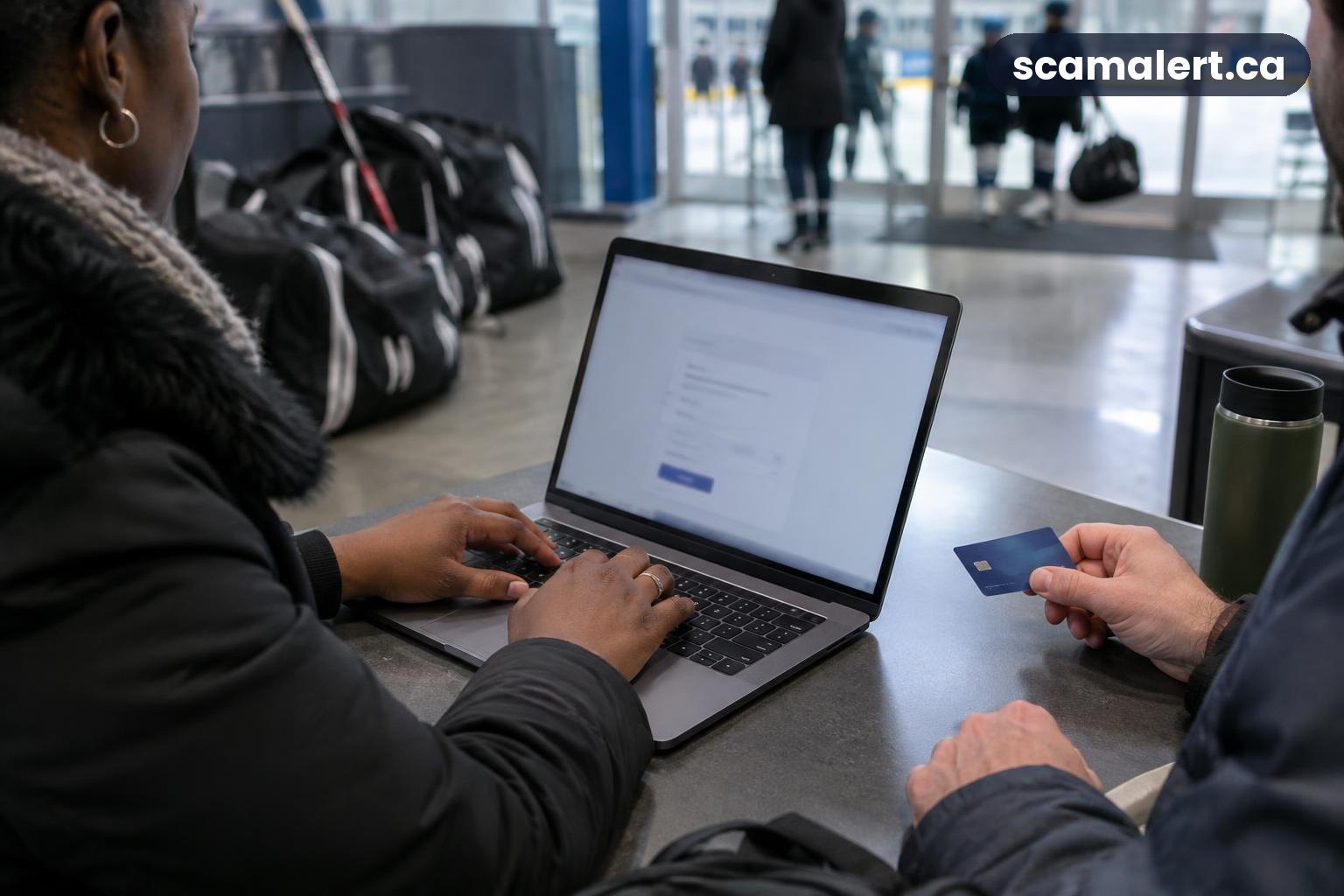
A hockey tournament scam is a concern for teams, volunteers and families after Hockey Alberta warned about fraud aimed at minor hockey tournaments. If you are organizing an event or supporting a young player, take a moment to verify payment requests, tournament information and unexpected messages before acting.
What the hockey tournament scam looks like
Hockey Alberta has warned that a scam is aimed at minor hockey tournaments. The warning is a reason for tournament organizers and families to stay alert, but it does not mean every tournament message, seller or payment request is fraudulent. Check who sent a request and whether it matches information shared through the team or event’s established channels.
Scams connected to events can take different forms. Someone may pretend to represent an organizer, team, vendor or other trusted contact, or may offer something connected to attending an event. The goal may be to get money or personal or banking information. These are general ways event-related fraud can work; do not assume a particular approach has been used in your tournament.
A message can look convincing because it refers to a real team, venue or event. A familiar name, logo or copied schedule is not proof that the sender is authorized. Scammers can also create urgency, such as claiming that a payment must be made immediately to avoid losing access or missing a deadline.
For families, the practical question is whether the request can be confirmed independently. For organizers, it is whether families know which accounts, contacts and payment methods are genuinely approved. A clear process makes unusual requests easier to spot and gives people a safe way to check before paying.
Red flags to watch for
- Unexpected payment instructions: A message asks you to send money to a new account, use an unfamiliar payment method or pay a person instead of the organization you expected.
- Pressure to act quickly: The sender says you will lose a place, ticket or opportunity unless you pay or share information right away. Pause and verify before responding.
- A request that changes: You are told that payment details, deadlines or contact information have changed, but the change has not appeared through the channels your team normally uses.
- Unverified offers: Someone offers event-related goods or services but cannot be confirmed by the organizer. Be cautious about paying in advance when you have not independently checked the seller.
- Requests for sensitive details: A person asks for a password, a one-time verification code, full banking credentials or more personal information than the transaction requires. Do not share account sign-in details or codes.
- Odd or inconsistent messages: The sender’s address, account name, writing style or payment information differs from what you have previously used. A polished message can still be deceptive.
- Instructions not to verify: The sender discourages you from contacting the team, organizer or venue directly. A legitimate request should be checkable through a separate, trusted route.
Tournament payment scams: how to check a request
Do not use contact details or payment links supplied only in a suspicious message to verify that message. Instead, contact the organizer using information you already trust, such as the team’s established group or a known contact. If the request claims to come from a specific person, reach that person through a separate channel.
Before sending money, confirm what the payment is for, who receives it and whether the amount and method match the instructions you were given previously. If you are unsure, wait until you can confirm. A delay is safer than transferring money to an account that has not been verified.
Be careful with links and attachments in unexpected messages. Rather than opening a link to sign in or pay, navigate to the organization’s official website yourself or ask a known organizer for the correct process. Never enter a password or verification code on a page reached through a message you cannot verify.
Organizers can reduce confusion by sharing payment instructions through established channels and telling families how to confirm a change. Keep the contact route for questions easy to find. If payment details genuinely need to change, explain the change through a trusted channel and give families a way to check it before they pay.
What to do if you’ve been targeted
- Stop the interaction. Do not send more money, share additional information, click more links or reply with verification codes. If you are unsure whether a request is genuine, pause and confirm it independently.
- Contact the real organizer. Use a contact method you already trust to check whether the message or offer is connected to the event. Tell them if someone is using the team or tournament’s name so they can alert other families through established channels.
- Contact your bank promptly if money or banking information is involved. Explain what happened and follow the bank’s instructions. Ask whether it can help secure accounts or payment methods. Change affected passwords from a trusted device, especially if you reused them elsewhere, and do not share any verification codes with someone who contacts you.
- Keep useful records. Save messages, emails, account names, receipts and transaction details. Take screenshots if needed, but do not forward suspicious links to other families. These records can help your bank, local police or the Canadian Anti-Fraud Centre understand what happened.
- Warn people who may be affected. Tell the team or event organizer through a trusted channel. Share the warning without reposting links or personal information that could expose someone else to risk.
- Report the incident. Contact local police and the Canadian Anti-Fraud Centre, even if you are uncertain whether a payment can be recovered. If a child’s or another person’s information was shared, tell the relevant adult or account holder and take steps to secure the affected accounts.
How to report it
Report suspected fraud to the Canadian Anti-Fraud Centre online or by calling 1-888-495-8501. You can report an attempted scam even if you did not lose money. Include the details you have saved, and avoid putting sensitive account information in public posts.
Contact your local police to report the incident, particularly if money was taken, someone’s identity was misused or you feel at immediate risk. If a payment or banking detail is involved, contact your bank as soon as possible using the number on your bank card or its official website—not a number supplied by the person who contacted you.
Families and organizers can also check for official updates from Hockey Alberta and use their team’s trusted communication channels to confirm event arrangements. Verify first, report concerns and help other families avoid acting on an unconfirmed request.
Source: Hockey Alberta warns of scam aimed at minor hockey tournaments – CBC
Reviewed by our editorial team on .

The Scam Alert Team tracks fraud targeting Canadians and turns official warnings into clear, practical advice. Our team has a background in IT and cybersecurity, and every article is fact-checked against official sources before publication. How we verify alerts