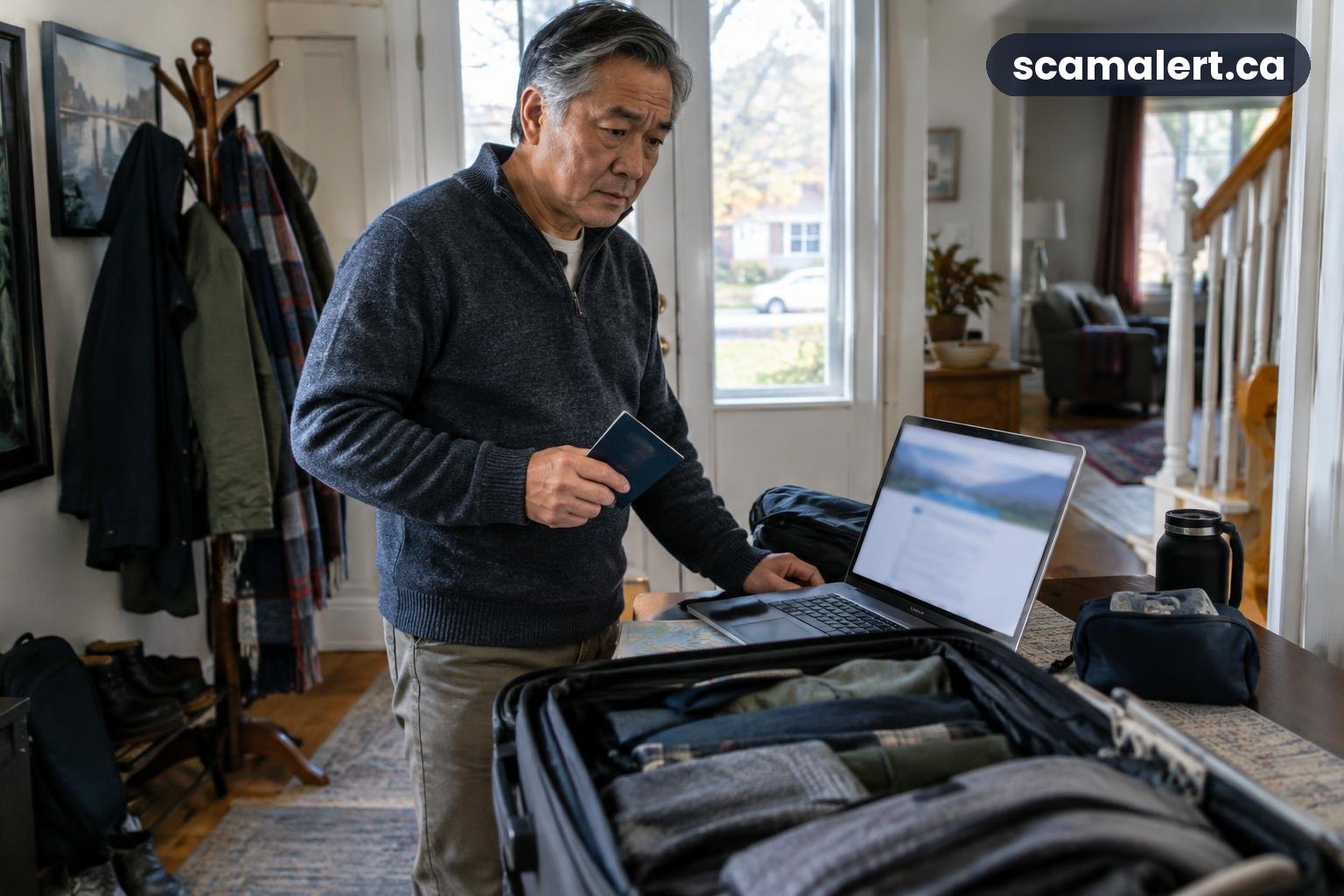
An ETIAS scam can target Canadians planning a trip to Europe through websites that look like they handle travel permits. Travel Tourister warns travellers not to pay fake permit websites; check current requirements and use official information before sharing details or money.
A polished website is not proof that a service is official. Some third-party businesses may offer travel-document assistance, but an unfamiliar site can also mislead you about what it provides, charge for unnecessary help or collect personal and payment information. Take time to verify before you proceed.
What the ETIAS scam looks like
A fake site may present itself as the place to apply for, renew or receive an ETIAS travel authorisation. It may use official-sounding language, European imagery, flags or a design that resembles a government service. The goal may be to persuade you to enter personal details, passport information or payment-card information.
Some unofficial services advertise help with an application. A site might not claim to be the official service outright, but still leave you with the impression that paying it is necessary. It may charge an added service fee, provide little or no useful assistance, or fail to deliver what you expected.
Scammers can also use email, text messages, search ads or social media posts to steer travellers to a lookalike page. A message might create urgency by saying you need to act quickly to avoid problems with your trip. Do not rely on a link in an unexpected message, even if the page looks convincing.
Requirements and application arrangements can change. Before starting, check the official European Union travel information at travel-europe.europa.eu and current Canadian travel advice at Travel.gc.ca. Use those official sources to confirm what applies to your destination and travel plans instead of trusting a site that found you.
Red flags to watch for
- A web address that does not match an official service. Look carefully at the domain name. Extra words, unusual spelling or a web address that only resembles an official one are reasons to stop and verify independently.
- Pressure to pay immediately. A countdown, threat or claim that you will lose your chance to travel unless you pay at once is a warning sign. Pause and confirm the rules through official channels.
- Promises of guaranteed approval or unusually fast results. Be cautious if a site claims it can guarantee an outcome or bypass normal steps. Do not treat confident marketing as proof of legitimacy.
- Unclear fees or services. Check who operates the site, what it will do for you, and whether the price includes an added service charge. If those details are hidden or confusing, do not enter payment information.
- Requests for more information than seems necessary. Passport and personal details can be valuable to criminals. If a site asks for information before you have confirmed who runs it and why it needs it, stop.
- Unexpected payment methods. Be wary of requests to pay by gift card, cryptocurrency, wire transfer or another method that is difficult to reverse. Do not send money simply because a page says it is required.
- Contact details you cannot verify. A logo, web form or email address on the same site does not independently confirm who operates it. Look for information through an official source you reached yourself.
- Messages that take you straight to a payment page. Avoid opening application or payment links in unsolicited messages. Navigate to the official information site by entering its address yourself.
What to do if you’ve been targeted
- Stop before paying or sharing more. Close the page and do not reply to pressure messages. If you are unsure whether you have reached an official service, use an independently verified government website to check.
- Check the application information again. Find the relevant information through the official European Union travel site and Canadian travel advice. Confirm the current requirements for your circumstances before deciding whether to apply or pay any service.
- Keep a record of what happened. Save the website address, messages, emails, receipts and transaction details. Take screenshots if it is safe to do so, but do not revisit a suspicious page or download files just to gather evidence.
- Contact your bank or card provider if you paid. Tell them you may have paid a fraudulent or misleading website and ask what steps they recommend. If you entered banking or card details, ask whether the account or card should be secured or replaced. Watch for unfamiliar transactions.
- Protect information you shared. If you provided a password, change it anywhere you used it and avoid reusing the replacement. If you shared identity or passport details, ask the relevant issuing authority what precautions are available and be alert for follow-up messages pretending to help.
- Be cautious of recovery offers. Someone may contact you claiming they can get your money back for an upfront fee or recover information you submitted. Verify such claims independently and do not provide more payment details or passwords.
- Tell anyone travelling with you. If a family member or travel companion used the same site or received the same message, let them know what happened. They can check their own accounts and avoid following the same link.
How to report it
Report suspected online fraud to the Canadian Anti-Fraud Centre at 1-888-495-8501 or antifraudcentre-centreantifraude.ca. Include the website address and any messages, receipts or payment details you have saved. Reporting can help authorities identify patterns, though it does not guarantee that lost money will be recovered.
You can also contact your local police service, particularly if you lost money, shared sensitive identity information or are being threatened. If money or banking details are involved, contact your bank or card provider promptly as well. Ask what steps to take to protect your accounts and dispute or stop a transaction.
When you report the incident, describe what you were asked to do and what information you provided. Do not send a copy of your passport or banking information to an unverified person who claims to be investigating. Keep your records and share them only through a reporting channel you have independently confirmed.
How to check a Europe travel permit website
Start from a trusted official page, rather than a search result, advertisement or message link. Check that the address is the one linked from the official European Union travel information site. A familiar-looking page title, emblem or layout is not enough to verify the operator.
Before submitting anything, read the page carefully. Confirm whether you are dealing with a government service or a private assistance business, and make sure you understand any fee and what it covers. If the site makes its identity, terms or next steps difficult to understand, leave it and check through an official channel.
Keep your travel planning separate from urgency tactics. A warning that you must pay right now should prompt you to pause, not rush. The safest response to a possible ETIAS scam is to verify current rules independently, avoid sharing information on an unconfirmed site, and contact your bank quickly if you have already paid.
Source: ETIAS Scam Warning: Don’t Pay Fake Europe Travel Permit Websites – Travel Tourister
Reviewed by our editorial team on .

The Scam Alert Team tracks fraud targeting Canadians and turns official warnings into clear, practical advice. Our team has a background in IT and cybersecurity, and every article is fact-checked against official sources before publication. How we verify alerts