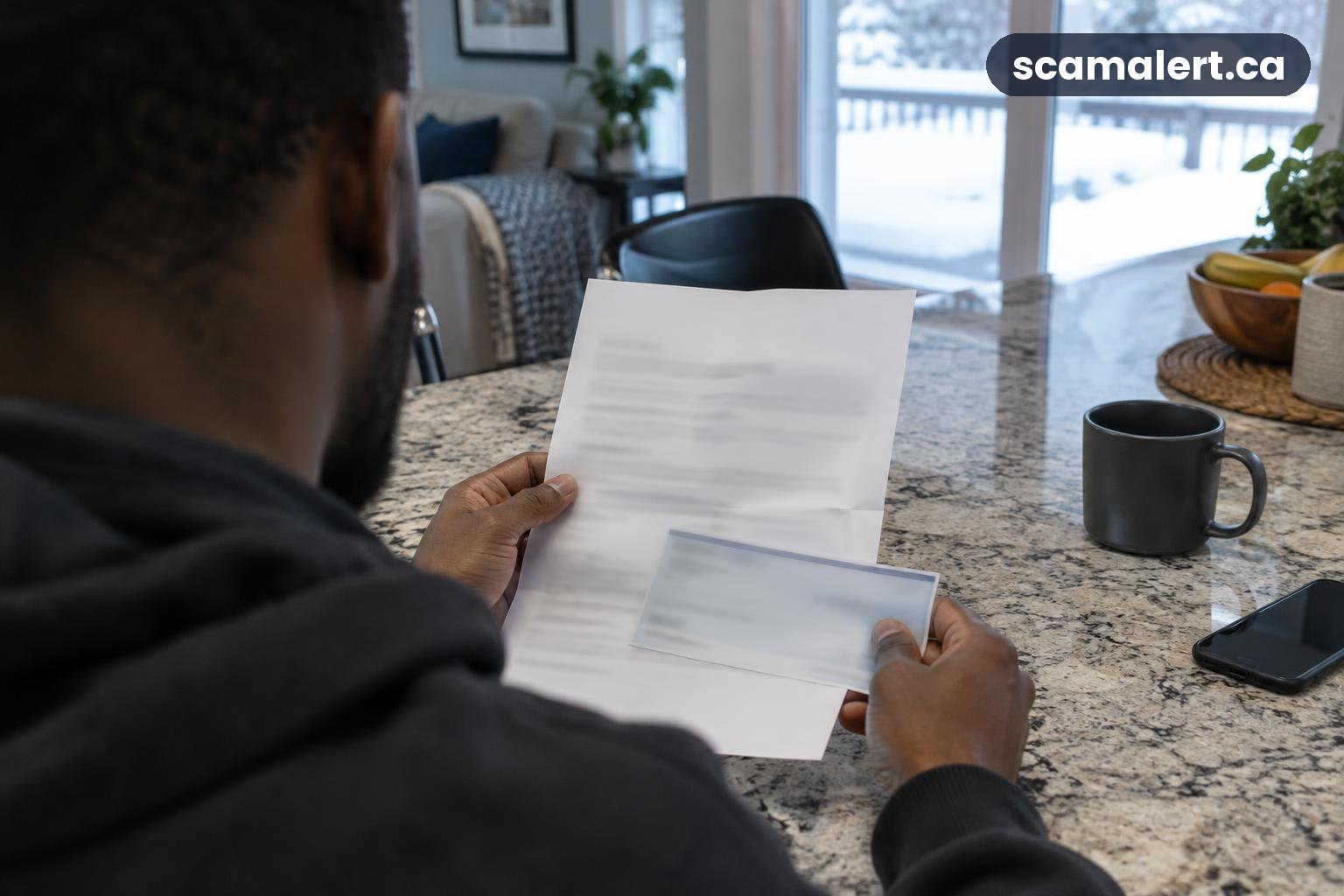
A mystery shopper scam can make a job offer look like an easy way to earn money, then ask you to deposit a cheque and send some of the funds elsewhere. Do not deposit a cheque or transfer money for an unfamiliar employer. A bank may let you use cheque funds before confirming the cheque is genuine, and you could have to repay money that is later removed from your account.
How a mystery shopper scam works
Mystery shoppers are hired to assess customer service or a shopping experience. A scammer may use that familiar idea to advertise a job, contact someone who has posted a résumé, or send an unexpected offer. The message may promise quick pay for a simple assignment, such as visiting a store or testing a service.
The suspicious part often comes after you accept. You may receive a cheque and instructions to deposit it, keep a portion as your pay, then use the rest to buy items, gift cards, or money orders, or send money to another person. The assignment may be described as checking how a cashier handles a purchase or how a money-transfer service works.
The cheque can later be returned as counterfeit, altered, or otherwise invalid. Any money you sent or spent may be difficult to recover, while the bank can take the cheque amount back from your account. The fact that funds appear in your account—or that you can withdraw them—does not by itself mean the cheque has fully cleared.
Some offers may instead ask for your banking details, identification, or an upfront fee. Those requests can expose you to identity theft or further financial loss. A real retailer or service provider is not responsible simply because its name or logo is used in a fake job offer.
Mystery shopper job offer variations
Not every approach looks the same. One mystery shopper scam may arrive by email or text, while another may appear in an online job listing or social media post. The sender may claim to represent a retailer, research company, or payment service. A familiar name is not proof that the message came from that organization.
Some versions focus on cheque deposits and transfers. Others may ask you to pay for training, registration, a background check, or access to assignments before you can start. A request to pay an employer through an unusual method, or to send money back from a cheque, deserves particular caution.
An offer can also be designed to collect personal information rather than obtain an immediate payment. A form asking for a Social Insurance Number, online banking password, or security code before you have independently verified the employer is not a safe way to apply. Do not share account passwords or one-time security codes with a recruiter.
Red flags in a mystery shopper scam
One sign alone does not prove an offer is fraudulent, but several warning signs together are reason to stop and check. Be especially cautious if an employer asks you to handle money before you have completed verified work.
- You receive an unexpected job offer without a clear application or interview process.
- The work sounds unusually easy, but the promised pay seems high for a brief task.
- You are sent a cheque and told to deposit it, keep a cut, and forward or spend the rest.
- You are asked to buy gift cards, send a wire transfer, purchase money orders, or return part of a payment.
- The sender pressures you to act quickly or says you will lose the job if you wait.
- You are asked to pay fees or provide sensitive personal or banking information before the employer is verified.
- The contact details or email address do not match information you independently find for the organization.
- The sender discourages you from speaking to your bank or checking the offer through another contact method.
How to check a mystery shopper job safely
Pause before replying, depositing anything, or sharing information. Search for the organization using a source you find independently, not a link or phone number in the offer. Contact it through its official website or a contact method you already trust, and ask whether the job and sender are genuine.
Check the details of the work. Ask what the assignment involves, how pay is calculated, when it is paid, and whether you must spend your own money. A legitimate assignment should not require you to send back part of a cheque or use your personal bank account to move money for someone else.
If you receive a cheque, do not rely on a deposit receipt, your account balance, or the availability of funds as confirmation that it is genuine. Ask your bank how it handles the cheque and what happens if it is later returned. Do not spend or transfer the money while the cheque’s status is uncertain.
Protect your personal information as carefully as your money. Do not give an unverified recruiter your online banking password, security codes, or identity documents. If you have already shared information, tell the relevant financial institution and ask what steps it recommends to secure your accounts.
What to do if you deposited the cheque
If you have deposited a cheque or followed instructions to send money, act promptly. Contact your bank using the number on your bank card or statement, or another contact method you know is genuine. Explain that the cheque came from a job offer and ask whether it can be stopped, flagged, or handled in another way.
- Stop sending money. Do not make another transfer, buy more gift cards, or return any part of the payment, even if the sender says it is urgent.
- Call your bank. Tell the bank what happened, including whether you deposited a cheque, withdrew funds, or shared banking information. Follow its instructions and ask about protecting your account.
- Save the evidence. Keep the job posting, emails, texts, cheque information, receipts, and records of payments. Do not delete messages or agree to meet the sender.
- Secure affected accounts. If you shared a password, change it using the official website or app. If you shared identity information, ask your bank and the relevant organization what safeguards are appropriate.
- Report the incident. Contact the Canadian Anti-Fraud Centre and your local police. If money or banking details were involved, report it to your bank as well.
If you only received an offer but did not deposit a cheque or share information, you can still stop responding, block the sender, and report the message. Do not pay a service that promises to recover money for an upfront fee; requests for more payment after a loss can create additional risk.
How to report a mystery shopper scam in Canada
Report suspected or completed fraud to the Canadian Anti-Fraud Centre online or by phone at 1-888-495-8501. You can report even if you did not lose money. Provide the messages and payment details you saved, but do not include passwords or security codes in a report.
Contact your local police service, particularly if money was taken, you were threatened, or your identity information was misused. If a cheque was deposited, money was sent, or banking information was exposed, notify your bank promptly. These reports help the relevant organizations assess the incident and advise you about next steps.
Frequently asked questions
Can a mystery shopper job be legitimate?
Yes, mystery shopping can be legitimate work. But an offer that asks you to deposit a cheque and send or spend part of the money is a serious warning sign. Verify the employer independently before accepting an assignment or sharing information.
Does money showing in my account mean the cheque cleared?
No. A bank may make funds available before it has confirmed that a cheque is valid. If the cheque is later returned, the bank may remove the money from your account. Ask your bank about the specific cheque and do not use the funds while its status is uncertain.
What if I already sent money?
Contact your bank right away and explain how you sent it. Ask whether the payment can be stopped or recalled, and follow the bank’s instructions. Save the messages and receipts, report the incident to local police and the Canadian Anti-Fraud Centre, and do not send more money to the sender.
Should I reply to the job offer to check if it is real?
Do not rely on the sender to verify their own offer. Look up the organization independently and contact it through a trusted channel. If the message asks you to deposit a cheque, forward money, or provide sensitive information, do not proceed while you check.
Reviewed by our editorial team on .

The Scam Alert Team tracks fraud targeting Canadians and turns official warnings into clear, practical advice. Our team has a background in IT and cybersecurity, and every article is fact-checked against official sources before publication. How we verify alerts