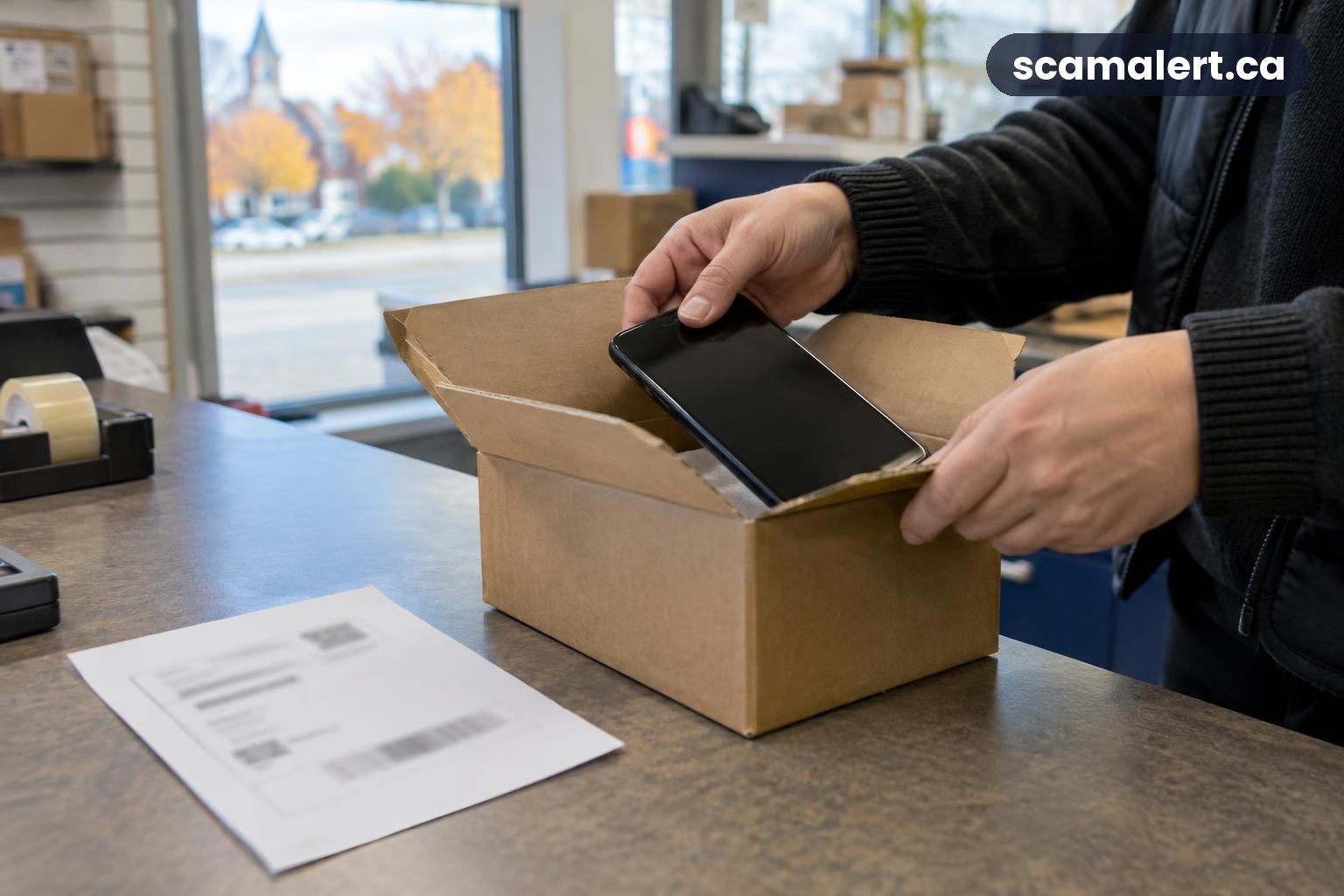
A cell phone return scam is the subject of a public warning from the North Bay Police Service. Anyone buying, selling or returning a mobile phone should take care before sharing personal information, accepting a payment or handing over a device.
The details of a return-related scam can vary. Treat an unexpected request involving a phone return as unverified until you have checked it directly with the retailer, carrier or other organization through contact details you find yourself.
What the scam looks like
A cell phone return scam may use a real purchase, return or delivery as a pretext to get money, account details, a verification code or the phone itself. A message or caller might claim there is a problem with a return, that a refund is waiting, or that you need to take quick action. Those are examples of tactics to watch for, not confirmed details of the warning.
The person contacting you may claim to represent a retailer, mobile carrier, delivery company or payment service. A familiar logo, name or phone number on a message does not prove who sent it. Contact information can be imitated or manipulated, so verify the request independently.
Some approaches may try to move a conversation away from an official customer-service channel. You could be asked to click a link, call a number provided in a message, install an app, share a one-time code, or pay a fee to release a refund or process a return. Do not assume a request is genuine just because it refers to a recent purchase.
In a transaction between individuals, a stranger could also make claims about a phone’s return, payment or ownership. Keep the device and any refund or payment arrangements under your control until you have confirmed the details. A screenshot or payment notification is not proof that funds have reached your account.
A legitimate return should be handled through the retailer or carrier’s official process. Find its contact details independently, check the return terms, and ask the company to confirm the request. If you did not start a return, do not provide information or send a phone merely because someone says a return is required.
Red flags to watch for
- Unexpected contact: You receive a call, text or email about a return you did not request or do not recognize.
- Pressure to act quickly: The person warns that a refund, account or phone will be lost unless you act immediately. Pause and verify before doing anything.
- Requests for private information: Someone asks for a password, PIN, banking details, account recovery information or a one-time verification code. Do not share these with an unexpected caller or message sender.
- Unusual payment instructions: You are told to pay a fee, send money, buy gift cards or transfer funds to receive a refund or complete a return. Confirm the process directly with the business first.
- Links or contact details supplied in the message: A return link or phone number may take you somewhere other than the business’s official service. Look up the business’s contact information independently.
- A request to install software or give remote access: Do not let someone you have not verified control your phone or computer to “fix” a return or issue a refund.
- Requests to give up the phone before verification: Do not hand over or ship a device until you have confirmed the return with the retailer or carrier and understand the process.
- Payment proof that you cannot confirm: Check your own bank or payment account rather than relying on a screenshot, email or text supplied by the other person.
- Conflicting details: A company name, order reference, return address or explanation does not match your records. Stop and contact the business through a separate, trusted channel.
What to do if you’ve been targeted
- Stop the interaction. Do not click further links, share a code, pay a fee, install an app or hand over the phone. If you are already on a call, hang up and make your own call to the business using contact information you independently locate.
- Check the return directly. Sign in by using the company’s official app or by typing its known website address yourself. Contact customer service and ask whether there is a return or refund connected to your account. Do not use the contact details in a suspicious message.
- Secure accounts if you shared information. Change any exposed passwords using the official service, and use a different, trusted device if you suspect your phone has been accessed. Review account recovery details and sign out of sessions you do not recognize. Contact your mobile carrier if your phone service or account may have been interfered with.
- Call your bank promptly if money or banking details were involved. Use the number on your bank card or an official statement, explain what happened and ask what steps are available to protect your account or payment method. If you sent money, report the transaction as soon as possible.
- Protect the device and its information. If you handed over or shipped the phone, contact the retailer or carrier and ask how to protect the device and account. If available, use the phone’s official lost-device or account security tools. Do not try to recover a phone by confronting someone yourself.
- Keep records. Save messages, emails, receipts, order details, shipping information and payment records. Note how the person contacted you and what they asked you to do. Do not forward suspicious links to other people.
- Tell anyone else affected. If a shared account, family payment method or another person’s phone is involved, let them know promptly so they can watch for unexpected account activity and secure their own information.
How to report it
Report suspected fraud to the Canadian Anti-Fraud Centre online at antifraudcentre-centreantifraude.ca or by phone at 1-888-495-8501. Share the records you saved and describe what was requested, what information or money you provided, and whether a phone was handed over or sent.
Contact your local police service to report the incident, particularly if money or a device was taken, someone used your identity, or you feel threatened. If your bank account, card or banking details were involved, contact your bank as well, using a trusted number. Reporting quickly can help the organizations involved advise you on securing accounts and documenting what happened.
If the contact claimed to be from a retailer or mobile carrier, notify that company through its official customer-service channel. A cell phone return scam can borrow the appearance of a genuine service process, so verify requests independently and do not let pressure replace your own checks.
Source: North Bay Police Service warns public about cell phone return scam – North Bay Nugget
Reviewed by our editorial team on .

The Scam Alert Team tracks fraud targeting Canadians and turns official warnings into clear, practical advice. Our team has a background in IT and cybersecurity, and every article is fact-checked against official sources before publication. How we verify alerts