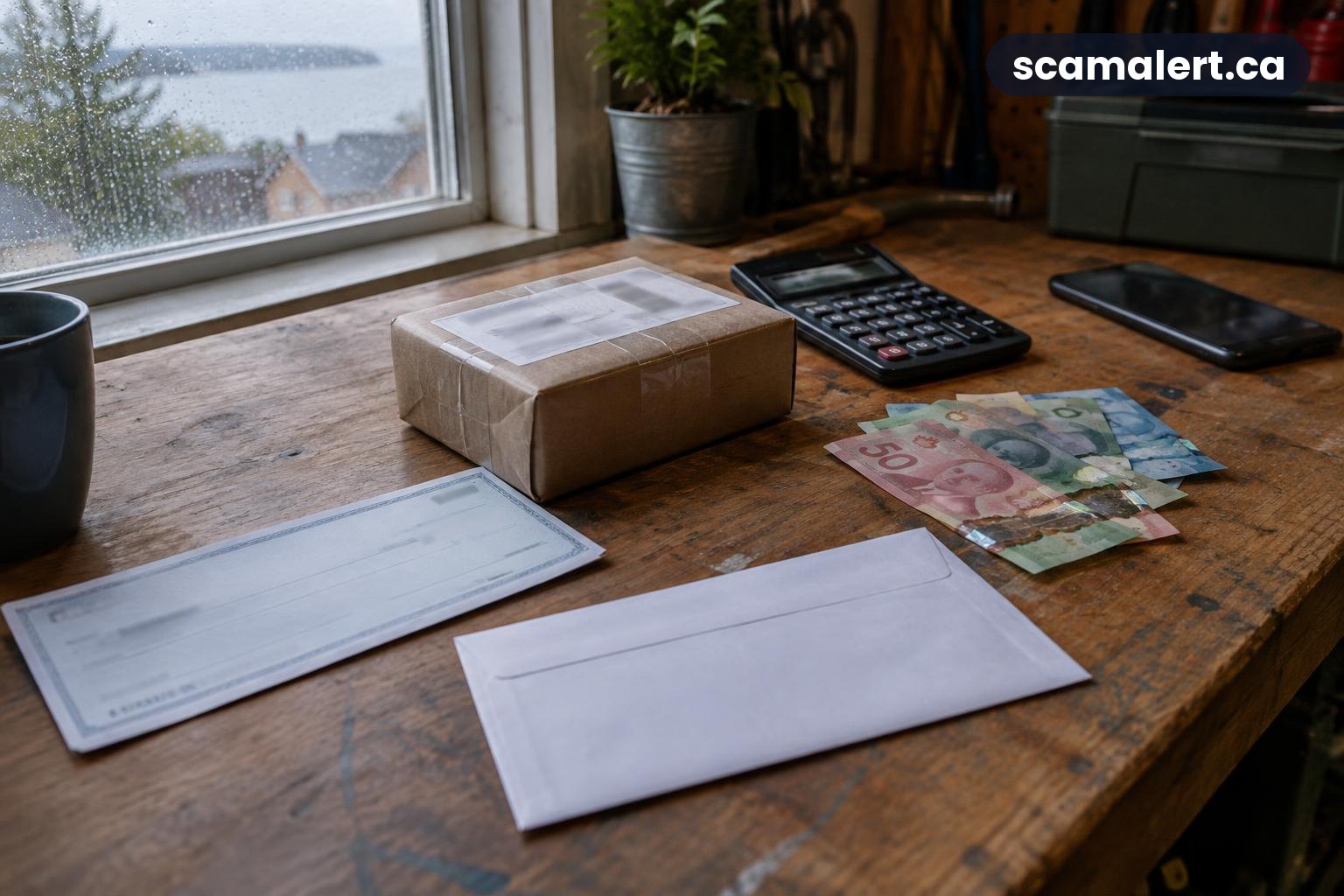
A cheque overpayment scam happens when someone sends you a cheque for more than the agreed price and asks you to send back the difference. The cheque may look convincing and the money may appear in your account, but the payment can later be found invalid. If you return money before that happens, you could lose what you sent and still owe your bank for the deposit.
This can catch people selling items, renting out a home, providing a service or applying for work. The safest rule is simple: do not refund or forward an overpayment until your bank has confirmed the cheque is genuine and the funds are final. A balance showing in your account is not, by itself, proof of that.
How a cheque overpayment scam works
A person contacts you about buying something, hiring you, renting a space or arranging another transaction. They offer to pay by cheque. The amount is higher than you asked for, and they explain it as a mistake or give a reason you should accept the extra money.
They then ask you to return the difference, pay a third party, cover a delivery or purchase supplies. They may want the money sent by e-transfer, wire transfer, gift card, cryptocurrency or another method that can be difficult to reverse. The requested refund can seem like a routine correction, but sending it is the part that puts your money at risk.
A bank may make some or all of a cheque deposit available before it has finished verifying the payment. That temporary availability does not guarantee the cheque will be honoured. If the cheque is later rejected, the deposit can be reversed. You may then be responsible for the amount you withdrew or sent, even if the apparent payment had been visible in your account.
For that reason, the cheque overpayment scam is not made safe by a cheque that looks official, a deposit receipt or an account balance that has increased. Ask your bank what the deposit status means and whether the payment has been fully verified. Do not rely on the sender’s explanation or on a screenshot of a payment.
Common overpayment scenarios in Canada
In an online sale, a supposed buyer may agree to your price, send a cheque for more and ask you to return the extra amount. They might say the additional money is for a mover or courier. Do not send an item or pay anyone based on a cheque that has not been confirmed by your bank.
A person offering a job may send a cheque and tell you to use part of it to buy equipment or pay a supplier. A request to handle money for someone you have not met, especially before your work begins, deserves careful scrutiny. Contact the employer using contact information you find independently, not details supplied in a message that may be part of the offer.
A similar approach can appear in a rental or service arrangement. Someone may claim to have paid too much for a deposit, booking or job and ask you to send some back. They may also press you to act quickly, saying a delivery or other arrangement depends on the refund. A genuine-looking reason does not verify the cheque.
These situations can overlap with other payment problems. A person may show a false transfer confirmation instead of a cheque, or ask you to move money between accounts. Treat each payment as unconfirmed until your own financial institution tells you otherwise.
Red flags to watch for
- The payment is larger than agreed. The sender asks you to refund the difference rather than cancel the payment and arrange a new one.
- You are asked to pay someone else. This could be a courier, supplier, assistant or another person you have not independently verified.
- You are pressured to act quickly. The sender says you must return money, release an item or make a purchase before you can check the payment.
- The refund must use a different method. For example, you are told to deposit a cheque but send the money back through an e-transfer, wire, gift card or cryptocurrency.
- The sender avoids ordinary payment arrangements. They may resist using the exact amount owed or suggest an unusual explanation for the extra money.
- You are told that an available balance proves the cheque is good. Only your bank can explain what the deposit status means; an amount appearing in the account is not enough.
- You are asked to share private financial information. Do not provide your banking password, one-time verification code or other account security details to a buyer, employer or stranger.
How to protect yourself from cheque overpayment scams
Agree on the price and payment method before completing a sale or service. If a payer sends too much, do not send back the difference. Ask them to contact their financial institution about cancelling or correcting the payment, and wait for your bank’s guidance before taking any action.
Contact your bank using the number on your bank card, statement or official banking app. Explain that you received a cheque for more than the agreed amount and ask whether it has been verified, whether it can still be returned unpaid, and what you should do next. Do not use a phone number or link supplied by the person who sent the cheque.
Keep control of the transaction. Do not release goods, pay a courier, buy equipment or forward money because someone says the cheque has cleared. Avoid spending or moving funds from a cheque deposit until your bank confirms the status. If the sender is legitimate, they can wait while you verify the payment or arrange a safer payment method.
When selling online, keep messages and payment records, and be cautious about changing the agreed price or payment plan after the sale is arranged. For a job offer, research the employer independently and check that the work and payment process make sense before accepting a cheque or spending money on the employer’s behalf. Never let a stranger use your account to receive or pass along funds.
Do not assume that a cheque is genuine because it has a bank name, looks professionally printed or arrives by delivery. Do not rely on a deposit slip, a sender’s screenshot or a message claiming a payment has been verified. Check directly with your bank through a contact method you already trust.
What to do if you were targeted
- Stop sending money. Do not return an overpayment, pay a third party or follow further payment instructions. If you have not deposited the cheque, do not deposit it just to see whether it works.
- Call your bank promptly. Use a trusted contact method and explain what happened. If you deposited the cheque, tell the bank whether you withdrew, transferred or spent any of the money. Follow its instructions and ask whether your account or banking details need protection.
- Keep the evidence. Save messages, emails, the cheque or an image of it, payment receipts and details of any transfers. Do not continue communicating just to gather more information if the person is pressuring or threatening you.
- Secure affected accounts. If you shared a password, change it and contact the relevant institution. If you gave out banking details or a verification code, tell your bank immediately so it can advise you on securing your account.
- Contact the other people or services involved. If you paid through a bank or payment provider, ask whether the transaction can be stopped or disputed. If you shared personal information, ask the relevant organizations how to protect the affected accounts.
- Report the incident. You can report suspected fraud even if you did not lose money. A report helps create a record and may help identify connected activity.
How to report a cheque overpayment scam
In Canada, report suspected fraud to the Canadian Anti-Fraud Centre at antifraudcentre-centreantifraude.ca or by calling 1-888-495-8501. Share what happened and preserve the messages and payment details that may help with your report.
Contact your local police service as well, particularly if money was taken, you were threatened or you need to document the incident. If money or banking information is involved, tell your bank as soon as possible. These are separate steps: contacting your bank does not replace reporting to the Canadian Anti-Fraud Centre or local police.
Frequently asked questions
Does money showing in my account mean the cheque is safe?
No. A deposit may appear available before the bank has completed verification. Ask your bank directly whether the cheque has been confirmed and whether the funds are final. Do not refund an overpayment based only on your account balance.
What if the sender says the extra amount was an honest mistake?
Do not send money back while the cheque is unverified. Ask the sender to contact their bank about correcting the payment, and speak with your own bank using a trusted contact method. A reasonable explanation cannot establish that a cheque is valid.
Can I get back money I already sent?
It may depend on how you paid and whether the transfer can still be stopped. Contact your bank or payment provider immediately and explain that you believe the payment was connected to a cheque overpayment scam. Do not pay anyone who promises to recover the money in exchange for an upfront fee.
Should I deposit the cheque if I am unsure?
If you suspect something is wrong, contact your bank before depositing it and follow its advice. Do not use the cheque to make another payment or release goods while its status is uncertain. If the arrangement depends on you quickly forwarding money, walk away and report the contact.
Reviewed by our editorial team on .

The Scam Alert Team tracks fraud targeting Canadians and turns official warnings into clear, practical advice. Our team has a background in IT and cybersecurity, and every article is fact-checked against official sources before publication. How we verify alerts