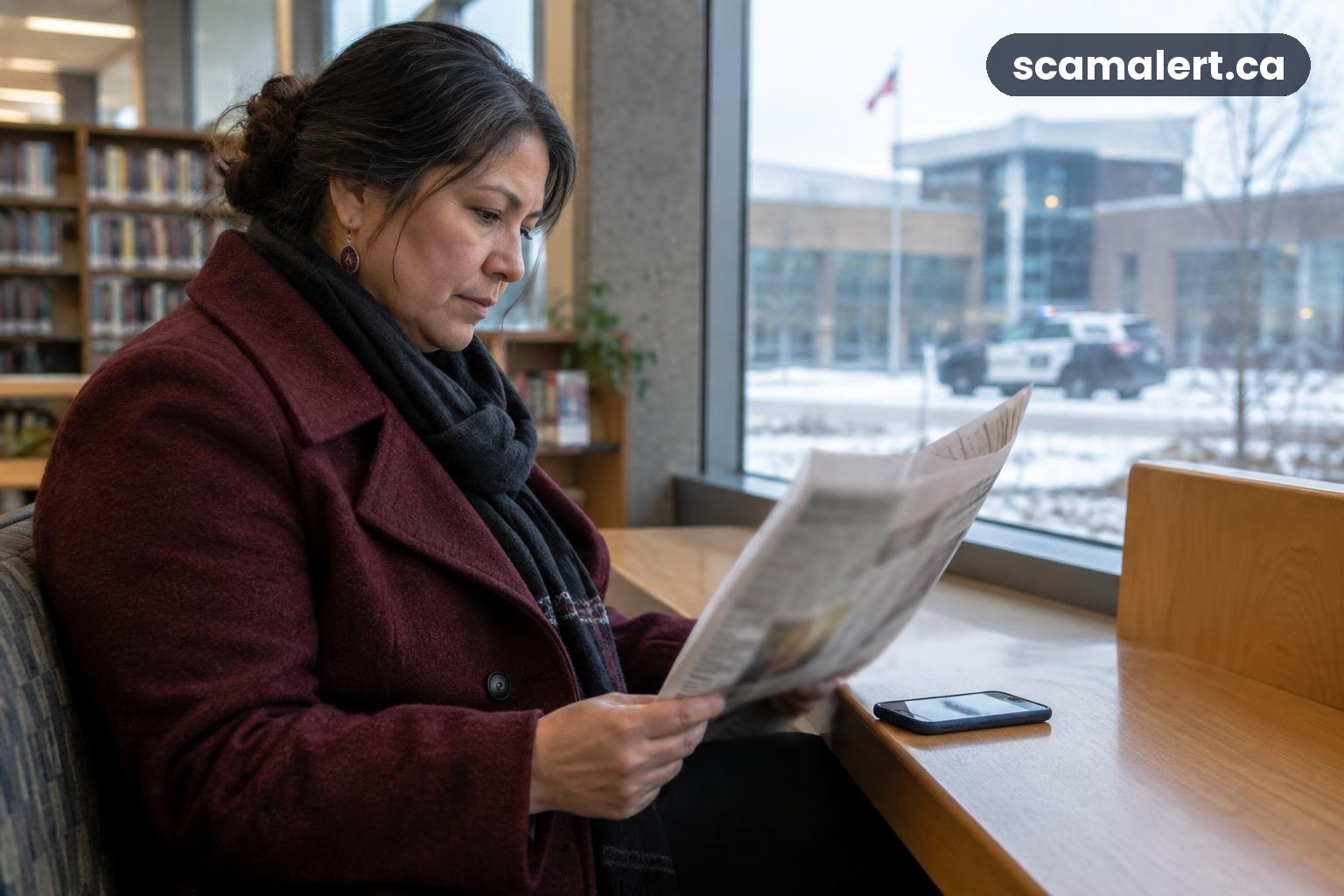
A CTV News headline dated October 6, 2026, reports that two police officers have been charged with fraud and breach of trust. The headline does not provide the officers’ names, location, alleged conduct or information about possible victims, so those details should not be assumed.
What the scam looks like
The available information identifies criminal charges, but it does not describe a particular scam or say that members of the public were targeted. A charge is an allegation, not proof of guilt; the accused are presumed innocent unless the allegations are proven in court.
That distinction matters when reading reports about alleged fraud involving people in positions of trust. The headline alone does not establish what happened, whether money was lost, or whether the case involved any interaction with the public. More detail would be needed to answer those questions.
Separately, anyone can receive an unexpected call, text or visit from someone claiming to be a police officer. That general risk is not identified as part of this case. If someone asks you to send money, share banking details or act immediately because they claim to be police, pause and verify the request independently. Do not rely on a phone number or link supplied by the person contacting you. Look up the police service’s public contact information yourself and call to check.
A genuine investigation may involve questions or requests for information, but pressure to make an urgent payment or keep a request secret is a reason to stop and verify. Do not give a caller remote access to your device or hand over cash, gift cards or cryptocurrency based only on their claim to be an officer.
Red flags to watch for
- Urgency or threats: Someone says you must pay or act right away to avoid arrest or another immediate consequence.
- Unusual payment demands: You are told to use gift cards, cryptocurrency, a money transfer or another hard-to-reverse payment method.
- Requests for sensitive information: A caller asks for passwords, one-time security codes, banking details or a photo of your identification without a clear, verified reason.
- Pressure to keep it secret: You are told not to talk to family, your bank or another police service.
- Contact details supplied by the caller: You are urged to use a number, link or email address they provide rather than independently finding an official contact method.
- Claims that cannot be checked: The person refuses to let you end the conversation and call the police service through its published number.
These are general warning signs for possible impersonation or payment fraud. They are not details about the charges reported in the headline.
What to do if you’ve been targeted
- Stop the interaction. End the call or conversation, do not click links, and do not send money or provide more information while you verify the request.
- Check independently. Find the relevant police service’s contact information from an official source and ask whether the contact or request is genuine. If you feel in immediate danger, contact emergency services.
- Contact your bank quickly if needed. If you sent money or shared banking information, call your bank using the number on your bank card or statement. Ask what steps can be taken to secure accounts or stop a transaction.
- Secure accounts and devices. Change any passwords you shared, use unique passwords where possible, and follow your bank’s guidance. If you gave someone access to your device, disconnect it from the internet and seek trusted technical help.
- Keep records. Save messages, emails, receipts and transaction details. Note when the contact happened and what was requested. Do not put yourself at risk to gather more evidence.
- Tell someone you trust. A second person can help you review the request and take practical next steps, especially if you feel pressured or uncertain.
How to report it
Report suspected fraud to the Canadian Anti-Fraud Centre at 1-888-495-8501 or through antifraudcentre-centreantifraude.ca. You can also report it to your local police. If money was sent or banking information was exposed, contact your bank as soon as possible. Reporting helps the appropriate organizations assess what happened and advise you on next steps.
If you are following the news report itself, wait for reliable updates before drawing conclusions about the allegations or the people involved. The headline confirms that charges were reported; it does not, on its own, explain the case.
Source: Two police officers charged with fraud and breach of trust – CTV News
Reviewed by our editorial team on .
Last updated

The Scam Alert Team tracks fraud targeting Canadians and turns official warnings into clear, practical advice. Our team has a background in IT and cybersecurity, and every article is fact-checked against official sources before publication. How we verify alerts