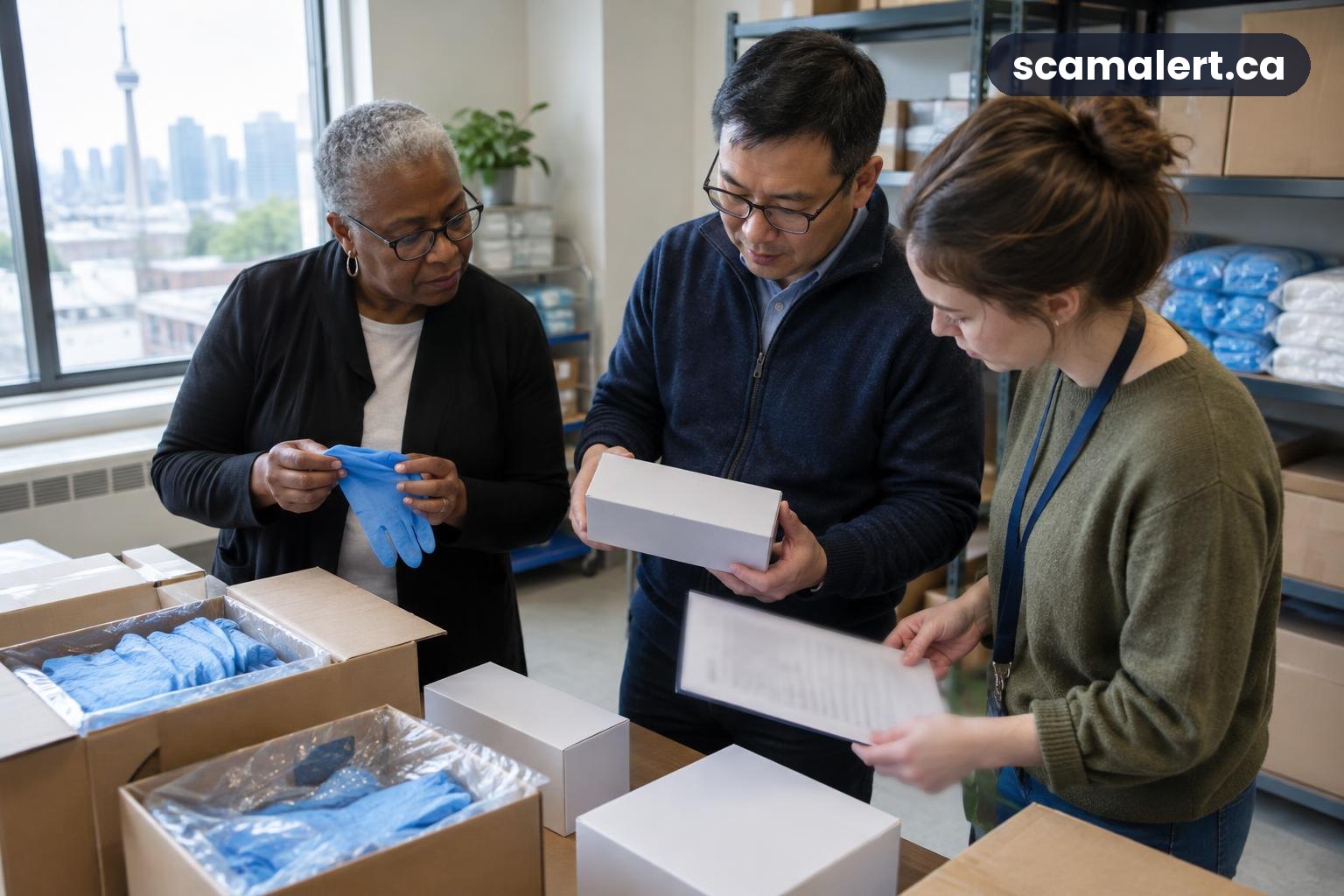
PPE scams can target businesses, community groups and individuals who need protective equipment and must choose a supplier quickly. A recent headline reports that a fraudster was jailed over a multi-million-pound PPE scam, but it does not provide details about the case or how it worked.
That headline is a reminder to check a seller and the terms of a deal before sending money. The advice below is general: it does not assume facts about the reported case, and it applies to Canadians buying personal protective equipment such as masks, gloves or other protective items.
What the scam looks like: PPE scams
PPE scams may involve a seller claiming to have equipment available, asking for payment, and then failing to deliver what was promised. Other dishonest offers may involve goods that differ from the description, unclear delivery terms or claims about product quality that the seller cannot support. These are general ways a purchase can go wrong, not details confirmed about the case in the headline.
A seller might approach a buyer directly, appear in an online listing, or respond to a request for a large order. A convincing-looking website, invoice or product photograph does not by itself prove that a supplier is genuine or has the stock it claims to have. Treat an unexpectedly easy offer with care, especially if the seller pushes you to decide immediately.
Some people buy PPE for personal use; others may be purchasing on behalf of a workplace, non-profit group or family. In each situation, the same basic checks matter: confirm who you are dealing with, understand what is being sold, and know what happens if the goods do not arrive or are not as described.
Product needs can differ depending on the work or activity involved. Do not rely only on a seller’s assurance that equipment is suitable for a particular purpose. If the intended use is important to health or workplace safety, confirm the requirements with a qualified safety professional or the relevant authority before ordering.
Red flags to watch for
- Pressure to pay fast: A supplier insists you must send money immediately or lose the offer, without giving you reasonable time to check the business and the terms.
- Unclear seller details: The seller will not provide a verifiable business identity, a way to contact them, or clear written information about the order.
- Payment that is hard to reverse: You are asked to use an unusual payment method or send money to an account that does not match the business you believe you are paying.
- Vague delivery promises: The seller will not clearly explain when the goods should arrive, what is included, or what you can do if delivery fails.
- Claims without useful support: The seller makes broad claims about quality or suitability but cannot provide reliable product information for you to check.
- Details that do not match: The business name, payment instructions, contact information and invoice appear inconsistent. Pause and independently confirm any change in payment details.
- Unusually low pricing or guaranteed stock: A price or availability claim that seems too good to be true is a reason to verify the offer, not a reason to skip checks.
- Resistance to basic questions: A seller becomes evasive when you ask for a written quote, order terms, a sample where appropriate, or time to verify the supplier.
How to check a PPE supplier
Look up the business independently rather than relying only on contact details or links supplied by the seller. Confirm that the name and contact information correspond with the business you intended to reach, and use a separately found contact method to check important details. A real business name can also be copied, so matching names alone are not proof.
Ask for a written description of the goods, the quantity, the total cost, delivery arrangements and what the seller will do if the order is not fulfilled. Read the terms before agreeing, and keep copies of the offer, invoice and messages. If the seller changes payment instructions, verify the change through a contact method you already trust.
For a large or urgent order, consider whether you can reduce the risk by placing a smaller initial order or using a payment method with suitable protections. Check the terms of your payment provider or card issuer rather than assuming a payment can be recovered. Do not send more money simply because a seller says another fee is needed to release goods, unless you have independently confirmed the charge and the agreement.
When buying for an organization, use its usual purchasing and approval procedures. A second person reviewing the supplier, invoice and payment details can help catch mistakes or suspicious changes. Do not let urgency bypass the checks your organization normally requires.
What to do if you’ve been targeted
- Stop further payments and contact: Do not send more money or share additional information just because the seller says it will fix the order. Save the messages and documents before blocking contact, if you choose to do so.
- Contact your bank or payment provider promptly: If you paid or shared banking details, explain what happened and ask what steps may be possible to protect your account or try to stop or recover a payment. Follow the provider’s instructions.
- Secure affected accounts: If you shared a password, change it anywhere it was used and enable additional account security where available. If you shared identity information, watch for unexpected account activity and ask the relevant organization how to protect your information.
- Keep evidence: Save invoices, payment records, emails, messages, listing details and delivery information. Record the seller’s claimed business identity and the timeline of events, but do not publish personal or financial details online.
- Warn others carefully: If the purchase was for a workplace or group, tell the people responsible for purchasing and account security. Share factual information through appropriate internal channels, without making claims you cannot verify.
- Report what happened: Contact the Canadian Anti-Fraud Centre and your local police. Reporting can help authorities understand suspected fraud, even if you are unsure whether the seller’s actions meet the legal definition of an offence.
How to report it
Report suspected fraud to the Canadian Anti-Fraud Centre online or by calling 1-888-495-8501. Provide the details you have, such as how you encountered the seller, what was promised, how you paid and what happened afterward. Keep your report factual and include copies of evidence when requested.
Also contact your local police service, especially if you lost money, were threatened or believe your identity or accounts have been misused. If money or banking details were involved, contact your bank or payment provider as soon as possible; a police or fraud report does not replace notifying the organization that handles your account.
If you have not paid, you can still report a suspicious approach and avoid further contact. Do not use contact details sent by the seller to verify their own claims. Take time to check the supplier independently, read the written terms and confirm payment instructions before placing an order.
Source: Fraudster jailed over multi-million pound PPE scam – Yahoo News Canada
Reviewed by our editorial team on .

The Scam Alert Team tracks fraud targeting Canadians and turns official warnings into clear, practical advice. Our team has a background in IT and cybersecurity, and every article is fact-checked against official sources before publication. How we verify alerts