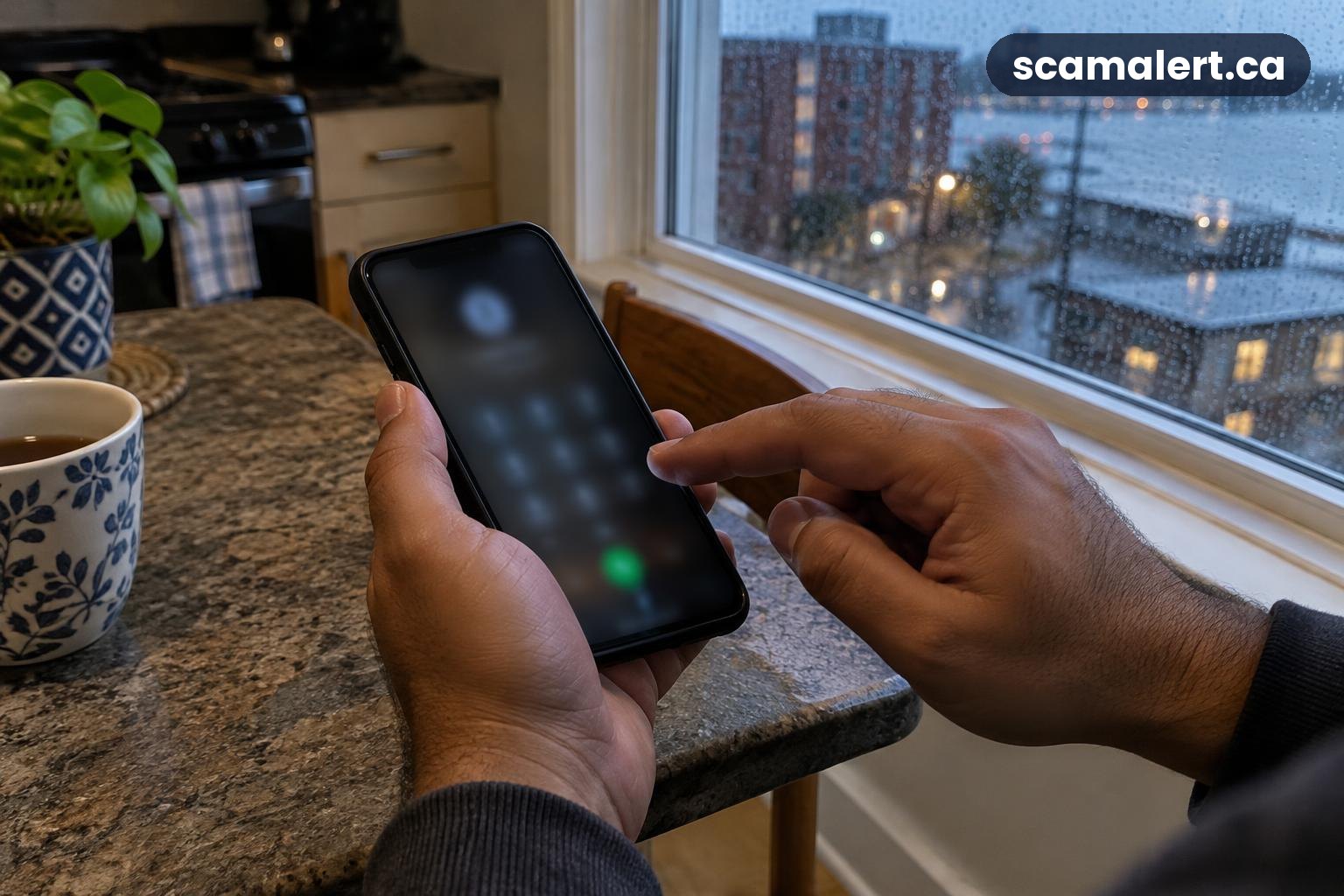
A bank and RCMP scam using phone spoofing is the subject of a report by Haligonia.ca, which says callers posed as a bank and the RCMP. Anyone receiving an unexpected call can face similar impersonation tactics, so treat the caller’s identity as something to verify—not something to assume from the number on your screen.
How a bank and RCMP scam may unfold
Phone spoofing is when a caller makes the number or name displayed on your phone appear different from the number they are calling from. A familiar-looking caller ID may be copied or misleading. It does not prove that the call is really from your bank or the RCMP.
In a bank and RCMP scam, the caller may claim to represent one of these organizations and try to make the conversation feel urgent. They might say there is a problem that needs immediate attention, or ask you to follow instructions while you are still on the phone. The details can vary; a caller’s claims alone do not confirm that an account or a person is actually at risk.
Some impersonation attempts use more than one claimed authority or organization to make a story seem convincing. That does not mean the real bank or the RCMP is involved in the call. A caller may also know some basic information about you, but that alone does not establish who they are.
Do not rely on caller ID, a professional tone, or details the caller already knows. End the call and contact the organization independently using contact information from its official website, your bank card, or a statement. Do not use a number the caller gives you or call back the number shown on your screen just because it looks familiar.
What the scam looks like
The caller may ask you to confirm personal information, share a password or security code, or take an action with your banking account. They may also ask you to install software, open a link, or move money. These are examples of warning signs to watch for, not details confirmed about the incident reported by Haligonia.ca.
A bank and RCMP scam can create pressure by insisting that you must act immediately, keep the conversation secret, or stay on the line. You are allowed to pause, hang up, and verify the story yourself. A genuine concern should not prevent you from using an independent contact method to check what is happening.
If the caller says you must transfer funds to a “safe” account, withdraw cash, or hand money to someone, do not proceed based on the call. Contact your bank using an official number and explain what you were told. Do not let a caller direct you to a number, person, or account they have supplied.
Caller ID spoofing: why a familiar number is not proof
Caller ID is useful for recognizing some calls, but it is not a reliable way to authenticate the person on the other end. A spoofed display can make an unfamiliar call appear to come from a bank, police service, or local number. Even if the displayed information looks right, independently confirm the caller before sharing information or acting.
When you end a suspicious call, use a different phone if one is available, or wait before making a new call. Then look up the organization’s contact details yourself. If you are unsure which contact route to use, visit the organization’s official website by entering its address yourself rather than following a link sent by the caller.
Red flags to watch for
- Pressure to act at once: The caller says you cannot take time to check their identity or ask someone you trust.
- A request for confidential details: They ask for a password, PIN, one-time code, or full banking information. Never read a security code aloud to someone who called you.
- Instructions to move money: They ask you to transfer funds, withdraw cash, buy gift cards, or give money to another person.
- A demand for secrecy: They tell you not to speak with your bank, family, or local police.
- Unusual access requests: They ask you to install an app, share your screen, or let them control your device.
- Reliance on caller ID: They insist that the number or name on your phone proves they are genuine.
- Discouraging independent checks: They tell you not to hang up, call an official number, or visit a branch.
What to do if you’ve been targeted
- Stop the conversation. Do not provide more information, approve a transaction, or follow instructions. Hang up if you feel pressured. Do not call a number supplied by the caller to verify their story.
- Contact your bank independently if banking is involved. Use the number on your bank card or statement, or the bank’s official website. Tell the bank if you shared account details, a password, a security code, or approved a transaction. Follow its instructions to secure your accounts and review recent activity.
- Secure accounts and devices. If you disclosed a password, change it through the genuine service and change it anywhere else you reused it. If you installed software or allowed access to your device, disconnect it from the internet and seek help from a trusted technical support provider.
- Keep a record. Note what the caller claimed, what they asked you to do, when the call happened, and any money or information you shared. Save messages or transaction records. Do not continue communicating with the caller to gather evidence.
- Tell someone you trust. A second person can help you make calls to your bank or police and spot follow-up requests. Be especially cautious if someone contacts you claiming they can recover money for a fee; verify any such offer independently.
- Act quickly if money or personal information was exposed. Contact your financial institution right away about money or banking details. If identity information was shared, ask the relevant service providers what protections or account changes are available.
How to report it
Report suspected fraud to the Canadian Anti-Fraud Centre (CAFC) online at antifraudcentre-centreantifraude.ca or by calling 1-888-495-8501. Include what happened and any records you have. Reporting can help authorities identify patterns, even if you did not lose money.
Contact your local police service to report the call, particularly if you lost money, were threatened, or shared sensitive information. If money or banking details are involved, contact your bank as soon as possible as well. For a call claiming to be from the RCMP, do not use contact details provided by the caller; find the official RCMP website at rcmp-grc.gc.ca and use an appropriate public contact route.
Remember that caller ID cannot confirm who is speaking. If a bank and RCMP scam call seems urgent, pause, end the call, and verify the claim through an official channel you found yourself.
Source: Scammers posed as bank and RCMP in phone spoofing fraud – haligonia.ca
Reviewed by our editorial team on .

The Scam Alert Team tracks fraud targeting Canadians and turns official warnings into clear, practical advice. Our team has a background in IT and cybersecurity, and every article is fact-checked against official sources before publication. How we verify alerts