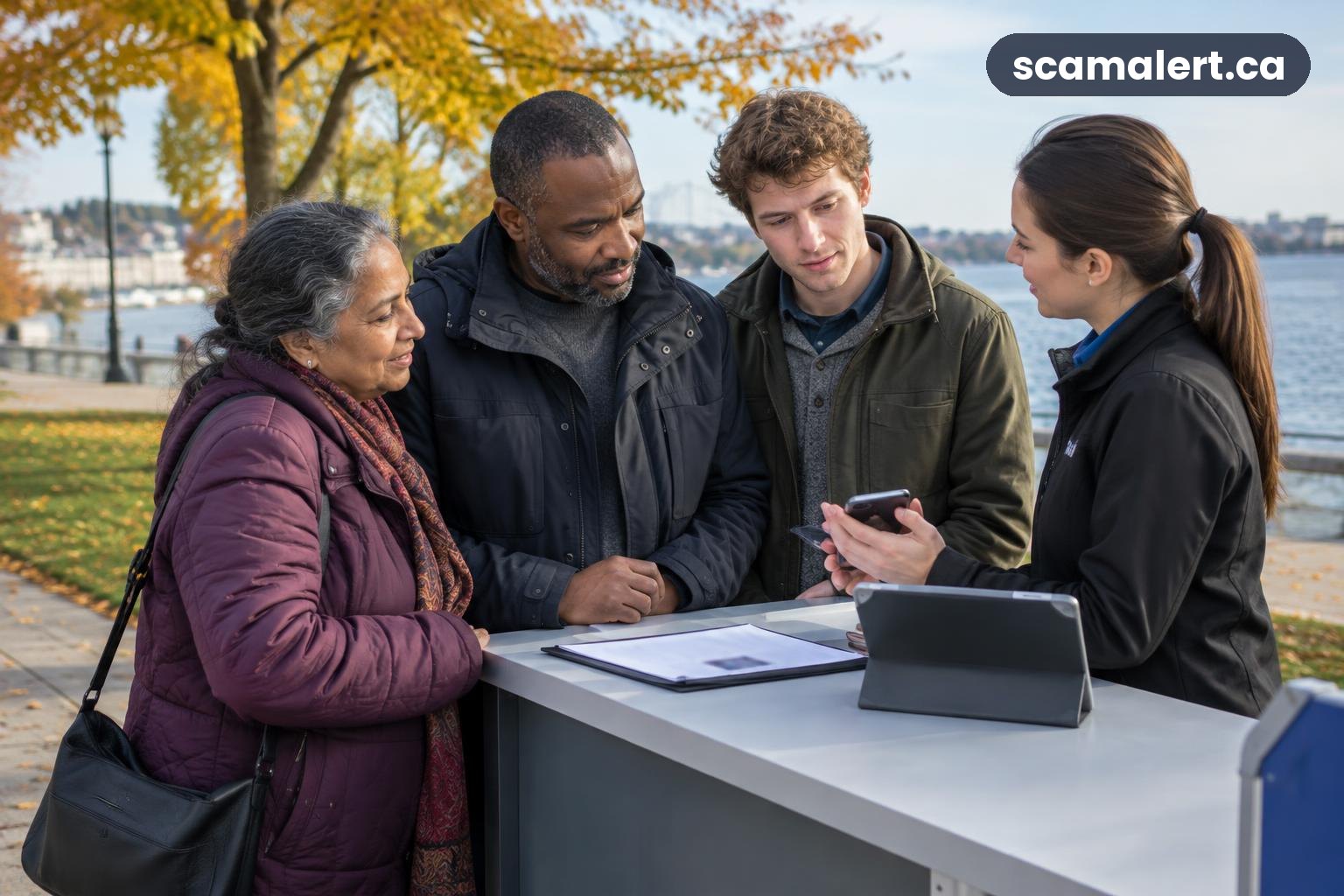
A cellphone provider scam can put your phone number, account or personal information at risk. SSM Police have issued a fraud alert about scams involving cellphone service providers, so mobile customers should be cautious about unexpected calls, texts and account requests.
Scammers may pretend to represent a real wireless company, or misuse information they have gathered to get access to an account. The legitimate provider is not responsible for someone impersonating it. If you are unsure whether a message or caller is genuine, stop and contact your provider using a number or website you find independently.
What the scam looks like
A cellphone provider scam may begin with a call, text, email or online message that appears to come from a mobile service company. The person may claim there is a problem with your account, a payment, your phone or your service. They may urge you to act immediately or ask you to confirm personal or account information.
In some common account-takeover schemes, a criminal tries to persuade a customer or provider to make a change to the phone account. That could include requesting a replacement SIM card or transferring the phone number to another device or provider. If the criminal gains control of the number, they may be able to receive calls or text messages meant for the customer, including some account verification codes.
Another approach is to use a fake discount, refund, prize or upgrade offer to draw someone into a conversation. The caller or message may ask for payment details, passwords, account PINs or a one-time code. A real-looking name or phone number on caller ID is not proof that the contact is genuine, because caller ID can be manipulated.
Some approaches rely on information from a data breach, public profile or earlier conversation to sound convincing. The person may know your name or mention a real provider, but that does not establish that they work for the company. A cellphone provider scam can also move between channels: a text may prompt you to call, or a caller may direct you to a website.
The alert from SSM Police concerns cellphone service provider scams. The alert does not establish that every unexpected provider message is fraudulent. The safe response is to verify unusual account requests through a contact method you choose yourself, rather than one supplied by the person who contacted you.
Red flags to watch for
Pay attention to the request and the pressure behind it, not just the logo, caller ID or details the person seems to know. These warning signs do not prove a message is fraudulent, but they are reasons to pause and verify it independently.
- A demand for a code: Someone asks you to read back a one-time passcode sent to your phone or email. Do not share verification codes with an unexpected caller or texter.
- A request for account credentials: A person asks for your password, account PIN or answers to security questions. Do not provide them in response to an unsolicited contact.
- Pressure to act right away: The caller says your service will be cut off, your account will be locked or an offer will disappear unless you act immediately.
- An unexpected account change: You receive a notification about a new SIM, device, number transfer or account update that you did not request.
- A link or payment demand: A message asks you to sign in through its link, pay an unexpected fee or share payment information to receive a refund or promotion.
- A caller who discourages checking: The person tells you not to contact the provider directly, or insists you must stay on the call while you take action.
- Service changes you cannot explain: Your phone suddenly cannot make calls or receive messages, or account notices arrive that you did not expect. There can be ordinary technical causes, but contact your provider promptly to check for unauthorized changes.
Spelling errors and awkward wording can be clues, but polished messages can also be fake. Do not use a link, phone number or callback instruction in a suspicious message to verify it. Instead, use the provider’s official app, a bill you already have or contact details you locate independently.
What to do if you’ve been targeted
If you received a suspicious message but did not respond, do not click links or open attachments. Block or report the contact using your device’s available tools, and delete the message after keeping any details you may need to report it. If you are uncertain whether your account was affected, contact your provider through its official channel.
- Stop the conversation. End the call or stop replying. Do not share a code, password, account PIN, payment information or identity documents. If you are already speaking with someone, hang up and make a fresh call using a contact method you have independently verified.
- Contact your cellphone provider. Tell the provider you suspect an account takeover or an unauthorized change. Ask it to check recent account activity, secure the account and explain how to protect your number and SIM. Use the provider’s official app, website or a number on an existing bill—not details sent by the suspected scammer.
- Protect your accounts. If you shared a password, change it through the genuine service and change it anywhere else you reused it. Use a unique password where possible. Review recovery details and sign-in activity on important accounts, especially email and financial accounts.
- Contact your bank if needed. If you shared banking or payment details, approved a transaction or sent money, call your bank using the number on your card or statement. Explain what happened, ask what protective steps it recommends and review recent transactions. Do not rely on a phone number provided by the person who contacted you.
- Keep useful evidence. Save the message, email, caller details, transaction records and any notices about account changes. Take screenshots if that helps, but do not forward suspicious links to other people. Evidence can help your provider, bank, police or the Canadian Anti-Fraud Centre understand what happened.
- Watch for follow-up contact. People who learn that you were targeted may try again while pretending to offer help or recover money. Treat unexpected recovery offers with caution, and do not pay someone who promises to get lost funds back without independently checking who they are.
If your phone suddenly loses service and you suspect that your number has been transferred or your SIM changed without your permission, contact your provider as soon as you can through another phone or an in-person service location. Ask it to investigate and restore control of your number. Also contact your bank and other important services if your phone number is used to verify access to those accounts.
How to report it
Report suspected fraud to the Canadian Anti-Fraud Centre online or by calling 1-888-495-8501. You can report a suspected attempt even if you did not lose money. Include what the person said, how they contacted you and any account changes or payments you noticed.
Contact your local police to report fraud, threats or a financial loss, and ask what information they need. If money or banking details were involved, contact your bank as well. Your cellphone provider should also be told about suspected account access, a SIM change or a number transfer you did not request.
For information about wireless services and consumer protections, consult the Canadian Radio-television and Telecommunications Commission website. Keep a record of the steps you take and any reference details the provider, bank or police gives you.
Frequently asked questions
Can caller ID prove a call came from my provider?
No. Caller ID can be spoofed, so a familiar name or number is not enough to confirm who is calling. Hang up and contact the provider using a number from an existing bill or its official website or app.
What if I shared a verification code?
Contact your provider immediately and explain what you shared. Ask it to secure your mobile account and check for changes. If the code was for another service, contact that service through its official channel, change your password and review account activity.
Should I report a suspicious message if I did not lose money?
Yes. You can report suspected fraud to the Canadian Anti-Fraud Centre even if you did not send money or provide information. Keep the message and report it to your provider too, especially if it used the provider’s name or asked for access to your mobile account.
Source: SSM Police: Fraud Alert – Cellphone Service Provider Scams – Wawa-news.com
Reviewed by our editorial team on .

The Scam Alert Team tracks fraud targeting Canadians and turns official warnings into clear, practical advice. Our team has a background in IT and cybersecurity, and every article is fact-checked against official sources before publication. How we verify alerts