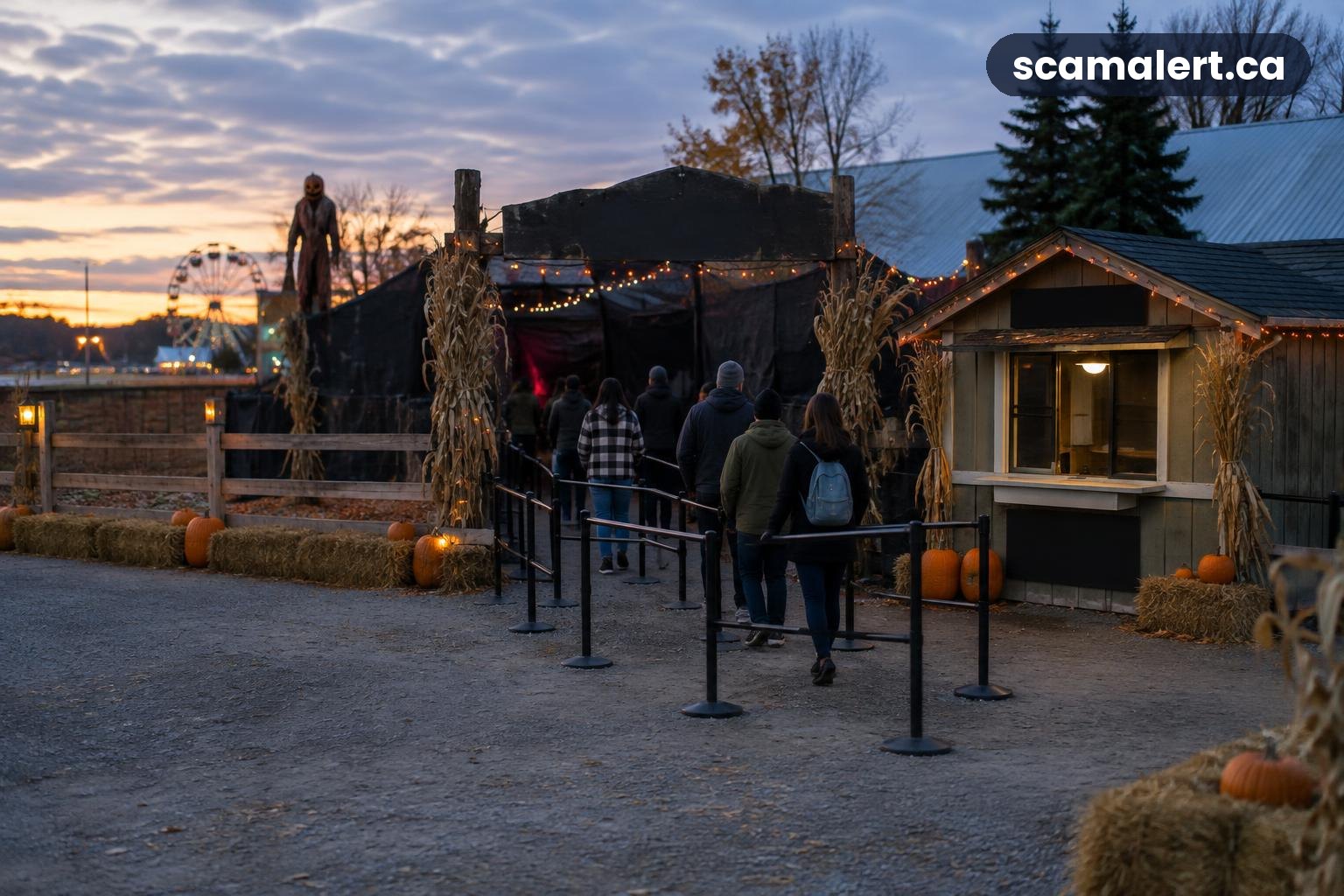
A Halloween ticket scam warning has put fans on notice as they look for seasonal scares and events. If you plan to attend a haunted attraction or other Halloween event, take time to check who is selling the tickets before you pay.
What the scam looks like
A warning about a scarefest scam does not mean every Halloween event or ticket seller is untrustworthy. Seasonal attractions can be legitimate, but scammers may use the excitement and time pressure around popular events to push people into paying before they have checked an offer.
One possible approach is to advertise tickets that the seller does not have, or to offer a ticket that has already been used or is not valid for the date or event. A seller might contact buyers through a social media post, a message, or an online listing. These are examples of common ticket-sale risks, not a claim about the specific method behind this warning.
Another risk is a copycat page or account that looks similar to an event’s official presence. It may use event photos or familiar wording, then ask you to pay through a method that offers little protection. The real attraction is not responsible for a scammer pretending to represent it.
Some offers may be genuine resales, but a buyer can have trouble confirming that a ticket is real, transferable, and still valid. A screenshot or an image of a ticket is not proof that it will scan at the entrance. If the seller cannot explain how a ticket will be transferred through an authorized process, pause before paying.
A Halloween ticket scam can also begin with a fake payment or booking page. Before entering personal or payment details, independently find the event’s official website or contact details and compare them with the page you were sent. Do not rely only on a link in a message or an advertisement.
Red flags to watch for
- Pressure to act immediately: A seller says you must pay at once or lose the tickets. Urgency can make it harder to check whether the offer is genuine.
- An unusually low price: A large discount is not proof of fraud, but it is a reason to verify the seller and the ticket terms before proceeding.
- No independent way to confirm the seller: The account has little history, offers vague details, or cannot be reached through the event’s official channels.
- Payment by an unusual or hard-to-reverse method: Be cautious if a seller insists on gift cards, cryptocurrency, a wire transfer, or a person-to-person payment with no buyer protection.
- A link that does not match the official event site: Check the web address carefully. A familiar name or event image does not confirm that a page is genuine.
- Requests for extra personal information: A ticket seller should not need your account password, one-time security code, or unrelated banking details.
- Unclear ticket conditions: The seller cannot confirm the event date, entry rules, transfer process, or whether the ticket can be resold.
- Only a screenshot is offered: A picture can be copied, and it may not show whether a ticket has already been used or can be transferred.
- Payment instructions change: Treat a last-minute switch to a different account or payment method as a reason to stop and verify the request independently.
How to avoid Halloween ticket scams
Start from the attraction’s official website rather than a search ad, social media message, or link sent by a stranger. Use the site to check the dates, ticket prices, authorized sellers, and any rules about resale or transfer. If you are unsure, contact the attraction using details you found independently.
When buying through a resale service, look for clear information about its buyer protections and what happens if a ticket is invalid. Read the terms before paying. A platform’s name or appearance alone is not a guarantee, and a private seller’s claim that a ticket is “verified” should not replace your own checks.
Pay with a method that gives you a way to challenge an unauthorized or misrepresented transaction. Do not send money because someone says a payment must be made in a particular way to hold a ticket. Keep the listing, messages, payment confirmation, and any ticket-transfer records in case you need to dispute a charge or make a report.
Do not share passwords, one-time passcodes, or account recovery codes with a seller. If a person says they need a code to transfer tickets or confirm payment, stop the conversation and check with the ticket platform or event through its official contact channel.
Families and groups can reduce the risk of duplicate purchases by agreeing who will buy the tickets and where they will purchase them. Before sending money to a friend or relative for a ticket, confirm the request with them using a separate, familiar way of contacting them.
What to do if you’ve been targeted
- Stop communicating and do not send more money. Do not pay a supposed release fee, refund fee, or extra charge to fix a questionable ticket purchase. A follow-up request may create another loss.
- Save the evidence. Keep messages, account names, the listing, receipts, payment records, and any web addresses. Take screenshots if a post or message may be removed, but do not share private information publicly.
- Contact your bank or payment provider promptly if you paid. Explain what happened and ask whether the payment can be stopped, reversed, or disputed. If you shared banking information, ask the bank what steps to take to secure your account.
- Secure any affected accounts. Change a password if you shared it or entered it on a suspicious page, and use a different, strong password for each account. Contact the service through its official website if you need help restoring access.
- Check ticket status directly with the event or authorized seller. Use contact information you find independently, not a phone number or link supplied by the person who sold you the ticket. Ask whether the ticket is valid and what transfer options are permitted.
- Tell the platform where you saw the offer. Report the listing or account so it can be reviewed. This does not guarantee that your money will be recovered, but it may help prevent further contact through that account.
- Watch for recovery offers. Be wary of anyone who claims they can get your money back for an upfront fee or asks for your password or security code. Contact your bank and the authorities yourself instead.
How to report it
Report suspected fraud to the Canadian Anti-Fraud Centre at antifraudcentre-centreantifraude.ca or by calling 1-888-495-8501. You can report even if you did not lose money; include the details and evidence you have, and avoid posting sensitive account information publicly.
Contact your local police to report the incident, especially if you lost money, shared sensitive information, or know who contacted you. If a payment or banking details are involved, contact your bank or payment provider as soon as possible and follow its instructions to protect your accounts.
A Halloween ticket scam can turn an event plan into a financial and personal-information risk, but a pause to verify the seller can help. Buy through the event’s official channels where possible, keep records of your purchase, and report suspicious offers rather than sending more money.
Source: Halloween fans warned over scarefest scam – BBC
Reviewed by our editorial team on .

The Scam Alert Team tracks fraud targeting Canadians and turns official warnings into clear, practical advice. Our team has a background in IT and cybersecurity, and every article is fact-checked against official sources before publication. How we verify alerts