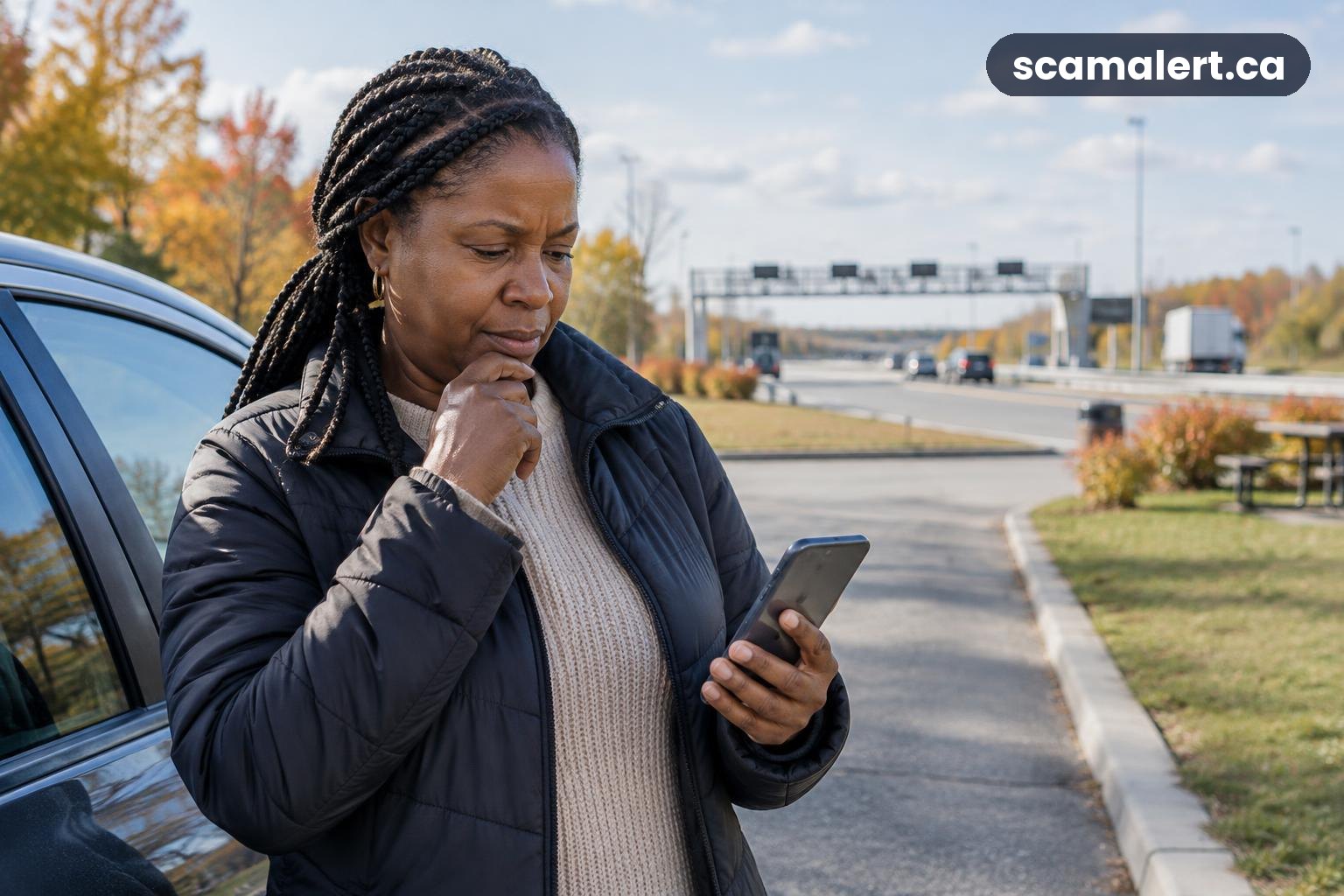
Fake toll texts claim you owe a road toll and urge you to pay through a message link. Before paying, check directly with the toll operator using contact details you find independently; a text alone does not prove that you owe money.
Some toll operators may send legitimate notices, so do not assume every toll-related message is fraudulent. Instead, treat unexpected payment requests as unverified until you confirm them through an official channel.
How fake toll texts work
The message may say a toll charge is unpaid, a payment is overdue or an account needs attention. It may create pressure to act quickly, sometimes warning that ignoring the message could lead to a fee or another consequence.
A link in the text may open a page that imitates a toll operator’s payment site. The page may ask for personal details, card information or account credentials. Giving those details to an impostor can put your money or accounts at risk.
The sender name or phone number is not reliable proof of who sent the message. Text sender details can be made to look familiar, and a professional-looking page does not confirm that it belongs to a real operator. Avoid deciding that a notice is genuine just because it mentions a road you have used.
Toll payment text variations to watch for
These messages can take different forms. One may claim there is a small unpaid balance, while another may present itself as a final reminder or an account-verification request. The wording and supposed reason for payment can change, but the instruction to use the message link is a reason to pause.
A message may also arrive when you have recently travelled on a toll road, making the request seem plausible. That timing does not confirm the amount, the account or the payment page. Check with the operator directly, even if the claim seems to fit your travel.
Some messages may use the name of a real toll service. If a real organization is named, that does not mean the organization sent the text or controls the linked page. Contact the organization through information you locate independently rather than replying or using the link.
Red flags in fake toll texts
- An unexpected payment demand: You were not expecting a bill, or you cannot match the notice to an account or trip.
- Pressure to act immediately: The message says you must pay now to avoid a penalty or other consequence.
- A link you did not request: It asks you to open a link to view a balance, settle a charge or keep an account active.
- Requests for sensitive information: The page asks for card details, passwords or information that seems unnecessary to check a toll notice.
- An unfamiliar web address: The link does not clearly match the official operator’s website, or it uses a confusing variation of a name.
- Unexpected spelling or wording: The message has awkward language, inconsistent details or a generic greeting. These signs can help you assess a text, but their absence does not prove it is genuine.
- Instructions to reply or keep the matter secret: Do not use the sender’s instructions as a substitute for independent verification.
How to check a toll notice safely
Do not tap the link, scan a code or reply to the message to confirm whether it is real. Instead, identify the toll operator from a source you already trust, such as a previous bill or account record, or find its official website independently. Do not rely on contact details or links supplied in the text.
Use the operator’s official website or app, if it provides one, and sign in by opening it yourself. Look for a notice in your account or use the customer-service contact details shown on the official site. If you call, use a number you found independently rather than one in the message.
Ask whether there is an amount due and whether the notice is associated with your account or travel. Check the details shown through the official channel before you pay. If the operator cannot confirm the claim, do not send money or personal information through the text link.
Keep the message long enough to record what it said if you need to report it, but do not forward it to friends as a warning with its link intact. You can describe the message without encouraging anyone to open the link. Fake toll texts can be convincing precisely because they connect an urgent payment request with a familiar kind of expense.
How to protect yourself from toll payment scams
Make independent verification your default for unexpected payment requests. Save the official operator’s website or use its app only after confirming that it is genuine. If you have an account, check it by opening the service yourself rather than following a message prompt.
Use a unique password for important online accounts. If a page reached through a suspicious text asks you to sign in, do not enter a password; if you already did, change it through the real service and change it anywhere else you reused it. Turn on additional sign-in protections when available.
Keep your phone and apps updated, and use the built-in tools on your device to block or report unwanted messages when available. Blocking a sender can reduce repeat contact, but it does not establish whether a toll charge exists. Confirm any real account issue with the operator.
When in doubt, step away from the message and check later through an official channel. A legitimate payment can still be made once it has been verified. You do not need to use an unexpected text link to establish whether you owe a toll.
What to do if you clicked or paid
If you opened the link but did not enter information, close the page and do not download anything or continue. If you entered details, acted on a request or sent money, take these steps promptly:
- Contact your bank or card provider if you shared banking or card details, or made a payment. Use the number on your card or the bank’s official app or website. Explain what happened and ask what steps are appropriate to protect the account or card.
- Change any password you entered on the page. Go directly to the real service, create a new password and update it anywhere else you used the same one. Check your account for activity you do not recognize.
- Save useful details. Keep a screenshot or note the message content, sender information, link text and any payment details. Do not revisit the link to gather more information.
- Contact the toll operator independently. Ask whether there is a genuine amount owing and tell the operator that a message used its name. Use contact information from its official website or your account record.
- Report the incident. Tell the Canadian Anti-Fraud Centre and your local police. If money or banking details were involved, contact your bank as well, even if you have already taken other steps.
How to report fake toll texts in Canada
Report suspected fraud to the Canadian Anti-Fraud Centre online or by phone at 1-888-495-8501. You can report a suspicious message even if you did not lose money. Include what the message claimed and whether you clicked, shared information or paid.
Contact your local police if you lost money, shared sensitive information or believe someone is using your identity. If a payment or banking details are involved, contact your bank or card provider as soon as possible using an official channel. Keep records of whom you contacted and any steps they advised.
If a real toll operator’s name was used, you can also alert that operator through its official website. Do not use the suspicious text’s contact information to report it. The operator may be able to confirm whether the notice is genuine and advise you about your account.
Frequently asked questions
Can a toll operator send a legitimate text?
Some operators may use text messages, but that possibility does not verify a particular payment request. Check your account or contact the operator through its official website or another source you trust. Do not pay through an unexpected link until you have confirmed the notice.
What if I do not remember using a toll road?
Do not assume the charge is real or fake based only on memory. Check with the operator using contact details you find independently. If it cannot confirm the charge, do not provide payment or personal information through the message.
Should I reply to the text to ask if it is real?
No. A reply does not independently verify the sender, and it may invite more contact. Use the operator’s official website, app or customer-service details instead.
Where can I report a toll payment text scam?
Report it to the Canadian Anti-Fraud Centre at 1-888-495-8501 or through its official website, and contact local police if you were targeted or lost money. If you shared banking details or paid, contact your bank or card provider promptly.
Reviewed by our editorial team on .

The Scam Alert Team tracks fraud targeting Canadians and turns official warnings into clear, practical advice. Our team has a background in IT and cybersecurity, and every article is fact-checked against official sources before publication. How we verify alerts