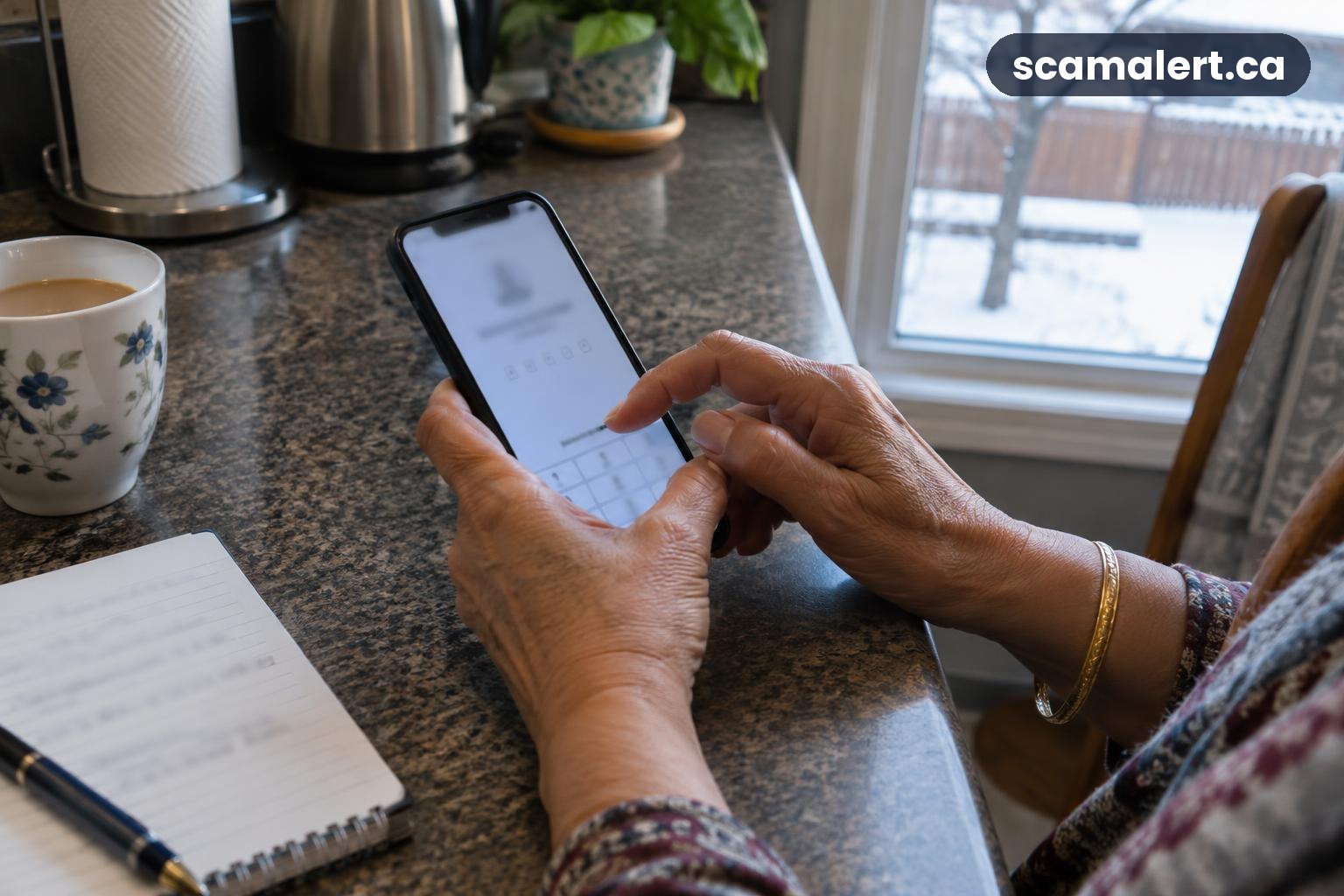
Caller ID spoofing is when a caller makes the number or name displayed on your phone misleading, so it may appear to come from someone else. A familiar or official-looking caller ID is not proof of who is calling; use a separate, trusted way to verify a request before sharing information, sending money or acting urgently.
How caller ID spoofing works
Caller ID information is passed along with a call. A caller can manipulate what appears on the receiving phone, making the displayed number different from the number or person actually calling. The display may show a local-looking number, a familiar contact name or the name of an organization.
This means caller ID spoofing can be used to make an unexpected call seem more believable. The caller may claim there is a problem with an account, a payment or a service, or ask you to confirm personal details. The display alone cannot verify that claim.
Not every call showing an unfamiliar or unusual number is necessarily a scam. Some legitimate calls may also appear under a different number than you expect. The practical rule is the same either way: treat the caller ID as a clue, not as proof, and verify important requests through a contact method you find independently.
Common caller ID scam variations
A spoofed call may pretend to come from a bank, a government office, a police service, a delivery company or a phone provider. The organization being imitated is not responsible for a caller who falsely claims to represent it. If a caller says they are from an organization, end the call and contact that organization using a number from its official website, a statement or a card you already have.
Some callers use pressure to stop you from checking their story. They may say you must act right away, keep the call secret, move money, or provide a password or one-time verification code. Others may ask you to install software, open a link or continue the conversation by text.
Caller ID spoofing can also support a personal-sounding approach. A caller may use a familiar name or number to encourage you to answer, then claim there is an urgent problem. If you are unsure, end the conversation and reach the person or organization through a channel you choose yourself.
These examples describe ways a misleading caller ID may be used; they do not mean every call displaying those kinds of names is fraudulent. A real caller may be difficult to confirm during an unexpected conversation, so take the time to check rather than relying on the display or the caller’s explanation.
Red flags in a spoofed call
Look at the request as well as the number. A caller who wants you to make a decision before you can verify the story is asking you to take a risk. Be especially cautious if they want you to share a code, change account access, send money or keep the call private.
- The caller claims to represent an organization, but you were not expecting the call and cannot confirm who they are.
- The caller asks for a password, PIN, banking information or a one-time verification code.
- You are urged to send money, buy or transfer something, or follow payment instructions during the call.
- The caller insists that you must act immediately or says you must not speak with anyone else.
- They ask you to click a link, install an app or give remote access to a device as part of resolving a problem.
- The caller discourages you from hanging up and contacting the organization through an independently found number.
- The caller ID looks familiar or official, but the request itself is unexpected, confusing or hard to verify.
How to protect yourself from caller ID spoofing
Do not use the displayed number as your only check. If the call is unexpected, say you will contact the organization directly, hang up and find its contact information from a source you trust. For a bank, you can use the number on your bank card or statement; for another organization, use its official website or paperwork you already have.
Do not rely on calling back the number that appeared on your screen. With caller ID spoofing, that number may not belong to the person who called. It could belong to an unrelated person or organization, so avoid confronting whoever answers a return call.
Keep passwords, PINs and one-time verification codes private. A code can be used to approve an action or access an account, so do not read it to someone just because they know your name, phone number or other details. If you are asked for a code, stop and contact the relevant service through a trusted route.
Take a moment before responding to claims about urgent problems. Ask what the caller wants you to do, but do not treat an answer as verification. You can end the call and check the matter independently without following instructions given during the conversation.
Use call-screening, spam-filtering or blocking features available on your phone or through your service provider if they are useful to you. These tools may help manage unwanted calls, but they cannot confirm who is calling, and blocking one displayed number may not prevent other calls that use misleading caller ID.
The Canadian Radio-television and Telecommunications Commission provides information about phone services and unwanted calls on its official website. Use official information to learn about available options, but continue to verify the identity of any caller who asks you to take action.
What to do if you’ve been targeted
If you answered a suspicious call, you can still stop the interaction. Do not keep talking simply because the caller sounds convincing, knows personal details or has a familiar number on your screen. Take these steps, based on what happened:
- End the call. Do not provide more information, follow a link or continue to another number supplied by the caller.
- Verify the story independently. Contact the named organization using a number from its official website, your bank card or a statement. If the caller claimed to be someone you know, reach that person through a contact method you already use.
- Contact your bank promptly if money or banking details were involved. Explain what happened and follow its advice. If you shared account credentials or a verification code, tell the bank that as well.
- Secure affected accounts. Change a password if you shared it or think someone else may know it. Use the service’s official app or website, not a link supplied by the caller.
- Keep details of the contact. Note what the caller claimed, what they asked you to do and whether you shared information or sent money. Save relevant call records, voicemail and messages if available.
- Tell someone you trust if you need support. A second person can help you check the claim, contact your bank or make a report without rushing.
- Report the incident. Contact the Canadian Anti-Fraud Centre and your local police. If money or banking details were involved, contact your bank as well.
How to report caller ID spoofing in Canada
Report suspected fraud to the Canadian Anti-Fraud Centre by calling 1-888-495-8501 or using its official website, antifraudcentre-centreantifraude.ca. Provide the details you have, such as what the caller said and whether you shared information or lost money. You can report an attempt even if you did not follow the caller’s instructions.
You can also report the incident to your local police. If you lost money or shared banking details, contact your bank immediately using a trusted number. The displayed caller ID may not identify the caller, so share the call details with authorities rather than assuming the number belongs to the person who contacted you.
Frequently asked questions
Can I trust a number that matches my bank or a government office?
No. A matching display does not establish who is calling. End an unexpected call and contact the organization using a number you find independently, such as one on your bank card or the organization’s official website.
Should I call back the number shown on my screen?
Not to verify a suspicious call. Caller ID spoofing can make the displayed number misleading, and it may belong to someone who did not call you. Find a trusted contact number separately instead.
What if I only answered and did not share anything?
End the call and avoid following up through details the caller provided. If you did not share information or send money, you may not need to take account-protection steps, but you can still report the attempt to the Canadian Anti-Fraud Centre and local police.
Could the displayed number belong to an innocent person?
Yes. A misleading caller ID may show a number unrelated to the person making the call. Do not accuse or confront the number’s owner; report what happened and verify future calls through trusted contact information.
Reviewed by our editorial team on .

The Scam Alert Team tracks fraud targeting Canadians and turns official warnings into clear, practical advice. Our team has a background in IT and cybersecurity, and every article is fact-checked against official sources before publication. How we verify alerts