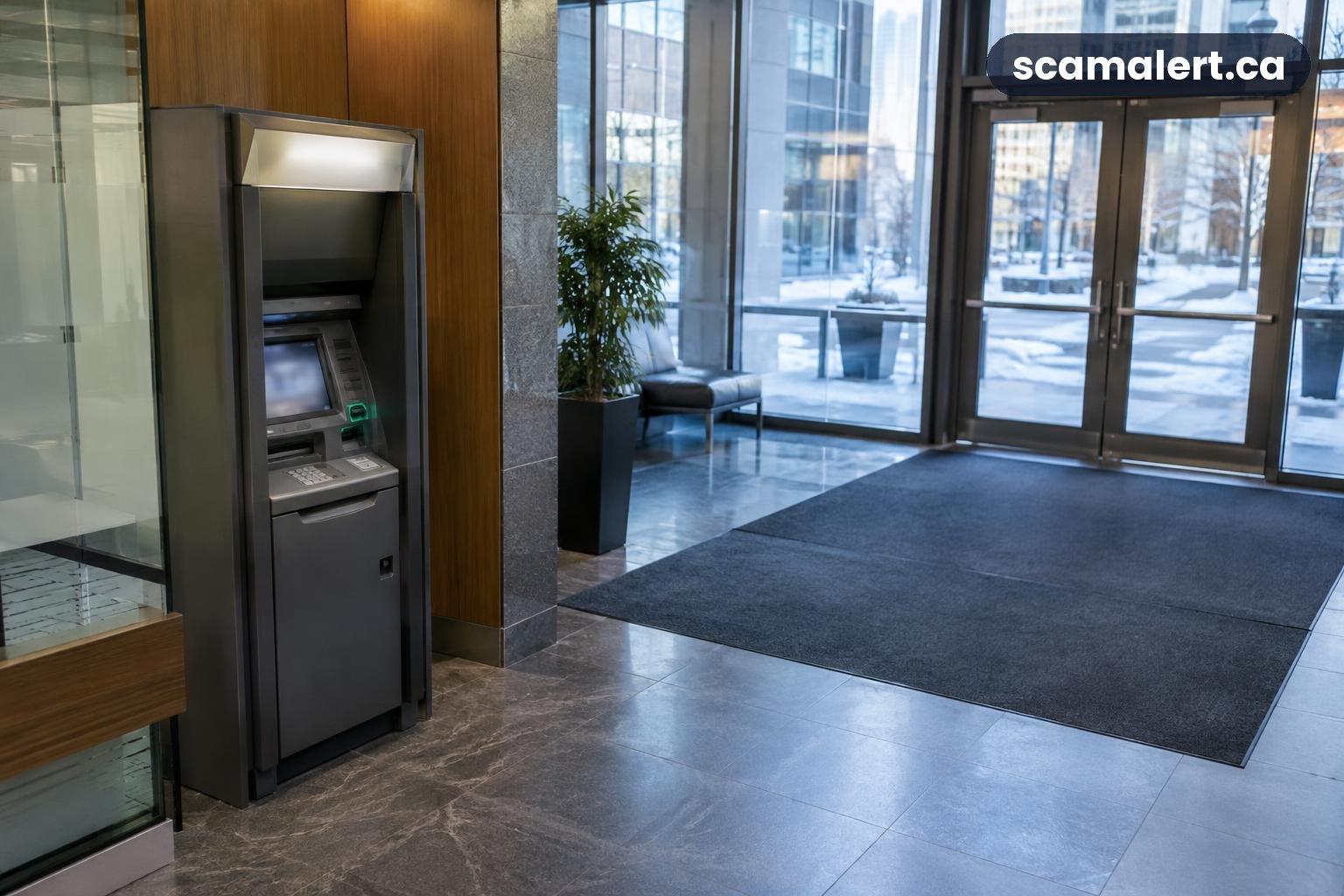
ATM skimming happens when a device is used to copy payment-card information, sometimes alongside a hidden camera or other method of capturing your PIN. Before using an ATM, check for anything loose, unusual or out of place, cover the keypad as you enter your PIN, and stop if the machine does not look right.
How ATM skimming works
A skimming device may be fitted over or near an ATM’s card slot to read information from a card’s magnetic stripe as it is inserted. A separate hidden camera or keypad overlay may be used to capture the PIN. The copied details can then be used to attempt unauthorized transactions or make a counterfeit card.
Skimming equipment can be difficult to notice, and not every ATM that looks different is tampered with. The useful check is whether a part looks added, loose, damaged or inconsistent with the rest of the machine. If you are unsure, do not insert your card just to test it.
Some payment cards use a chip, which is designed to make certain types of card fraud harder. That does not make it safe to ignore suspicious equipment or to reveal your PIN. Card details can be exposed in other ways, and a PIN may be captured separately.
ATM skimming variations to know about
Skimming is not limited to bank-branch ATMs. Card-reading equipment may be tampered with at other unattended payment terminals, such as those used for fuel or other self-service purchases. A terminal that accepts a card can be worth checking, especially if it is in a quiet or poorly monitored location.
Another variation involves a device placed over the keypad to record keystrokes. A camera may instead be positioned to view the keypad while someone enters a PIN. In either case, protecting the PIN matters even if the card slot itself appears normal.
Sometimes the problem is not a device that copies information but an ATM that has been interfered with in another way, such as a card slot or cash dispenser that does not work as expected. Do not assume that every malfunction is fraud, but avoid repeatedly trying the card or accepting help from a stranger. Contact your bank using a number from your card or bank statement.
Red flags at an ATM
Look over the machine before you use it. One unusual feature is not proof of tampering, but several signs—or a part that feels insecure—are good reasons to choose another ATM.
- The card slot looks bulky, misaligned or different from the surrounding machine.
- A part near the slot or keypad appears loose, raised, damaged or attached on top of the surface.
- The keypad feels unusually thick, moves, or does not sit as expected.
- You notice a small opening or object positioned where it could view the keypad.
- The machine has signs of damage, or its card reader or cash dispenser behaves unexpectedly.
- A stranger offers to help, asks for your PIN, or encourages you to try the machine again.
- The machine or its surroundings make it difficult to see what is happening as you enter your PIN.
How to protect yourself from ATM skimming
Choose a machine in a place where staff or security can be contacted, and take a moment to look at it before inserting your card. If a component seems loose or out of place, use a different ATM and let the bank or business responsible for it know. Do not remove a suspected device or confront anyone.
Cover the keypad with your free hand while entering your PIN, even if you do not see a camera. This simple habit can make it harder for someone nearby or a concealed camera to view your keystrokes. Keep your PIN private; a bank employee or another customer should not need you to disclose it.
When the machine and your card support it, using a chip or contactless option can avoid inserting the card into a reader. Follow the instructions on the ATM or terminal, and do not use a payment method that the machine does not offer. No payment method removes the need to protect your PIN and check transactions.
Keep your card in sight when paying at a staffed terminal, and be cautious if someone takes it out of view. Turn on transaction notifications if your bank offers them, and review account activity regularly. Knowing how to contact your bank makes it easier to act promptly if a transaction looks unfamiliar.
What to do if you’ve been targeted
- Stop using the machine. If you have not inserted your card, leave and use another ATM. If you have, do not try again or accept assistance from a stranger.
- Contact your bank or card issuer promptly. Use the contact information on your card, bank statement or official banking app. Explain what you noticed and ask whether the card should be blocked or replaced.
- Check your account activity. Look for transactions you do not recognize and report them to your bank. Follow the bank’s instructions for protecting the account and disputing transactions.
- Change your PIN if your bank advises you to, or if you believe someone saw it. Choose a PIN that is not easy to guess, and do not share it with anyone.
- Keep useful details. Note the ATM’s location and the time you used it, and describe what seemed unusual. Do not touch or try to remove a suspected attachment.
- Report any suspected loss or fraud. Contact local police and the Canadian Anti-Fraud Centre, as well as your bank. Keep any reference numbers or instructions they provide.
How to report ATM skimming in Canada
Tell the bank or business responsible for the ATM as soon as you can, particularly if you saw a suspicious attachment or the machine behaved strangely. If money or banking details may be involved, contact your bank or card issuer directly through a trusted channel. Your bank can advise you about blocking a card, securing an account and reporting unfamiliar transactions.
Report suspected fraud to your local police and the Canadian Anti-Fraud Centre. The Centre accepts reports online and by phone at 1-888-495-8501. Reporting helps create a record of what happened; it does not replace contacting your bank about your card or account.
Frequently asked questions about ATM skimming
Can I tell for certain whether an ATM has been tampered with?
Not always. Skimming equipment may be hard to spot, and an unusual-looking part is not automatically evidence of fraud. If something is loose, out of place or makes you uncomfortable, do not use that machine; report your concern to the responsible bank or business.
What if I used the ATM but see no unfamiliar transactions?
Contact your bank if you believe the machine may have been tampered with, even if your account looks normal at the moment. Ask whether you should replace your card or take other steps, and continue checking your account for activity you do not recognize.
Does covering the keypad protect my card?
Covering the keypad can help prevent someone from seeing your PIN, but it does not stop a device from reading card information. Check the ATM before use, shield your PIN, and contact your bank if you suspect your card details were exposed.
Should I confront someone I think is tampering with an ATM?
No. Do not approach or confront a person, and do not touch a suspected device. Move to a safe place and notify the business or bank responsible for the ATM; contact local police if you believe a crime is taking place.
Reviewed by our editorial team on .

The Scam Alert Team tracks fraud targeting Canadians and turns official warnings into clear, practical advice. Our team has a background in IT and cybersecurity, and every article is fact-checked against official sources before publication. How we verify alerts